
Dr. Arvind Kumar*

The seventh session of the United Nations Environment Assembly (UNEA-7), which concluded yesterday in Nairobi, will likely be remembered less for the number of resolutions it adopted and more for what it revealed about the current state of global environmental governance. Convening over 6,000 delegates from 186 countries, UNEA-7 delivered 11 resolutions, three decisions, and most notably a ministerial declaration adopted through negotiated consensus for the first time in the Assembly’s history.
The adopted resolutions advanced international cooperation on wildfire management, protection of coral reefs and glaciers, sound management of minerals, chemicals and waste, sustainable application of artificial intelligence, antimicrobial resistance, youth participation, and control of harmful algal blooms reflecting both the breadth of environmental risk and emerging governance priorities. Yet the deeper question lingers: does consensus, painstakingly achieved, translate into action at a pace commensurate with planetary urgency, especially when geopolitical divisions and procedural constraints dilute ambition and slow implementation?

At one level, UNEA-7 marked a pragmatic shift. Framed around the theme “Advancing Sustainable Solutions for a Resilient Planet,” the Assembly moved away from rehearsing the scale of environmental crises and toward implementation pathways grounded in science. UNEP Executive Director Inger Andersen’s insistence that the environment is not a sector but the “foundation of prosperity, stability, and peace” reframed environmental action as a matter of enlightened self-interest. This rhetorical repositioning was instrumental in navigating geopolitical fault lines but it also exposed how fragile multilateral resolve remains when environmental ambition collides with national interest.
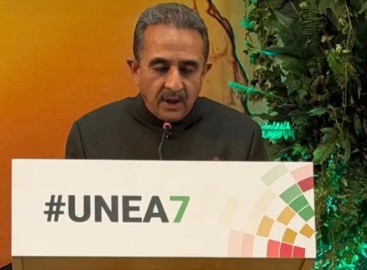
The high-level segment illustrated this tension vividly. India’s intervention, delivered by Minister of State Kirti Vardhan Singh, combined empirical evidence with civilisational ethos. India’s achievements 50% non-fossil electricity capacity, decentralised renewable energy through PM Surya Ghar and PM-KUSUM, and leadership on global wildfire governance were framed not as exceptions but as scalable pathways. Anchoring environmental responsibility in the principle of Vasudhaiva Kutumbakam, India positioned sustainability as dignity-enhancing rather than development-constraining.
Between Resolve and Reality
The implicit challenge to other nations was clear: if ambition can be aligned with growth, why does hesitation persist? This question reverberated across the resolution landscape. India’s wildfire resolution grounded in stark projections of escalating fire risk, advanced a preventive paradigm built on early-warning systems, satellite monitoring, community preparedness, and ecosystem restoration. Fiji’s breakthrough resolution on coral reef resilience similarly underscored that technical solutions alone are insufficient without recognising Indigenous stewardship and local governance systems. The Dominican Republic’s landmark resolution on sargassum blooms, Kenya’s pioneering engagement with the environmental footprint of artificial intelligence, and Tajikistan’s focus on glacier preservation all reflected UNEA’s expanding engagement with complex, interconnected risks.
Yet each of these resolutions also bore the imprint of compromise. Negotiations on chemicals and waste governance were diluted. Financial commitments remained cautiously worded. Vanuatu’s withdrawal of its deep-sea ecosystems resolution despite overwhelming scientific consensus was a sobering reminder that evidence does not guarantee agreement. Is multilateralism, then, structurally incapable of acting decisively on emerging threats before damage becomes irreversible?
The ministerial declaration, adopted by consensus, symbolised both achievement and constraint. It reaffirmed the human right to a clean, healthy, and sustainable environment and acknowledged the interconnected crises of climate change, biodiversity loss, pollution, land degradation, drought, and deforestation. It embraced the One Health approach and called for scaled-up finance and technology transfer. But declarations, however historic, do not fund adaptation, restore ecosystems, or regulate supply chains. When consensus is achieved by softening obligation, does it illuminate a path forward or merely defer difficult choices?
Nowhere was this tension starker than in the geopolitical shadows cast by the United States’ withdrawal from resolution negotiations. By disassociating itself from all adopted resolutions, the U.S. signalled a recalibration of its engagement with global environmental institutions. The absence was not procedural alone; it materially weakened momentum on chemicals management, biodiversity finance, and implementation capacity. At a moment defined by “triple planetary crises,” can global governance afford fragmentation by its most powerful actors?
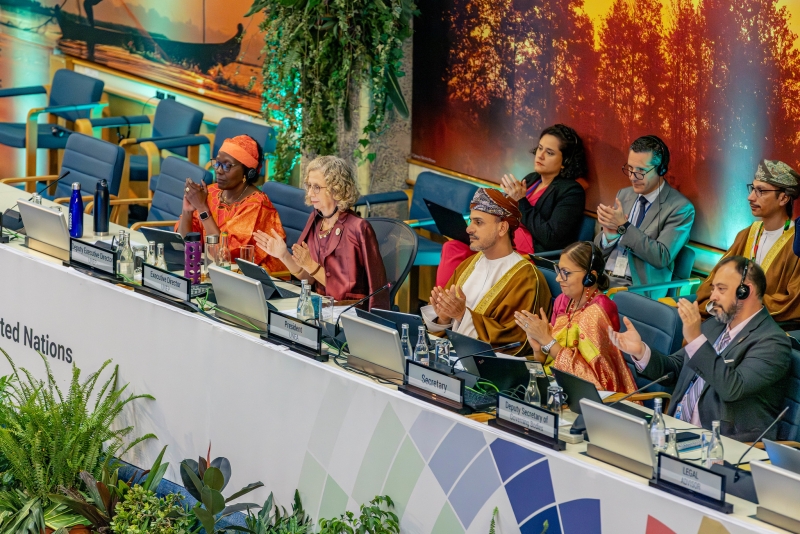
Structural constraints further complicate the picture. UNEP faces declining core funding even as its mandate expands. Persistent North–South disagreements over climate finance particularly whether responsibility should be historical or shared across “all sources” continue to stall ambition. These are not technical disputes; they are questions of equity, trust, and political will. Without resolving them, how realistic is the expectation that resolutions will move from paper to practice?
Still, UNEA-7 was not devoid of forward momentum. Jamaica’s election to preside over UNEA-8 signals a shift toward leadership from climate-vulnerable nations. Minister Matthew Samuda’s emphasis on frontline realities, science-policy integration, and adaptation finance suggests a presidency oriented toward implementation rather than symbolism. The launch of the seventh Global Environment Outlook further reframed environmental action as economic opportunity projecting trillions in potential GDP gains and significant reductions in poverty and premature deaths if investments are made now. Ultimately, UNEA-7 illuminated both the resilience and the limits of multilateral environmental governance. It demonstrated that consensus is still possible, even in a fractured geopolitical landscape. But it also exposed a widening gap between negotiated ambition and operational delivery. As Inger Andersen observed in her closing remarks, the beacon has been brightened but the urgency lies in how quickly the world moves down the illuminated path.
Way Forward
The true test of UNEA-7 will lie not in the ambition of its resolutions but in the speed and scale of their implementation. Bridging the gap between consensus and impact now requires a deliberate shift from declaratory multilateralism to delivery-oriented governance. This entails three immediate priorities: first, embedding UNEA outcomes into national development planning and climate finance architectures; second, strengthening the science–policy–finance interface to ensure that decisions are guided by evidence and adequately resourced; and third, restoring trust in multilateralism through equitable financing, technology transfer, and genuine North–South partnership. As ecological thresholds tighten, incrementalism is no longer viable. UNEA’s relevance in the coming years will depend on whether it can catalyse coordinated action at a pace aligned with planetary limits before urgency turns irreversibly into loss.
*Editor, Focus Global Reporter