
Dr. Arvind Kumar*
The Aravalli Range stands today at a decisive inflection point; one where an unfolding ecological crisis can be transformed into a generational opportunity for India’s environmental security and economic resilience. Recent judicial interpretations that narrowly define the Aravallis as landforms rising more than 100 metres above local terrain have, in effect, placed nearly 90% of India’s oldest mountain system outside meaningful protection, exposing vast stretches to mining, real estate expansion, and irreversible ecological degradation. Yet history demonstrates that moments of acute vulnerability often present the clearest opportunity for strategic reimagining.

The Aravallis can either be reduced to a fragmented ecological relic or elevated into a globally relevant model of restoration-led, decoupled development; one that simultaneously strengthens water security, climate resilience, biodiversity conservation, and sustainable livelihoods. This perspective aligns closely with the vision articulated by Prime Minister Narendra Modi at the UNCCD in 2019, where he emphasised that land and water security are inseparable, noting that restoring degraded landscapes is fundamental to addressing water scarcity. The urgency of this vision is underscored by a broader global reality: the transition of vast regions from humid to arid or permanently drier conditions represents what Ibrahim Thiaw, Former Executive Secretary, UNCCD, has described as a “permanent, unrelenting transformation” not episodic droughts that eventually recede, but profound and potentially irreversible shifts in regional climate systems.
India already hosts four globally recognised biodiversity hotspots; the Himalayas, Western Ghats, Indo-Burma region, and Sundalandeach integral to continental ecological balance. While the Aravalli Range has not been formally designated as a hotspot, its ecological functions and species assemblages strongly justify such recognition. Spanning nearly 700 kilometres from eastern Gujarat to southern Haryana, the range supports roughly 400 native tree species, over 200 bird species, more than 100 butterfly species, and a diverse assemblage of reptiles and mammals including leopards, hyenas, jackals, blue bulls, and porcupines. Beyond species counts, the Aravallis form a critical ecological corridor in north-western India, enabling wildlife movement, genetic exchange, and landscape-level resilience across a region otherwise dominated by aridity and rapid urbanisation.
The Aravalli as Ecological Infrastructure
What distinguishes the Aravalli Range is not only its biodiversity, but its role as ecological infrastructure underpinning human survival across northern India. Its fractured, weathered geology enables exceptional groundwater recharge estimated at nearly two million litres per hectare annuallymaking it the single most important aquifer recharge system for Rajasthan, Gujarat, Haryana, and the Delhi-NCR. When mining shatters rock strata or urbanisation seals soils, this recharge capacity collapses permanently, cascading into water scarcity, agricultural decline, and deteriorating ecosystem health across downstream regions.
The range also functions as India’s primary defence against desertification in the north-west. Situated between the Thar Desert and the Indo-Gangetic Plains, the Aravallis act as a physical and biological barrier that stabilises soil, reduces wind velocity, and suppresses dust transport toward Delhi-NCR. As air pollution episodes in the capital increasingly reach crisis levels, the degradation of this natural barrier directly exacerbates particulate matter loads. Groundwater contamination patterns in Delhi and its periphery closely correlated with mining zones in the Aravalli foothills further demonstrate how hill degradation translates into urban environmental collapse.
Hydrologically, the Aravallis are indispensable. Seventeen rivers originate from their slopes, forming a watershed divide between the Arabian Sea and Bay of Bengal basins and sustaining agricultural systems across three states. Climatically, the range moderates heat fluxes, influences humidity gradients, and buffers the advance of hot desert air masses into densely populated regions. These services, once lost, cannot be replicated through engineered infrastructure at any feasible cost.
The urgency of protecting the Aravallis must also be situated within the global desertification crisis. Between 1990 and 2020, nearly 78% of the world’s land experienced permanent drying, rendering desertification the largest driver of agricultural degradation globally. 40% of arable land is already affected, and dryland populations are projected to reach five billion by the end of the century. Africa’s experience where rising aridity has erased over a tenth of GDP illustrates that land degradation is not an environmental issue alone but a macroeconomic threat. The African Union’s Great Green Wall Initiative demonstrates that restoration, when integrated with livelihoods and governance, can reverse degradation while generating employment and social equity. This lesson is directly applicable to India.
India’s own policy commitments reflect this understanding. Its pledge under the Bonn Challenge to restore 26 million hectares of degraded land by 2030, establishes a strong national mandate. Initiatives such as Ek Ped Maa Ke Naam have further embedded ecological stewardship within cultural consciousness. However, symbolic tree planting must now evolve into landscape-scale restoration that restores ecosystem functionality rather than isolated green cover.
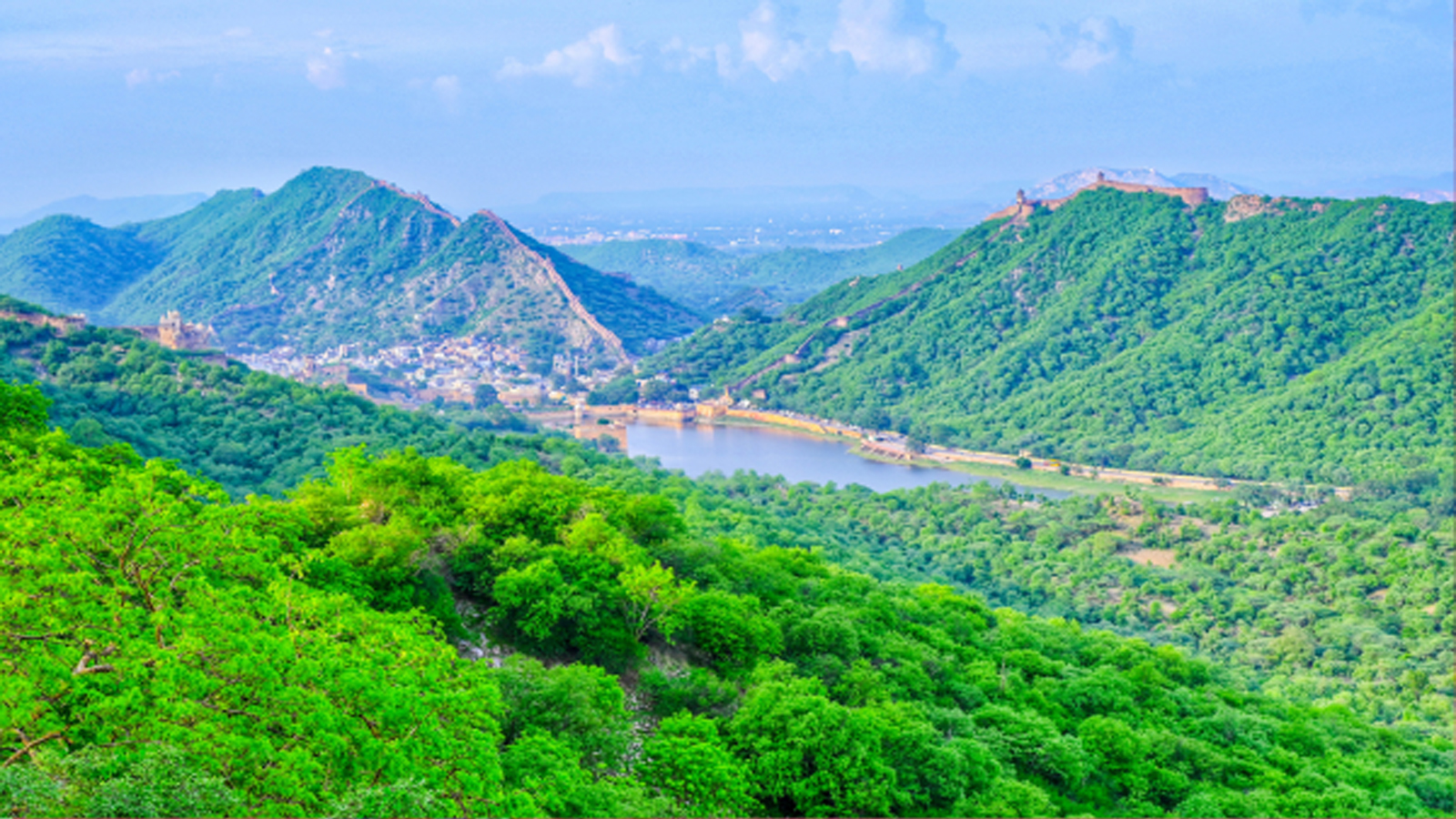
Reimagining the Aravalli as a biodiversity hotspot requires a decisive shift from reactive protection to proactive ecosystem restoration. This entails active rewilding through the reintroduction of native species assemblages, removal of invasive species, and restoration of grassland–forest mosaics that historically defined the range. Indian examples from community-led forest restoration in central India to emerging rewilding initiatives demonstrate that degraded landscapes can regain ecological complexity while supporting livelihoods when communities are empowered as stewards.
Hydrological restoration must form the backbone of any transformative strategy for the Aravalli Range, anchored in the principles of ecosystem-based adaptation. This approach is explored in depth in my book, Ecosystem-Based Adaptation: Approaches to Sustainable Management of Aquatic Resources, published by Elsevier, London, which examines how enhanced ecosystem services can be leveraged to manage floods, conserve water and watersheds, prevent water scarcity, and ensure long-term water security within the framework of the Sustainable Development Goals. Among ecosystem-based interventions, wetlands offer exceptional strategic leverage: they enhance water retention, accelerate groundwater recharge, sequester carbon through anaerobic soils, and create high-value habitats for diverse species. In the mining-scarred valleys and low-lying landscapes of the Aravallis, wetland restoration can deliver multiple, mutually reinforcing outcomes addressing chronic water scarcity, reversing biodiversity loss, and contributing to climate mitigation, while simultaneously generating livelihoods through fisheries, aquatic biomass, and nature-based enterprises.
Crucially, this ecological transformation is also an economic strategy. Restoration-led development unlocks multiple income streams that outperform extractive models over time. Sustainable agriculture supported by restored aquifers, efficient irrigation, and climate-resilient crops can revive rural productivity. Non-timber forest products already a major income source for forest-dependent communities expand significantly with biodiversity recovery and can be strengthened through value-addition schemes. Community-based ecotourism offers another pathway, generating employment while reinforcing conservation incentives, as demonstrated in mountain regions across India.
When these benefits are quantified through ecosystem services valuation, the economic case becomes unequivocal. Groundwater recharge, climate regulation, air filtration, and cultural services collectively generate values that far exceed the short-lived revenues of mining. Restoration thus enables true decoupling where economic growth is driven by enhanced natural capital rather than its depletion.
Way Forward
Transforming the Aravalli into a recognised biodiversity hotspot requires rewilding through institutional innovation as much as ecological science. A dedicated, multi-state Aravalli Biodiversity Restoration Mission could provide the governance architecture needed to coordinate action across jurisdictions, integrate scientific monitoring, and align finance with locally driven restoration plans. Community participation must be foundational, supported by mechanisms such as payments for ecosystem services that link upstream stewardship with downstream beneficiaries. Wetlands, forests, grasslands, and agricultural landscapes must be restored as an integrated system rather than fragmented projects.
With strategic intensity, measurable ecosystem recovery is achievable within a decade well within the 2030 horizon of global biodiversity and land restoration frameworks. The choice before India is stark but empowering. By restoring the Aravalli, the country can demonstrate that prosperity flows not from environmental extraction, but from ecological renewal rooted in the ethos of Vasudhaiva Kutumbakam. In doing so, India would not only safeguard water, air, and food security for millions, but offer the world a replicable model of restoration-led development where environment, economy, and dharma converge into a shared and sustainable future.
*Editor, Focus Global Reporter