
Dr. Arvind Kumar*
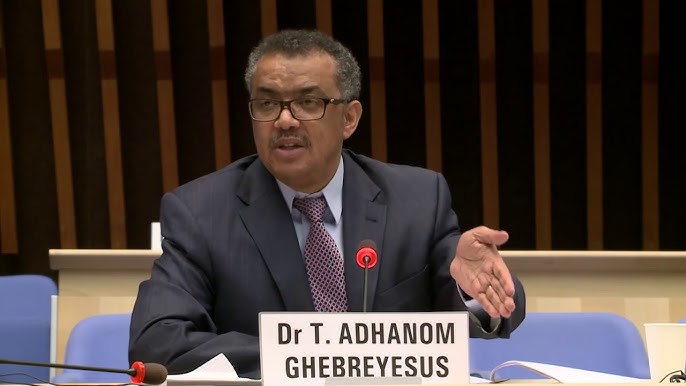
The age of treating climate and health as separate policy silos is rapidly ending. From overcrowded emergency wards during heatwaves to vector-borne diseases expanding into new geographies, the evidence is clear: the climate crisis is fundamentally a health crisis. WHO estimates that 3.6 billion people currently live in areas highly susceptible to climate change, and between 2030 and 2050, climate impacts could cause an additional 250,000 deaths annually from undernutrition, malaria, diarrhoea, and heat stress. Direct health damages alone are projected to cost between 2 and 4 billion US dollars annually by 2030, excluding losses linked to agriculture, water security, and livelihoods. As WHO Director-General Tedros Adhanom Ghebreyesus has repeatedly emphasised, the most urgent reasons for climate action lie not in distant projections but in immediate and escalating health consequences.

In response to this growing recognition, the concept of planetary health diplomacy has emerged as a framework that integrates human well-being with the stability of Earth’s natural systems. This approach is increasingly reflected in collaborative platforms such as the Quadripartite One Health alliance, which brings together the Food and Agriculture Organization, United Nations Environment Programme, WHO, and the World Organisation for Animal Health. Parallel momentum has also been created through knowledge and advocacy networks like the Planetary Health Alliance, which continues to expand international collaboration across academic, civil society, and policy institutions. In late December 2025, Prime Minister Narendra Modi and Dr. Tedros inaugurated the new WHO South-East Asia Regional Office Complex in New Delhi. Dr. Tedros highlighted this as a symbol of shared vision for health in the region. The alliance’s 2024 Planetary Health Roadmap and Kuala Lumpur Call to Action marked an important milestone, highlighting the need to embed ecological limits, health equity, and sustainability within global governance systems.
Bridging Climate Action
Scientific data underpinning this transition is deeply concerning. WHO assessments identify climate change as a “risk multiplier” that intensifies extreme weather events, food and water insecurity, infectious disease transmission, and mental health stressors. Mortality rates from climate-related disasters are estimated to be fifteen times higher in vulnerable regions compared to wealthier and more climate-resilient areas. Heat-related deaths among older populations have risen by approximately seventy percent over the past two decades. Meanwhile, two billion people still lack safely managed drinking water, and roughly 600 million people suffer from foodborne diseases annually, with children under five accounting for nearly one-third of related deaths. Complementing these findings, the World Bank warns that climate-induced health shocks could push at least 44 million people into extreme poverty by 2030 while generating more than 21 trillion dollars in additional healthcare costs across low- and middle-income countries by mid-century. Reinforcing the gravity of these challenges, United Nations Secretary-General Antonio Guterres has cautioned that environmental degradation is already inflicting severe damage on global health and human security.
Recognising these interconnected threats, international institutions have begun reorienting their policy frameworks. In 2026, FAO, UNEP, WHO, and WOAH renewed their One Health Memorandum of Understanding through 2030, establishing a coordinated framework to strengthen health systems, address antimicrobial resistance, improve food safety, and integrate environmental considerations into disease prevention strategies. The One Health Joint Plan of Action for 2022–2026 outlines six interdependent work streams, including zoonotic disease prevention, sustainable food system development, and ecosystem restoration. Simultaneously, WHO’s Global Programme of Work 2025–2028 places climate-related health risks among its central strategic priorities, highlighting the necessity of integrated international cooperation across climate, food, water, and health sectors.
Climate negotiations are gradually incorporating these perspectives. Recent global climate summits have elevated health considerations within adaptation and mitigation agendas, recognising that reducing emissions, restoring ecosystems, and controlling pollution deliver immediate public health benefits. Increasingly, policymakers are framing climate action not merely as environmental responsibility but as a strategic investment in long-term health security and economic resilience. This shift represents the core principle of planetary health diplomacy: aligning environmental sustainability with social equity and human survival.
Importantly, planetary health diplomacy extends beyond multilateral negotiations and global conferences. It relies heavily on collaborative knowledge platforms that connect local innovations with global policy formulation. Initiatives led by civil society, city administrations, indigenous communities, and youth movements are influencing international decision-making processes. Heat action plans developed in urban centres now inform global guidelines, while community-led water stewardship models contribute to biodiversity governance discussions. These horizontal networks of cooperation demonstrate that effective planetary health diplomacy must operate simultaneously at grassroots, national, and global levels.
India has emerged as a significant contributor and policy innovator in this evolving landscape. The National Action Plan on Climate Change and Human Health and the National Programme on Climate Change and Human Health have sought to integrate climate considerations into healthcare planning through surveillance systems, public awareness initiatives, and climate-resilient infrastructure development. Heat-health preparedness strategies implemented across several climate-vulnerable states have demonstrated the value of early warning systems, intersectoral coordination, and community-level interventions. National flagship programmes such as Jal Jeevan Mission and Swachh Bharat Mission also illustrate how water and sanitation initiatives function as large-scale planetary health interventions by reducing disease burdens, improving nutritional outcomes, and lowering environmental pollution.
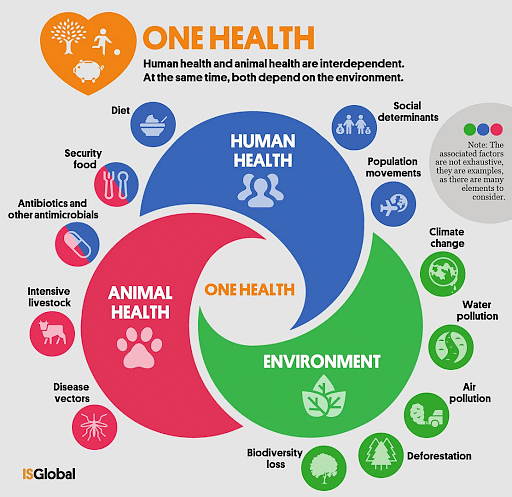
India has further strengthened its One Health governance framework through the National One Health Mission, which promotes integrated surveillance and coordinated responses across human, animal, and ecosystem health systems. The mission leverages advanced technologies including genomic surveillance, artificial intelligence-based disease analytics, and high-containment laboratory networks. By institutionalising collaboration among multiple ministries and scientific agencies, India is aligning domestic public health systems with the same integrative logic it advocates internationally.
Another critical dimension of India’s planetary health strategy involves decarbonising its healthcare sector. Globally, healthcare systems contribute approximately five percent of total greenhouse gas emissions. India has initiated reforms to reduce this footprint through the adoption of green healthcare facility guidelines, rooftop solar integration, energy-efficient infrastructure design, and sustainable waste management systems. Early evidence suggests that renewable energy deployment in primary healthcare facilities enhances service reliability while simultaneously reducing operational costs and emissions. Integrating environmental sustainability standards into hospital accreditation processes is also creating systemic incentives for greener healthcare delivery across the country.
Despite these advances, significant challenges remain. Emerging projections indicate that combined climate change and air pollution impacts could contribute to tens of millions of deaths annually by the end of the century if current emission trajectories continue. Existing mortality estimates linked to climate-sensitive diseases are increasingly viewed as conservative, as they often exclude mental health impacts, forced migration, and complex cascading risks across food and water systems. The next phase of planetary health diplomacy will therefore be judged not by international declarations but by measurable outcomes such as reduced heatwave mortality, strengthened disease surveillance, resilient health infrastructure, and equitable access to safe water and clean air.
Way Forward
Achieving these outcomes requires structural transformation in global cooperation frameworks. Climate finance, international trade agreements, and development assistance mechanisms must systematically integrate health outcomes into their decision-making processes. Prevention, ecosystem restoration, and community resilience should be recognised as critical investments rather than secondary environmental considerations. India’s growing experience in climate-linked health planning, integrated One Health systems, and low-carbon healthcare delivery positions it as a key knowledge partner for developing nations, particularly across the Global South.
Platforms that facilitate cross-sectoral dialogue and policy experimentation play an essential role in sustaining this transition. The upcoming Water Transversality Global Awards and Conclave 2026, scheduled at the India International Centre in New Delhi, represents one such effort to deepen collaboration among scientists, policymakers, practitioners, and civil society leaders. Discussions on water-centred cooperation and planetary health diplomacy at such forums highlight the urgent need for integrated, knowledge-driven, and justice-oriented governance frameworks. Ultimately, the success of planetary health diplomacy will depend not only on multilateral agreements but also on collective societal commitment to safeguarding both human well-being and the ecological systems upon which all life depends.
*Editor, Focus Global Reporter