Dr. Arvind Kumar*

In an era where sustainability has moved from boardroom rhetoric to regulatory mandate, the battle against greenwashing has become one of the defining challenges of global finance and governance. As corporations, financial institutions, and governments pledge their allegiance to Environmental, Social, and Governance (ESG) principles, the gap between promise and practice has never been more scrutinized. Leaders of major international organizations have been vocal in their call to end greenwashing. United Nations Secretary-General António Guterres has been particularly forthright, “We must have zero tolerance for net-zero greenwashing. It is rank deception. This toxic cover-up could push our world over the climate cliff. The sham must end”.
Jean-Paul Servais, Chair of the International Organization of Securities Commissions (IOSCO), warned that “there is a growing concern against misleading claims about ESG risks, opportunities, and impacts,” calling it “key to promote cultures that support good practices aimed at protecting investors and fostering market integrity”. Catherine McKenna, Chair of the UN High-Level Expert Group on Net-Zero Commitments, noted that “non-state actors industry, financial institutions, cities and regions play a critical role in getting the world to net zero no later than 2050” and cautioned that “the planet cannot afford delays, excuses or more greenwashing”.
Greenwashing Intensifies
The global sustainable finance market, valued at USD 5.87 trillion in 2024 and projected to grow at a CAGR of 19.8% through 2034, underscores the sheer magnitude of capital flowing into sustainability-linked instruments. Yet, as capital surges, so does the temptation to overstate green credentials; a phenomenon that regulators, international organizations, and civil society are now confronting with unprecedented vigour.
The year 2025 marked a decisive turning point in the global fight against greenwashing. Deutsche Bank’s asset management arm, DWS, was fined €25 million by German prosecutors for misleading investors about its ESG credentials, following similar penalties imposed by the U.S. Securities and Exchange Commission. Airlines including Air France, Lufthansa, and KLM came under investigation for promoting “carbon neutral” flights based on questionable offsetting schemes under the EU’s Unfair Commercial Practices Directive. In Italy, the fast-fashion giant Shein was hit with a one million euro greenwashing fine by the country’s regulatory authority. Meanwhile, HSBC’s decision to exit the Net-Zero Banking Alliance, citing concerns over greenwashing exposure amid geopolitical uncertainty, sent shockwaves through the financial sector. These enforcement actions signal that regulators worldwide are moving from guidance to action — and that companies can no longer rely on vague or aspirational claims without facing legal and reputational consequences.
Extensive research by NGOs Urgewald and Facing Finance laid bare the scale of the problem in European sustainable finance. An analysis of more than 14,000 ESG funds traded in European markets revealed that well over one-third 4,792 funds invested more than EUR 123 billion in companies actively expanding fossil fuel projects or lacking credible Paris-aligned coal phase-out plans. Greenwashing in sustainable finance has become a concern for 85% of investors, according to the European Securities and Markets Authority (ESMA), which defines the practice as sustainability-related statements that fail to “clearly and fairly reflect the underlying sustainability profile of an entity, a financial product, or financial services”. Global sustainable finance issuance amounted to USD 975 billion in the first seven months of 2025, trailing slightly behind the previous year, with corporate ESG bond and loan issuance falling sharply from USD 182 billion to USD 153 billion a decline partly attributed to the end of green incentives in the United States and growing regulatory caution.
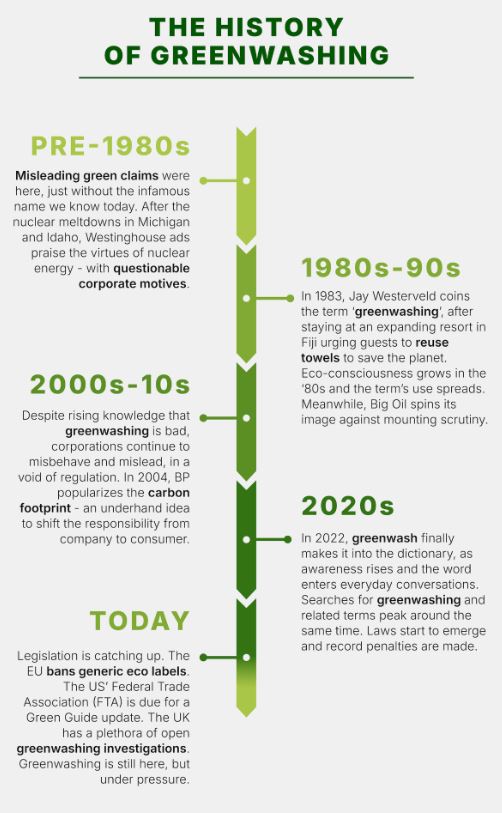
On the regulatory front, Europe is leading the charge with a multi-layered legislative framework. The EU’s Corporate Sustainability Reporting Directive (CSRD), complemented by the Sustainable Finance Disclosure Regulation (SFDR) and the EU Taxonomy, now mandates detailed and standardized ESG disclosures across the continent. Although the proposed EU Green Claims Directive was effectively paused in mid-2025 after the European Commission announced its intention to withdraw the proposal due to opposition in the European Parliament, its spirit lives on through the Empowering Consumers for the Green Transition Directive, which will apply across the EU from September 2026. This directive will ban generic environmental claims such as “eco-friendly” or “climate neutral” unless substantiated with evidence, prohibit misleading sustainability labels, and forbid claims about future environmental performance that lack clear, verifiable commitments.
In the United Kingdom, the Competition and Markets Authority can now fine companies up to 10% of global turnover for misleading environmental claims. In Canada, recent amendments to the Competition Act require businesses to substantiate environmental claims, introducing steep penalties and a private right of action leading, paradoxically, to a rise in “greenhushing,” where companies scale back public ESG commitments to avoid litigation risk. Sustainability-linked loans have also come under increasing scrutiny, with the Royal Bank of Canada publicly abandoning its sustainable finance goals in April 2025, and companies like Shell and Drax revealed to have secured such loans while continuing high-pollution activities.
India’s ESG Shift
India, as one of the world’s fastest-growing major economies, is charting its own ambitious course in ESG governance. The Securities and Exchange Board of India (SEBI) has elevated ESG mandates significantly by introducing the BRSR Core framework, making sustainability reporting mandatory for the top 1,000 listed companies by market capitalization. The BRSR framework represents a paradigm shift from narrative to metrics, from voluntary to mandatory, and from domestic to global alignment. For FY 2025–26, ESG reporting including value chain disclosures is mandatory for the top 250 listed firms, with mandatory third-party assurance beginning in FY 2026–27 and the scope gradually widening to the top 500 companies. SEBI’s framework encompasses nine key metrics covering carbon and energy footprints, circular economy efforts, water conservation, diversity, social initiatives, and board governance, and now includes a “green credit” leadership indicator to publicly recognize companies generating or procuring green credits.
Importantly, greenwashing under the BRSR framework may attract liability as fraudulent or unfair trade practices, material misrepresentation, or market manipulation through misleading disclosures. India’s ESG rules are redefining corporate accountability; ESG rating agencies are now permitted to withdraw ratings if companies fail to file their BRSR reports, reflecting ongoing regulatory refinement. Kerala leads as India’s first state to approve a comprehensive ESG policy in late 2025, spearheaded by KSIDC to prioritize low-pollution industries, 100% renewable energy by 2040, and BRSR-aligned reporting, offering incentives like capital reimbursements and subsidies. Despite these strides, challenges remain: greenwashing risks persist due to weak assurance standards, high compliance costs for smaller firms, and the absence of sector-specific taxonomies.
In this rapidly evolving landscape, the need for cross-sectoral dialogue and collaborative action has never been more urgent. It is in this spirit that the India Water Foundation is set to host the 2nd Edition of the Water Transversality Global Awards and Conclave 2026, scheduled for 6–7 March 2026 at the India International Centre, New Delhi. Building on the resounding success of its first edition, this landmark global event will feature an International Conference on “ESG Transversality for Sustainable Water, Energy, Health & Environment Nexus,” supported by NITI Aayog, the Ministry of Jal Shakti, the Ministry of Social Justice and Empowerment, the Ministry of Power, the Ministry of Environment, Forest and Climate Change, and the Ministry of Heavy Industries of the Government of India, in collaboration with UNESCAP’s South and South-West Asia Office and the SANS Network. The conclave aims to convene global experts, practitioners, and policymakers from around 30 countries to identify synergies between sectors, harness the potential of sustainable finance, and leverage technological and social innovations to drive systemic change.
Way Forward
The message from boardrooms to multilateral forums is unequivocal: ESG-aligned finance and governance are no longer optional aspirations but enforceable imperatives. As regulations tighten, litigation expands, and stakeholder expectations rise, the era of performative sustainability is drawing to a close. The path forward demands transparency, accountability, and a commitment to genuine sustainability not just the appearance of it. Platforms like the Water Transversality Global Awards and Conclave 2026 represent the kind of collaborative, cross-cutting approach that the world urgently needs to translate ESG principles into tangible, transformative outcomes for water, energy, health, and the environment.
*Editor, Focus Global Reporter