
Against a backdrop of war, trade frictions and geopolitical polarisation, the test of COP 31 in Antalya will be whether Türkiye can convert these emerging mechanisms into real flows of support for the Global South instead of watching them wither in implementation limbo. Under current conditions, scaling up finance to the 1.3 trillion trajectories, operationalising the Loss and Damage Fund, and advancing just‑transition‑oriented fossil‑fuel roadmaps are politically and economically challenging, but not impossible if Antalya locks in predictable New Collective Quantified Goal pathways, simplifies access to adaptation and loss‑and‑damage finance, and positions climate action as a core pillar of energy security and stability.
Dr. Arvind Kumar*

In an age of record heat and widening inequality, my greatest concern would be if we simply settled into complacency, UNEP Executive Director Inger Andersen has warned, stressing that countries must “do much more, move much faster, and stretch our collective ambition even further.” UN Secretary‑General António Guterres has been equally blunt, cautioning that “climate chaos is rewriting the rules of weather” and that each warmer year will “hammer economies, deepen inequalities and impact developing countries hardest even though they did least to cause it.” These warnings frame the political and ethical landscape in which COP31 will convene in Türkiye, following a fragile but important outcome at COP30 in Belém and against a backdrop of geopolitical turbulence that is reshaping climate multilateralism.
COP30 in Belém marked a shift from setting targets to building delivery mechanisms, delivering a significant package on finance, adaptation, loss and damage, and implementation.
- Parties agreed to work towards mobilising at least 1.3 trillion USD annually by 2035, to double adaptation finance by 2025 and triple it by 2035,
- to operationalise and replenish the Loss and Damage Fund,
- And to launch the Global Implementation Accelerator and the “Belém Mission to 1.5°C.”
- Initial “start‑up” allocation of about 250 million USD in grants for 2025–2026 projects
- Creation of a Just Transition Mechanism
These tools aim to turn pledges into concrete action by linking NDCs and national adaptation plans to finance, technology and capacity, even as the summit left a credibility gap on fossil fuels by sticking to the weaker “transitioning away” language rather than a firm, time‑bound phase‑out.
Against a backdrop of war, trade frictions and geopolitical polarisation, the test of COP31 in Antalya will be whether Türkiye can convert these emerging mechanisms into real flows of support for the Global South instead of watching them wither in implementation limbo. Under current conditions, scaling up finance to the 1.3 trillion trajectories, operationalising the Loss and Damage Fund, and advancing just‑transition‑oriented fossil‑fuel roadmaps are politically and economically challenging, but not impossible if Antalya locks in predictable New Collective Quantified Goal pathways, simplifies access to adaptation and loss‑and‑damage finance, and positions climate action as a core pillar of energy security and stability.
Global South and its negotiating leverage
Against this backdrop, India’s decision to withdraw its bid to host a future COP specifically COP33 in 2028 has been read as both a pragmatic recalibration and a subtle critique of how the process is evolving. Officially, New Delhi informed the UNFCCC’s Asia‑Pacific group that, after reviewing its 2028 commitments, it would no longer pursue the hosting bid, without giving detailed reasons. Unofficially, analysts point to a combination of factors: the heavy logistical and financial burden of hosting another mega summit; a desire to avoid being placed under disproportionate pressure as the world’s third‑largest emitter during a politically sensitive phase; and a broader recalibration in which India is asserting a development‑first, equity‑anchored climate narrative rather than allowing its domestic choices to be scripted by external expectations.
COP31 itself will be distinctive not only because it is hosted in Türkiye a country that formally positions itself as a bridge between East and West, developed and developing but also because of the co‑hosting arrangement under which Australia will chair the negotiations. This hybrid leadership structure reflects the messy geopolitics of the moment: great‑power rivalries, ongoing conflicts and trade tensions are constraining the space for cooperative outcomes even as they make climate action more urgent. For developing countries, there is a risk that climate negotiations become collateral damage in wider strategic competition, with finance, technology and supply chains increasingly weaponised rather than shared. Yet, there is also an opportunity: a bridge country like Türkiye, which only recently ratified the Paris Agreement and still seeks favourable treatment as a developing economy, can articulate concerns about equity and development while using its ties with the OECD and G20 to push for more credible commitments from the North.
India’s own stance heading into Antalya will be shaped by its updated NDC for 2031–2035, approved by the Union Cabinet in March 2026, which substantially scales up ambition while reaffirming energy access and growth as core priorities. The new NDC commits India to securing 60% of cumulative installed electricity generation capacity from non‑fossil fuel sources by 2035, building on rapid growth that has already pushed the non‑fossil share past roughly half of total capacity. It also pledges to reduce emissions intensity of GDP by about 47% by 2035 compared to 2005 levels, and to expand forest and tree cover to create an additional carbon sink of 3.5–4 billion tonnes of CO₂ equivalent. These are non‑trivial commitments for a lower‑middle‑income country still grappling with energy poverty and industrialisation needs, and they give India both moral standing and negotiating leverage to demand that enhanced ambition from the South be matched by scaled‑up, predictable finance and technology partnerships.
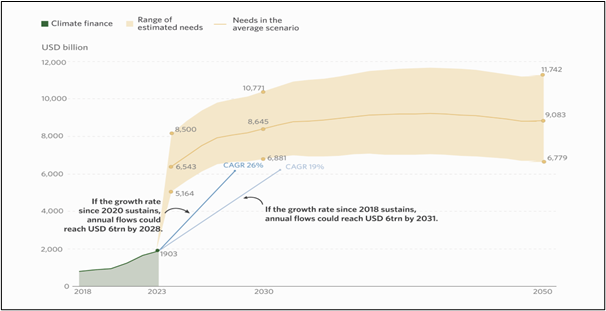
For the Global South more broadly, the priorities at COP31 are clear. First, closing the finance gap: the Belém package’s headline figure of 1.3 trillion dollars per year by 2035 needs to be operationalised through concrete burden‑sharing arrangements, innovative instruments such as debt swaps, and deep reforms of multilateral development banks to lower the cost of capital for clean energy and resilience projects. Second, embedding justice into energy transitions: the Just Transition Mechanism launched in Brazil will have to move beyond concept to country‑level support frameworks that protect workers, informal economies and vulnerable communities as coal and other fossil assets are retired. Third, turning forest and land‑use commitments into durable, adequately funded programmes that reward conservation and restoration without reproducing colonial patterns of control over natural resources in tropical countries.
In analytical terms, COP31 must therefore deliver three things if it is to be seen as a turning point rather than another holding operation.
- It must re‑anchor trust by showing that the Paris regime can still generate “wins” for those most exposed to climate harms through real money, real projects and real capacity rather than only new text.
- It must clarify the fossil‑fuel transition pathway initiated in Dubai and Belém, with timelines and accountability measures that are ambitious but differentiated, recognising that premature constraints on energy use in poor countries would deepen poverty and instability.
- It must defend the integrity of science and multilateralism at a time when both are under attack, echoing Andersen’s reminder that “collaboration across borders and across our differences is the only option to protect the foundation of humanity’s existence Planet Earth.”
Way Forward
For India and its peers in the Global South, the way forward at Antalya is not to disengage from the COP process, but to use COP31 as a platform to hard‑wire their development and justice priorities into the next cycle of global climate governance. That means linking their enhanced NDCs and long‑term strategies to demand‑driven packages of finance, technology and capacity building; insisting that adaptation and loss and damage receive parity with mitigation; and shaping the emerging architecture on just transitions, forests and trade so that it advances, rather than constrains, their developmental aspirations. If COP31 can deliver on even part of this agenda, it will respond to the moral urgency expressed by Guterres and Andersen not with rhetoric, but with tangible steps towards a more equitable, climate‑resilient future for the Global South and for the world.
*Editor, Focus Global Reporter