Dr. Arvind Kumar*
UN Secretary-General António Guterres has been a vocal advocate for integrating ESG principles into global finance, often emphasizing that sustainability is not just a moral issue but a necessity for economic survival. He frequently critiques “greenwashing” and calls for transparent, science-based commitments to net-zero. In 2026, ESG is no longer a reputational add-on or a voluntary reporting exercise. It has become the operating grammar through which risk, value creation, and long-term competitiveness are evaluated across markets and sectors. Climate, biodiversity and pollution are deeply interconnected, and it enables these linkages to be embedded into governance and capital allocation. In India the ESG policy has been formulated on the basis of the assessment that environmentally friendly and relatively low-polluting industries are suitable for the State’s industrial ecosystem. Kerala has now become the first State to implement a comprehensive ESG policy.

The global economy is now operating inside a convergence of systemic shocks that scientists describe as the triple planetary crisis: accelerating climate change, unprecedented biodiversity loss, and pervasive pollution. These are not parallel challenges but deeply interlinked stressors emerging from the same structural failures, extractive growth models, fragmented governance, and the chronic under-pricing of natural and social capital. Recent global assessments indicate that without rapid structural transformation, warming trajectories will overshoot safe limits, ecosystem degradation will continue to undermine food and water security, and pollution will impose rising health and productivity costs, particularly in emerging economies.
It is within this context that Environmental, Social and Governance has moved decisively from the margins of corporate responsibility to the core architecture of economic resilience. UN Secretary-General António Guterres has been a vocal advocate for integrating ESG principles into global finance, often emphasizing that sustainability is not just a moral issue but a necessity for economic survival. He frequently critiques “greenwashing” and calls for transparent, science-based commitments to net-zero. In 2026, ESG is no longer a reputational add-on or a voluntary reporting exercise. It has become the operating grammar through which risk, value creation, and long-term competitiveness are evaluated across markets and sectors. Climate, biodiversity and pollution are deeply interconnected, and it enables these linkages to be embedded into governance and capital allocation. In India the ESG policy has been formulated on the basis of the assessment that environmentally friendly and relatively low-polluting industries are suitable for the State’s industrial ecosystem. Kerala has now become the first State to implement a comprehensive ESG policy.
At its essence, it translates sustainability into decision-relevant signals. Environmental indicators track emissions, energy and water intensity, land use, waste and biodiversity impacts. Social indicators assess labour standards, health and safety, community outcomes, equity and inclusion. Governance indicators examine board accountability, transparency, ethics, and institutional integrity. What makes it uniquely powerful in the current moment is its capacity to integrate planetary risk, social stability and institutional credibility into a single evaluative lens that investors, regulators, consumers and citizens can simultaneously interrogate.
ESG and the Systemic Nature
The relevance of ESG today lies not in novelty but in exposure: every sector now faces systemic, non-linear risks. Climate shocks disrupt supply chains, biodiversity loss undermines food and pharmaceutical systems, pollution drives rising health costs, and weak governance magnifies all these vulnerabilities. It offers a structured framework to internalise such risks before they translate into financial losses or social instability.
Across the economy, this lens is now decisive. Heavy industry and energy are judged on credible decarbonisation, water stewardship and just transition pathways. Finance is being reshaped by climate stress tests, sustainable taxonomies and transition finance. Agriculture is assessed through deforestation, soil health and farmer livelihoods; healthcare through access, ethics and population outcomes; digital platforms through data governance, algorithmic bias and worker protections. It has become the common language through which sustainability expectations are defined, measured and enforced in the real economy.
The rapid institutionalisation of ESG has been driven by the maturation of global standards and regulatory frameworks. What began as voluntary guidelines has evolved into a dense and increasingly mandatory ecosystem. The Global Reporting Initiative (GRI) continues to anchor impact-oriented sustainability disclosures globally. The consolidation of the Sustainability Accounting Standards Board (SASB) into the International Sustainability Standards Board (ISSB) has strengthened the link between ESG metrics and financial materiality across industries.
Climate-focused disclosures shaped by the Task Force on Climate-Related Financial Disclosures (TCFD) are now embedded in ISSB standards, while the European Union’s Corporate Sustainability Reporting Directive (CSRD) and European Sustainability Reporting Standards (ESRS) have converted ESG disclosure into binding law for thousands of firms, including non-EU companies with significant European exposure. Parallel frameworks such as the UN Global Compact, OECD Guidelines for Multinational Enterprises, and stakeholder-capitalism metrics further reinforce convergence around ESG as a baseline expectation of market participation, not a discretionary choice.
Crucially, it shifts sustainability from philanthropic add-ons to core business strategy. Data-driven ESG programmes redirect capital toward climate-resilient infrastructure, inclusive value chains, green innovation and social protection. At the same time, disclosure requirements and third-party assurance help curb SDG-washing by forcing alignment between stated commitments, capital allocation, operational KPIs and executive remuneration.
Building on this philosophy, India Water Foundation is convening the Water Transversality Global Awards and Conclave as a unique platform that operationalises ESG transversality in practice. The 2026 edition, on the theme “ESG Transversality for a Sustainable Water–Energy–Health–Environment Nexus”, is conceived as a two‑day high‑level international forum on 6-7 March 2026 at India International Centre, New Delhi
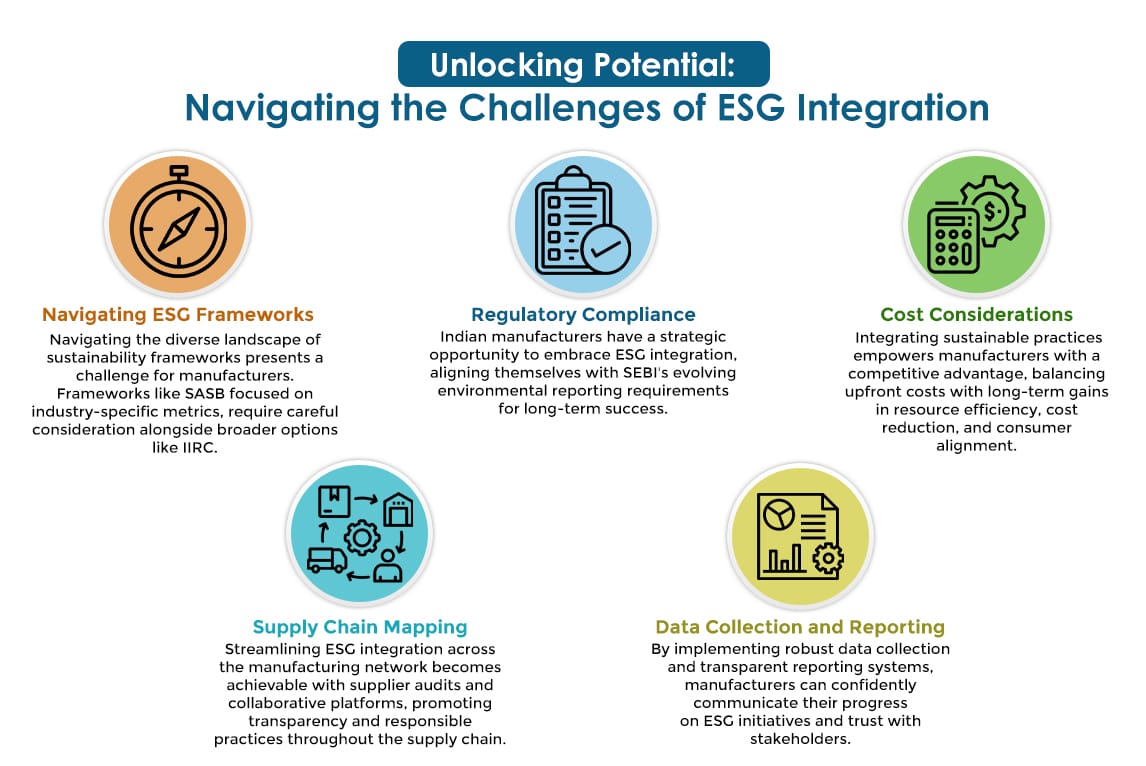
India with rapid economic growth, demographic pressures and climate vulnerability intersect with rising investor scrutiny and regulatory ambition. The country has moved decisively from narrative-driven corporate social responsibility to a more structured ESG regime. The Securities and Exchange Board of India’s evolution from Business Responsibility Reports to Business Responsibility and Sustainability Reporting (BRSR), and now BRSR Core for the largest listed companies, marks a significant shift toward standardised metrics, value-chain coverage and independent assurance.
This framework is reinforced by the National Guidelines on Responsible Business Conduct, expanding renewable energy and electric mobility policies, green hydrogen ambitions, water and waste management regulations, and the emergence of sovereign green bonds. At the same time, India faces gaps: ESG adoption remains uneven beyond large corporates, data quality and assurance capacity are still developing, and coordination across ministries and levels of government requires strengthening. The opportunity lies in aligning ESG more explicitly with India’s development priorities jobs, regional equity, water security and climate resilience.
The Way Forward
For ESG to meaningfully address the triple planetary crisis and accelerate sustainable development, four shifts are essential. First, mainstream nexus thinking by integrating water, energy, health and biodiversity into ESG metrics and strategies. Second, deepen regulatory ambition by expanding coverage, improving assurance and aligning national frameworks with global best practice while preventing greenwashing. Third, repurpose finance toward projects that deliver climate resilience, ecosystem restoration and social inclusion, particularly in vulnerable regions. Fourth, build coalitions and capacities that enable governments, businesses, financiers and communities to co-create context-specific ESG solutions.
ESG is no longer a compliance burden or reputational exercise. In a world shaped by climate shocks, ecological limits and social strain, it has become the architecture of a different development model one that internalises planetary boundaries, values social stability and strengthens institutions. If applied with credibility, ambition and transversal thinking, ESG can help economies like India navigate the triple planetary crisis while advancing resilient, inclusive and sustainable growth.
*Editor, Focus Global Reporter