Shweta Tyagi*
INTODUCTION
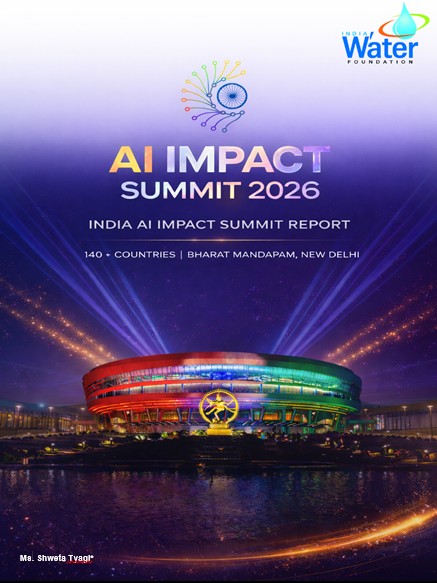
For India, the importance of such a summit extends far beyond technological advancement. Artificial intelligence is rapidly becoming a foundational tool for addressing complex national challenges, including water security, climate resilience, agricultural productivity, urban planning, healthcare delivery, and disaster risk reduction. By facilitating dialogue across sectors, the summit promotes collaborative innovation and ensures that AI solutions are aligned with national development priorities and ethical frameworks.
The AI Impact Summit India 2026 represents a pivotal moment in the nation’s technological evolution, bringing together policymakers, industry leaders, researchers, development institutions, and civil society to shape a responsible and inclusive artificial intelligence ecosystem. As India accelerates its digital transformation, the summit serves as a strategic platform to examine how artificial intelligence can be harnessed to drive sustainable development, strengthen governance, and enhance societal resilience.
AI-enabled data analytics, predictive modeling, and intelligent resource management systems offer transformative potential for public infrastructure and natural resource management. These technologies enable real-time monitoring, early risk detection, improved planning efficiency, and evidence-based decision-making capabilities that are essential for strengthening climate resilience, improving service delivery, and supporting sustainable development outcomes.
Moreover, the summit fosters capacity building, knowledge exchange, and international partnerships, positioning India as a global leader in responsible AI deployment. It encourages the development of regulatory frameworks, ethical guidelines, and public-private collaborations that ensure technology serves humanity while safeguarding equity, transparency, and accountability.
In essence, the AI Impact Summit India 2026 is not merely a technology forum; it is a national development catalyst. By integrating artificial intelligence into sustainability and governance frameworks, the summit supports India’s vision of inclusive growth, environmental stewardship, and resilient infrastructure for future generations.
AI Impact Summit India 2026
AI Impact Summit India 2026 established a strong strategic foundation for the responsible adoption of artificial intelligence across sectors critical to national development. Discussions highlighted how AI can support sustainable growth, strengthen governance, and improve resilience against climate and resource challenges. Policymakers and experts emphasized that AI must be deployed within an ethical and transparent framework to ensure public trust, data protection, and equitable access to technological benefits. The sessions demonstrated the growing role of AI in environmental management, infrastructure planning, agriculture, and disaster preparedness, reinforcing its value as a tool for evidence-based decision-making. The importance of collaborative innovation, capacity building, and global partnerships was also underscored, positioning India as an emerging leader in responsible and development-focused AI deployment.
Strategic Vision & Responsible AI Foundations:

Across five days of deliberations, the summit articulated a unified national vision for responsible artificial intelligence as a catalyst for sustainable development, resilient infrastructure, and inclusive economic growth. Led by the Ministry of Electronics and Information Technology and NITI Aayog, with key guidance from Ashwini Vaishnaw, the summit emphasized governance frameworks that ensure transparency, accountability, and ethical deployment of AI systems.
Sectoral ministries including the Ministry of Jal Shakti, Ministry of Agriculture and Farmers Welfare, and Ministry of Environment, Forest and Climate Change highlighted AI applications in water security, climate adaptation, precision agriculture, and environmental monitoring. The National Disaster Management Authority underscored AI-enabled early warning systems to strengthen disaster resilience, while digital public infrastructure integration was explored with national technology agencies. Strategic partnerships and technology collaborations, including engagement with Pax Silica, focused on environmental intelligence platforms, real-time monitoring systems, and data-driven governance tools. These agreements aim to accelerate scalable deployment, strengthen climate resilience planning, and improve resource efficiency.
The summit’s integrated approach positions India to harness AI responsibly to improve service delivery, safeguard natural resources, enhance food and water security, and build institutional capacity. By aligning innovation with ethical standards and development priorities, this strategic vision strengthens India’s pathway toward sustainable, inclusive, and technology-enabled national progress.
National AI Mission Implementation & Roadmap

The summitplaced strong emphasis on operationalizing the National AI Mission through a structured implementation roadmap designed to accelerate responsible adoption across governance, infrastructure, and development sectors. Led by the Ministry of Electronics and Information Technology in collaboration with NITI Aayog, the roadmap outlines a coordinated approach to scaling AI innovation while ensuring ethical compliance, transparency, and public accountability. Ashwini Vaishnaw emphasized that AI deployment must balance technological advancement with safeguards that protect citizen rights and promote trust.
The implementation framework prioritizes the development of national data infrastructure, interoperable digital platforms, and secure cloud ecosystems to enable cross-sectoral integration. Key focus areas include water resource management, agriculture, climate resilience, healthcare, smart infrastructure, and digital governance. Ministries and state governments were encouraged to adopt standardized AI frameworks to ensure scalability, efficiency, and consistency in service delivery.
Capacity building emerged as a central pillar of the roadmap, with initiatives aimed at strengthening AI research, fostering academic partnerships, and developing a future-ready workforce through specialized training and skilling programs. Support for startups and innovation ecosystems was also emphasized to promote indigenous technology development and reduce dependency on external solutions.
Strategic collaborations with technology partners, including Pax Silica, were highlighted to support AI infrastructure deployment, advanced analytics platforms, and environmental intelligence systems.
The National AI Mission roadmap provides a clear pathway toward leveraging artificial intelligence to improve governance efficiency, strengthen resilience, and drive inclusive, technology-enabled national development.
AI for Water Security & Climate Adaptation
Throughout the five days of the summit, artificial intelligence emerged as a transformative tool for strengthening water security and advancing climate adaptation strategies. Led by the Ministry of Jal Shakti, with policy coordination support from the Ministry of Electronics and Information Technology and NITI Aayog, discussions focused on integrating AI-driven data systems into national water governance frameworks. The deliberations emphasized that climate variability, groundwater depletion, and water quality degradation require real-time intelligence, predictive modeling, and evidence-based decision-making.
Experts demonstrated AI-enabled tools for watershed mapping, groundwater monitoring, river basin analytics, and pollution detection. Remote sensing and machine learning models were highlighted for improving drought forecasting, flood risk mapping, and seasonal water availability projections. Such capabilities enable early warning systems, improve reservoir management, and support climate-resilient planning at basin and district levels.
The Ministry of Environment, Forest and Climate Change highlighted AI-based climate modeling and ecosystem monitoring to support long-term environmental sustainability, while the National Disaster Management Authority emphasized AI-powered hazard prediction systems to reduce risks associated with extreme weather events. Sessions also demonstrated AI-driven smart irrigation technologies and precision water-use systems that enhance agricultural resilience while conserving scarce resources.
Strategic partnerships and technology collaborations, including initiatives with Pax Silica, focused on deploying environmental intelligence platforms, sensor-based monitoring networks, and advanced analytics dashboards to support real-time water quality tracking and climate risk assessment.
These integrated approaches represent a critical advancement toward sustainable water governance. By enabling proactive planning, strengthening climate resilience, and improving resource efficiency, AI-driven water intelligence systems can safeguard livelihoods, support food security, and ensure long-term environmental sustainability in an era of increasing climate uncertainty.
AI for Agriculture, Rural Development & Livelihoods
AI emerged as a cornerstone of discussions on agricultural transformation and rural prosperity at the AI Impact Summit India 2026, highlighting its potential to enhance productivity, strengthen resilience, and improve livelihood security. Deliberations led by the Ministry of Agriculture and Farmers Welfare emphasized the role of AI-driven crop forecasting, soil health analytics, pest surveillance, and precision irrigation systems in improving farm efficiency and reducing input costs. By enabling data-driven decision-making, these technologies empower farmers to optimize yields while conserving water and soil resources.
Experts highlighted the use of satellite imagery, remote sensing, and predictive analytics to provide real-time advisories on weather patterns, crop health, and market trends. Such tools help farmers make informed decisions on sowing cycles, fertilizer application, and harvest timing, thereby reducing climate-related risks and improving income stability. AI-enabled supply chain optimization and digital marketplaces were also discussed as mechanisms to improve price discovery, reduce post-harvest losses, and strengthen farmers’ access to national and global markets.
The summit further underscored the importance of integrating AI into rural development strategies to support livelihood diversification. Intelligent systems can assist in identifying local economic opportunities, enhancing access to credit through alternative data assessment, and supporting rural enterprises with demand forecasting and logistics planning.
Collaborative initiatives involving research institutions, agri-tech startups, and technology partners, including Pax Silica, explored scalable platforms for climate-smart agriculture, resource optimization, and rural data intelligence.
Where a significant portion of the population depends on agriculture and allied activities, AI offers a pathway to resilient rural economies. By strengthening productivity, improving market integration, and enabling climate-adaptive practices, AI-driven solutions can enhance farmer incomes, reduce vulnerability, and support sustainable rural transformation aligned with long-term national development goals.
Disaster Resilience & Climate Risk Preparedness
Disaster resilience and climate risk preparedness emerged as critical priorities at the Summit, with artificial intelligence recognized as a powerful tool for safeguarding lives, infrastructure, and ecosystems. The National Disaster Management Authority highlighted AI-enabled early warning systems, hazard mapping, and predictive risk modeling that can significantly improve preparedness and response mechanisms. By analyzing real-time weather data, hydrological patterns, and geospatial intelligence, these systems enable authorities to anticipate floods, droughts, cyclones, and landslides with greater accuracy.
Experts from the Ministry of Environment, Forest and Climate Change emphasized AI-driven climate modeling and vulnerability assessments to support long-term adaptation planning. These tools help identify high-risk zones, guide resilient infrastructure planning, and support ecosystem-based adaptation strategies.
The summit also underscored the importance of integrating AI platforms with emergency response systems to improve coordination among national, state, and local agencies. Real-time decision-support dashboards, evacuation planning tools, and resource allocation models can significantly enhance response efficiency during climate-induced disasters.
Collaborative initiatives with technology partners, including Pax Silica, explored environmental intelligence platforms capable of monitoring climate indicators, supporting risk forecasting, and strengthening disaster response infrastructure.
For India, where climate variability and extreme weather events increasingly threaten development gains, AI-enabled disaster preparedness provides a strategic pathway to resilience. By strengthening early warning systems, improving risk assessment, and enabling proactive planning, AI can reduce vulnerabilities, protect critical infrastructure, and support climate-resilient development essential for long-term national security and sustainability.
AI for Public Health & Social Development:
AIartificial intelligence emerged as a powerful catalyst for transforming public health delivery and advancing inclusive social development. The Ministry of Health and Family Welfare highlighted AI-enabled disease surveillance, predictive outbreak modeling, and telemedicine platforms that enhance early detection, strengthen response systems, and expand healthcare access particularly for remote and underserved communities. Experts noted that real-time health intelligence can support better resource allocation, hospital preparedness, and targeted interventions during public health emergencies.
Integration with national digital infrastructure, supported by the Unique Identification Authority of India, demonstrated how AI can streamline beneficiary identification, improve welfare delivery efficiency, and reduce service leakages. Such systems enable precise targeting of health insurance schemes, nutrition support programs, and maternal and child health initiatives, ensuring assistance reaches those most in need.
Beyond healthcare, discussions highlighted AI’s growing role in social development through education access, skill mapping, and livelihood support systems. Collaborative technology engagements, including initiatives with Pax Silica, explored advanced analytics platforms to support data-driven planning and social service delivery.
For India, where scale and diversity present complex governance challenges, AI offers a transformative pathway toward equitable service access and improved human development outcomes. By strengthening healthcare reach, enhancing welfare precision, and enabling evidence-based policymaking, AI is poised to elevate quality of life and foster a more inclusive, resilient, and socially empowered society.
Women in AI & Inclusive Technology
The Summit placed strong emphasis on gender inclusion and equitable participation in emerging technologies, recognizing that inclusive innovation is essential for sustainable national progress. Leaders underscored that bridging the gender digital divide is critical to ensuring that the benefits of artificial intelligence are accessible across all segments of society. Smriti Irani highlighted the importance of empowering women through digital literacy, STEM education, entrepreneurship support, and leadership opportunities in AI-driven sectors.
Deliberations emphasized targeted skilling initiatives, mentorship networks, and innovation platforms designed to encourage women’s participation in research, technology development, and startup ecosystems. Government agencies, academic institutions, and industry stakeholders discussed the creation of inclusive training programs and funding mechanisms that enable women-led enterprises to thrive in the digital economy.
Technology experts also stressed the importance of designing inclusive AI systems that reduce bias and reflect diverse social realities. Ensuring gender-responsive data sets, ethical algorithm design, and equitable access to digital infrastructure were identified as critical steps toward building trustworthy and representative AI solutions.
Collaborative initiatives involving public institutions and technology partners, including Pax Silica, explored capacity-building programs and inclusive innovation platforms to support women technologists and grassroots entrepreneurs.
Strengthening women’s participation in AI is not only a matter of equity but also a strategic imperative for economic growth and social transformation. By fostering inclusive technology leadership and expanding opportunities for women in AI, India can accelerate innovation, enhance workforce diversity, and ensure that technological progress reflects the needs and aspirations of its entire population.
Investment Commitments & Multi-Stakeholder Partnerships
Investment commitments and multi-stakeholder partnerships emerged as a defining outcome of the summit, signaling strong momentum toward scalable and responsible AI deployment. Government institutions, industry leaders, research organizations, and development partners collectively emphasized that collaborative financing and shared innovation frameworks are essential to accelerate technology adoption across priority sectors.
Policy leaders from the Ministry of Electronics and Information Technology and NITI Aayog highlighted funding mechanisms designed to support AI infrastructure, data platforms, and sector-specific innovation. Public–private partnerships were identified as critical to bridging investment gaps, strengthening research ecosystems, and enabling the transition from pilot projects to large-scale deployment.
Industry stakeholders announced commitments to support AI research, startup incubation, and digital infrastructure development. Collaborative frameworks aim to foster innovation clusters, promote indigenous technology development, and strengthen India’s global competitiveness in emerging technologies.
A key highlight was the engagement of technology solution providers, including Pax Silica, in advancing environmental intelligence systems, real-time monitoring platforms, and data-driven governance tools. Such partnerships are expected to enhance climate resilience planning, resource management, and infrastructure efficiency through advanced analytics and integrated digital systems.
The summit reinforced that multi-stakeholder collaboration is essential for ensuring equitable and sustainable AI adoption. By aligning investments with policy priorities and development goals, India can accelerate innovation, strengthen institutional capacity, and deliver technology solutions that improve service delivery and societal resilience.
These commitments mark a significant step toward building a robust AI ecosystem capable of supporting inclusive growth, sustainable development, and long-term national competitiveness.
International Cooperation and South–South Collaboration
The Summit underscored international cooperation as a critical enabler for scaling responsible artificial intelligence solutions across developing regions. Guided by the Ministry of External Affairs in collaboration with the Ministry of Electronics and Information Technology and NITI Aayog, the summit advanced a framework for cross-border partnerships, technology exchange, and collaborative innovation. Particular emphasis was placed on South–South collaboration to promote practical, affordable, and context-sensitive AI solutions that address shared developmental challenges.
Deliberations highlighted opportunities for joint research, institutional capacity building, and interoperable data frameworks among countries facing similar pressures related to water scarcity, climate variability, disaster risks, agricultural resilience, and public health systems. By co-developing AI tools tailored to diverse environmental and socio-economic conditions, participating nations can accelerate sustainable development outcomes while ensuring inclusivity and technological accessibility.
Several strategic cooperation initiatives were discussed, including partnerships between Indian institutions and global technology providers such as Pax Silica. These collaborations aim to deploy environmental intelligence systems, climate monitoring platforms, and data-driven governance tools to strengthen resource management, improve early warning capabilities, and support climate adaptation planning in vulnerable regions.
The Ministry of Jal Shakti and Ministry of Environment, Forest and Climate Change emphasized the potential for collaborative watershed management, ecosystem monitoring, and climate modeling initiatives with partner countries confronting comparable environmental stresses.
Through strengthened South–South engagement, India is reinforcing its role as a leader in inclusive digital transformation. By promoting shared learning, cooperative innovation, and equitable access to advanced technologies, India is contributing to a more resilient, sustainable, and technologically empowered Global South.
Closing Leadership Address & Way Forward
The AI Impact Summit India 2026 has established a forward-looking framework that positions India at a decisive moment in its technological and developmental journey. The deliberations demonstrated that artificial intelligence is no longer an experimental tool but a strategic necessity for addressing complex national priorities, including water security, climate resilience, agricultural sustainability, disaster preparedness, and efficient governance. The way forward requires translating the summit’s insights into coordinated action, ensuring that innovation is guided by ethical standards, institutional readiness, and inclusive access.
A key priority is the operationalization of responsible AI governance. Strengthening regulatory frameworks, ensuring data protection, and embedding transparency in algorithmic systems will build public trust and enable long-term adoption. Institutional collaboration led by the Ministry of Electronics and Information Technology and NITI Aayog must continue to guide policy coherence, while sectoral ministries integrate AI tools into domain-specific planning and service delivery.
Equally critical is the scaling of AI-enabled solutions in climate adaptation and resource management. Investments in environmental intelligence systems, predictive analytics, and real-time monitoring platforms — supported by partnerships with technology providers including Pax Silica — can significantly enhance resilience planning, optimize resource utilization, and strengthen disaster preparedness. Such deployments must prioritize vulnerable regions where climate impacts and resource stress are most acute.
Capacity building will define the success of India’s AI transition. Expanding skilling programs, fostering interdisciplinary research, and supporting startup ecosystems will empower a workforce capable of designing and managing advanced technologies. Collaboration among academia, industry, and government will be essential to nurture innovation and ensure technological self-reliance.
The path forward must also remain inclusive. Ensuring equitable access to AI-driven services for rural communities, small enterprises, and underserved populations will help bridge digital divides and promote balanced socio-economic progress. Public awareness, community participation, and local innovation ecosystems should be encouraged to ensure technology responds to real societal needs.
As India advances toward a digitally empowered future, the summit’s outcomes call upon policymakers, industry leaders, researchers, and citizens to embrace responsible innovation. By fostering collaboration, strengthening institutions, and prioritizing sustainability, India can harness artificial intelligence not only as a driver of economic growth but as a force for environmental stewardship, social equity, and resilient national development.
CONCLUSION
The AI Impact Summit India 2026 concluded as a landmark initiative demonstrating India’s commitment to harnessing artificial intelligence as a strategic instrument for sustainable development, resilient infrastructure, and inclusive economic growth. Over the course of the summit, multi-stakeholder dialogue translated national priorities into actionable pathways, reinforcing the role of responsible AI in strengthening governance, environmental stewardship, and public service delivery.
The summit underscored that AI is no longer a future aspiration but an operational necessity for addressing complex challenges such as water security, climate adaptation, disaster resilience, agricultural productivity, and urban sustainability. By fostering convergence among government institutions, industry leaders, research organizations, and civil society, the platform advanced a shared vision of ethical, transparent, and citizen-centric technology deployment.
A defining outcome of the summit was the announcement of strategic partnerships and implementation commitments designed to accelerate AI adoption across priority sectors. Collaborative agreements with technology providers, including Pax Silica, are expected to strengthen environmental intelligence systems, enhance real-time resource monitoring, and enable data-driven decision-making. Such partnerships will support scalable infrastructure, improve climate resilience planning, and optimize resource efficiency at national and regional levels.
Equally significant was the emphasis on regulatory readiness, data governance frameworks, and capacity building to ensure responsible innovation. Investments in skilling, research collaboration, and startup ecosystems will help build a future-ready workforce and foster indigenous technological capabilities.
In essence, the summit represents a transformative national effort to align technological progress with sustainable development imperatives. By catalyzing partnerships, strengthening institutional frameworks, and promoting inclusive access to innovation, the AI Impact Summit India 2026 has laid a robust foundation for long-term resilience, economic competitiveness, and equitable growth positioning India as a global leader in responsible and development-oriented artificial intelligence deployment.
*Associate Editor, Focus Global Reporter