Excerpts from an interview of Ms. Madhushree Chatterjee, Secretary, UN-Water & Chief, Natural Resources and Interlinkages Branch, UN DESA by Dr. Arvind Kumar, Editor, Focus Global Reporter.
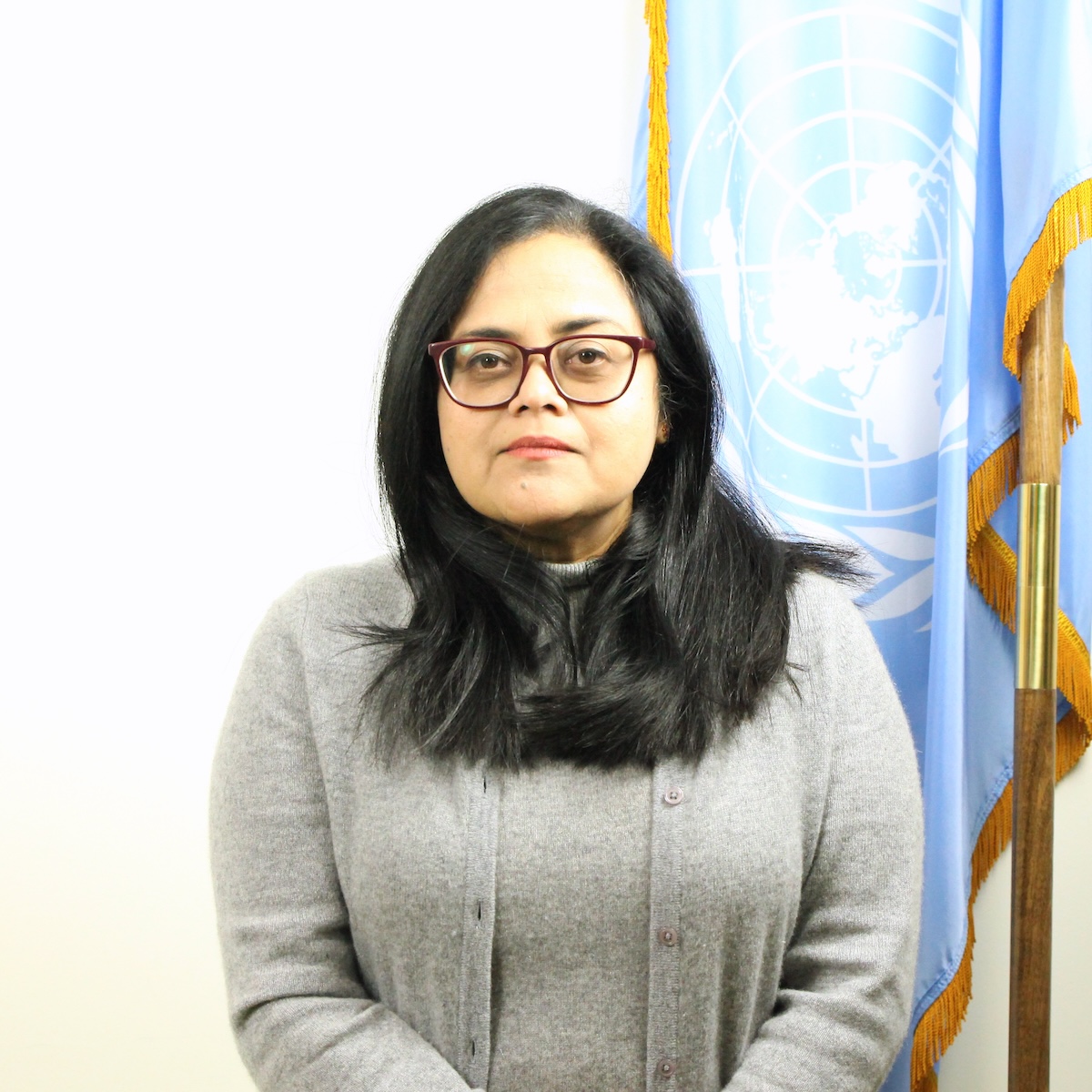
Ms. Madhushree Chatterjee is the Secretary of UN-Water and currently serves as Chief of Natural Resources and Interlinkages Branch at the Division for Sustainable Goals of the Department of Economic and Social Affairs (DESA), United Nations, New York. Ms Chatterjee brings a combination of substantive experience in the implementation of the 2030 Agenda and the SDGs and understanding of the strategic direction of the Organisation to her role as Secretary of UN-Water.
Ms Chatterjee served as the Principal Economic Affairs Officer and later as Chief of the Strategic Planning and Communication Service at the Office of Under-Secretary General, DESA. She actively engaged programme managers on inputs to discussions on the 2030 Agenda, provided a leadership role in the Strategic Planning and Communication Services unit, and supported the DESA Editorial Board. Ms Chatterjee holds a PhD in Economics from the University of California Santa Cruz.
INTERVIEW
EDITOR: Looking back at your career trajectory within the UN system, what has been the most significant shift you have witnessed in how the global development community perceives “water” from a siloed sector to a central development enabler?
MS. CHATTERJEE: The United Nations has long acknowledged the vital role of water in all aspects of development. A diverse set of Conferences and Summits, as well as resolutions of the various Committees of the General Assembly, have addressed the role of clean water and sanitation and the multitude of socio-economic implications owing to a lack of it. However, discussions in the early 2000s were largely devoted to WASH (Water, Sanitation and Hygiene) or rather was seen through the WASH lens. In 2000 for example, when the eight Millennium Development Goals (MDGs) were agreed upon by the Member States of the United Nations, the accomplishment of Goal 7: Ensure Environmental Sustainability was dependent on, among others, four water related targets, all focused on access to drinking water and improved sanitation. As such, it is my understanding that water was addressed mostly within the confines of WASH ministries.
The transition from the Millennium Development Goals to the Sustainable Development Goals represented a major broadening of water-related priorities. While the MDGs focused primarily on ensuring basic water access through its Goal 7, the SDGs took a comprehensive approach with Goal 6 by addressing water management across its full cycle as reflected in its targets. With the adoption of the 2030 Agenda, and its 17 SDGs, we demonstrated that water is a fundamental connector across our priorities in sustainable development. Research, including that done by UN DESA, shows clearly how water is connected across the majority of SDGs. For instance, access to clean water is a key factor in reducing poverty (SDG 1). One reason is because of water’s role in food production (SDG 2), Lack of water and sanitation limits the lives of women and girls disproportionately and is a barrier to gender equality (SDG 5); Clean water is also essential to all economic activity, including energy production (SDG 7), job creation (SDG 8), and industry (SDG 9). With growing water scarcity, water will be the key constraining factor in many parts of the world, requiring responsible consumption and production (SDG 12) and, therefore, water must be a key part of planning for sustainable cities and communities (SDG 11) and resilient landscapes (SDG 15) to name a few.
Finally, the 2023 UN Water Conference was a watershed moment where discussions centered around thematic dialogues that focused on these interconnections and as we look towards the 2026 UN Water Conference, Member States are building on these connections to accelerate implementation of our common priorities on water, leaving no one behind. The 2023 Conference and the subsequent appointment of the Special Envoy on Water places water high on the global sustainable development agenda.
EDITOR: It has been over a year since the operationalization of the UN System-wide Strategy on Water and Sanitation. From your perspective, how has this strategy concretely changed the way UN agencies collaborate on the ground? Are we finally breaking the silos?
MS. CHATTERJEE: The UN System-wide Strategy on Water and Sanitation aims to make inter-agency collaboration fully operational and to use UN development system reforms and upscaled water initiatives to offer Member States support that is more strategic, effective, unified, and efficient. Following the Strategy’s introduction, UN-Water created an implementation plan outlining key collaborative and continuing initiatives. This plan establishes common priorities and steps to improve coordination, synchronize organizational work schedules, and deliver more unified and impactful assistance to Member States. The Plan advances the Strategy’s execution by:
- Setting deadlines for actions that will achieve the Strategy’s goals and results
- Emphasizing how UN organizations and partners can contribute to create synergies, fill gaps, and eliminate redundancy
- Offering a foundation for harmonizing institutional strategies and water programmes
- Acting as a collective framework for tracking advancement
- Facilitating the mobilization of extra resources for joint Strategy implementation
Beyond delivering coordinated and harmonized assistance to Member States, there’s also a goal to unite and strengthen UN messaging on water matters. The objectives include promoting improved collaborative country-level programming across different government departments and sectors, integrating water issues throughout the Rio Conventions at every level, enhancing evidence accessibility and knowledge application to speed up progress, and building momentum to raise the aspirations of UN Water Conferences.
As for the challenge of eliminating organizational silos is concerned, it’s important to recognize that each UN entity operates with unique mandates, governing bodies, separate funding mechanisms and approaches that cannot be easily restructured. At the operational level, the UN must work through comparable challenges while respecting national priorities. The system-wide strategy represents a meaningful initial step toward unified action.
EDITOR: The SDG 6 Global Acceleration Framework emphasizes data. As we head into 2026, are you satisfied with the level of data transparency from Member States, particularly from the Global South, or is the “data gap” still our biggest hurdle?
MS. CHATTERJEE: When Member States adopted the 2030 Agenda, countries took responsibility for collecting and sharing indicator data and metadata for the purpose of global reporting. The role of the United Nations is to support countries in their efforts to do so. UN-Water established the Integrated Monitoring Initiative-SDG 6 in 2015 which brings together the United Nations organizations that are custodians of the various SDG 6 global indicators, to that end.
Data on SDG 6 that is reliable, consistent and disaggregated (including by age and gender) are essential to stimulate political commitment and inform policymaking and decision-making. Such data helps identify those who are most vulnerable, enable well-targeted investments that maximize health, environmental and economic gains, and allow governments to make timely course corrections. While the data gap remains one of our most critical challenges, I want to emphasize that it is not simply about transparency or willingness—many governments need technical capacity, financing, and institutional infrastructure to collect reliable data. In some countries, we’re asking for disaggregated water quality monitoring when they don’t have functioning statistical offices.
Finally, the global South comprises of a variety of countries across regions, each navigating their own unique circumstances. Our role is to provide technical assistance, support capacity building, foster innovation, and increase financing for national statistical systems. It is therefore fitting that support for programmes that strengthen national data collection and statistics, especially on sustainable development, features prominently in the Sevilla Commitment.
EDITOR: You have spoken previously about the “Blue Economy” as a frontier for sustainable growth. How can developing nations harness ocean resources without repeating the over-extraction mistakes made on land, and how does UN DESA support this balance?
MS. CHATTERJEE: Estimates suggest the ocean economy generates between US $3-6 trillion annually and provides direct employment for no fewer than 150 million people worldwide. These jobs span diverse industries including fisheries, fish farming, maritime shipping, coastal tourism, offshore wind power, petroleum extraction, seabed mining, and marine biological research.
Each nation’s ocean economy composition differs based on its geographic location, historical background, governmental systems, societal structure, cultural traditions, economic conditions, and the strategic priorities reflected in its national policies and vision. Ocean resources, therefore, are fundamentally connected to coastal nations’ economic prosperity and are critical for reaching the Sustainable Development Goals.
A truly sustainable ocean economy must incorporate activities and sectors that achieve social fairness, environmental protection, and economic profitability—thereby harmonizing the three pillars of sustainable development.
In my view, this equilibrium among economic, environmental, and social dimensions depends heavily on which ocean-based sectors—both existing and emerging—are developed. Established industries like fishing, fish farming, tourism, and shipping can coexist with emerging sectors including ocean-based renewable energy, blue carbon capture, and marine biotechnology.
Furthermore, the blue economy offers particular promise for small island developing and coastal states to strengthen their resilience against external shocks while safeguarding and revitalizing their natural assets. However, building this resilience faces numerous obstacles, including threats like ocean acidification, plastic pollution, and declining biodiversity.
Bold initiatives must be undertaken to combat climate change and biodiversity loss, while ensuring that livelihoods are maintained and sustainable.
Frequently, employment concerns, environmental protection, and climate action are addressed separately. As we advance toward an ocean economy that tackles the interconnected crises of climate, pollution, and biodiversity, we must strengthen comprehensive ocean management systems and labor protections while elevating perspectives from coastal populations, including Indigenous groups, women, and youth. Integrated policies and coordinated management are necessary to restore ocean health while enabling responsible use of marine resources for human benefit.
UN DESA contributes by providing capacity-building support to help countries develop national strategies that incorporate these priorities in a unified and comprehensive way. Furthermore, DESA supports the implementation of SDG 14, including through conducting in-depth reviews of progress on its implementation, at the High-Level Political Forum on sustainable development, working closely with Member States on the same. UNDESA leads the substantive preparations and content of the Ocean Conferences and maintains a database of ocean commitments aimed at sharing best practices. UNDESA also conducts regular analysis of these voluntary commitments to assess their impact.
EDITOR: SIDS are on the frontlines of both the water crisis and ocean degradation. What specific new initiatives is your branch championing to support SIDS in building resilience against sea-level rise and freshwater salinization?
MS. CHATTERJEE: Small Island Developing States (SIDS) are at the forefront of the water crisis and face amplified challenges in reaching SDG 6 due to their distinct vulnerabilities. These include scarce fresh water, fragmented governance, and the intensifying effects of climate change, all of which threaten their sustainable development and resilience. Furthermore, climate change worsens water insecurity for SIDS. For example, inadequate sanitation, worsened by climate impacts, raises the risk of waterborne diseases. Investments in wastewater treatment and public health education are crucial to mitigate these threats. Financing remains a critical hurdle. Many SIDS depend on external, project-based funding, which is not sustainable for long-term water management. Access to international climate finance is essential to close funding gaps and support resilient infrastructure.
Sea-level rise, saltwater intrusion, erratic rainfall, and extreme weather compromise water quantity, quality, and infrastructure.
In its advisory capacity, UN DESA helps SIDS countries develop national plans and strategies that take into account requisite measures to address challenges. We recommend that adaptation measures are integrated into water-management strategies to protect livelihoods and ecosystems.
Gaps in policy and governance hinder progress. Fragmented policies and weak institutional coordination limit effectiveness. Adopting Integrated Water Resources Management (IWRM) approaches that reflect SIDS realities can improve governance, coordination, and resource allocation. We encourage building resilient water systems through innovative infrastructure. SIDS need support for decentralized, cost-effective solutions such as rainwater harvesting, renewable-energy-powered desalination, and nature-based approaches to boost ecological resilience and water security.
Empowering decision-making with data and knowledge systems is critical. Data gaps on SDG 6 in SIDS hinder evidence-based actions; about 49% of SDG 6 indicators in SIDS lack adequate reporting, higher than the global average which hampers targeted interventions. As requested, UN DESA helps build technical capacity and helps strengthen institutions to close these gaps and track progress.
UN DESA also helps foster global partnerships to leverage expertise and resources. Strengthening ties among SIDS, regional organizations, and international bodies can enhance knowledge exchange, access technical expertise, and mobilize financial resources more effectively.
Finally, we help elevate SIDS voices on the world stage. The vulnerability of SIDS in the global water crisis calls for greater visibility. UN DESA has served as the Secretariat for several UN Conferences that focus on SIDS where UN DESA leverages its analytical skills, convening power and intergovernmental acumen to ensure that challenges specific to SIDS are addressed. We are also working closely with the Special Envoy on Water to advocate for stronger political will, dedicated funding, and technical support for SIDS.
EDITOR: While we are focused on 2030, discussions are quietly beginning about the post-SDG agenda. Do you believe we need a standalone “Water Goal” again in the future framework, or should water become a mandatory cross-cutting indicator across all future development goals?
MS. CHATTERJEE: This is a timely and important question, and I don’t have a definitive answer to it, which perhaps reflects the complexity of the matter itself. The Member States of the United Nations will determine how water is reflected post-2030. Without pre-empting the outcome, I would like to stress that the case for either option that you state in your question is compelling.
Having a standalone goal (SDG 6) created political visibility, enhanced advocacy, engaged a diverse group of stakeholders, promoted research leading to innovative ideas and solutions at all levels. It has also led to the establishment of mechanisms and frameworks, (no doubt, with imperfections) that have been critical in bringing about a coordinated approach to water. In short, SDG 6, despite its shortcomings, significantly elevated water in national, regional and global agendas. There is also the practical reality that without a dedicated goal, water may be deprioritized when governments face trade-offs.
The case for mainstreaming water is equally strong. If, water is a connector, why should we create artificial silos and sectorize it? I would propose a focused water goal, with a mandatory cross-cutting element across all other goals, which would recognize the importance of water in sustainable development.
We know that the world is off track to achieve SDG 6 by 2030 and the world must accelerate up to four times the current rate to have a chance to achieve SDG 6 by 2030. Therefore, tracking progress on our water related priorities will be critical. What this would look like ultimately would depend on decisions that Member States take on the post-2030 Agenda itself: i.e., would the current goal structure be maintained or would it take the shape of an approach that acknowledges interlinkages across our common objectives.
EDITOR: As we enter 2026, a critical year for global water governance, what is your one key message to non-state actors—civil society, NGOs, and the private sector—on how they can best support the UN’s mandate right now?
MS. CHATTERJEE: The United Nations has a strong history of partnership with a variety of stakeholders including civil society, NGOs and the private sector. We recognize that we cannot achieve SDG 6 on our own and neither can national governments working in isolation.
Right now, the UN’s water mandate most needs non-state actors to align and coordinate their efforts around shared goals, common data, and country-led priorities, and to demonstrate impact at scale.
Concretely, this means:
- Civil society and NGOs should advocate for water via compelling evidence. They must amplify marginalized voices and support governments to implement informed, science and data driven policies.
- The private sector must move beyond pilots and pledges to transparent investment, risk-sharing, and disclosure that supports universal access, ecosystem protection, and climate resilience.
- All non-state actors should use compatible metrics, open data, and accountability mechanisms so progress can be aggregated, trusted, and acted upon.
With barely four years to go, the UN alongside its partners must move beyond commitments and deliver results on the ground. The UN can convene and set norms but only coordinated, outcome-focused partnerships will close the growing gap between global water ambition and reality.
As we approach 2026, my key message to non-state actors, including civil society, NGOs, and the private sector, is to engage proactively with the UN’s initiatives and contribute to collaborative efforts. Your involvement is vital in advocating for sustainable water management, implementing innovative solutions, and amplifying the voices of communities that are directly impacted. Together, we can build a stronger global partnership for water governance and sustainable development.