
Dr. Arvind Kumar*

When the Director-General of the Food and Agriculture Organization (FAO), Qu Dongyu, launched the 2025 Global Report on Food Crises, he warned that acute food insecurity has become a “constant reality” for millions, driven by a toxic mix of conflicts, weather extremes and economic shocks, compounded by funding shortfalls and shifting global priorities away from resilience-building”. “When the Strait of Hormuz is strangled, the world’s poorest and most vulnerable cannot breathe and the consequences are already visible “in the daily lives of people struggling with rising food and energy costs from the Philippines…to Sri Lanka…to Mozambique,” said Antonio Guettress during a press briefing on the continuation of the US-Israel-Iran conflict and its impact on the world.
In a separate briefing on the Middle East, DG-FAO, stressed that “peace is a prerequisite for food security” as escalating hostilities in Gaza and its neighbourhood push 1.84 million people into extremely critical levels of acute food insecurity and threaten to spill over into agrifood systems across the wider region. With climate action dwarfed by the scale of the crisis and by entrenched fossil‑fuel and geopolitical interests. Together, these assessments underline a stark reality: today’s wars are not only claiming lives and destroying infrastructure; they are deeply entangled with the triple planetary emergency of climate change, biodiversity loss and pollution, and are driving a cascading crisis of food insecurity and inflation.
The latest State of Food Security and Nutrition in the World (SOFI) report estimates that between 638 and 720 million people faced hunger in 2024 around 8.2% of the global population while elevated food price inflation has eroded access to healthy diets for low‑income households in many countries. Conflict‑related disruptions, extreme weather and economic slowdowns remain the dominant structural drivers of this crisis, with rising prices for food, energy and agricultural inputs undermining progress towards Zero Hunger. The 2025 Global Report on Food Crises (GRFC) finds that 295.3 million people across 53 countries and territories experienced acute food insecurity in 2024, a tripling since 2016, with conflict identified as the main driver in 20 of the 65 countries.
Food and inflation dynamics for Global south
Against this backdrop of systemic vulnerability, global political and financial choices remain profoundly misaligned. World military expenditure reached 2.718 trillion dollars in 2024 the highest level ever recorded equivalent to 2.5% of global GDP and about 7.1% of total public spending. The United States, China, Russia, Germany and India together account for around 60% of this total, indicating the concentration of security investments in a handful of powers. By contrast, the Loss and Damage Fund operationalised at COP28 has so far attracted roughly 700 million dollars in pledges, a sum that represents less than 0.2% of the estimated annual loss and damage faced by developing countries and barely a fraction of the 100 billion dollars per year that vulnerable nations expect the fund to programme. In effect, the world continues to invest orders of magnitude more in preparing for and prosecuting wars than in stabilising climate‑stressed food systems and cushioning the poor from price shocks.
The wars themselves are central drivers of today’s food‑price and inflation dynamics. FAO’s analyses of the war in Ukraine highlight how fighting between two major agricultural and fertiliser exporters unsettled global food and energy markets, driving higher prices for cereals, vegetable oils, fuel and inputs at the very moment the world was emerging from the pandemic. Econometric work on the Russia‑Ukraine war confirms that the shock to food, fuel and fertiliser prices pushed more than 22 million people into hunger and over 27 million into poverty, with food security indicators particularly sensitive to spikes in wheat and fertiliser prices. These findings underscore a simple but devastating chain: when wars disrupt energy supplies, grain exports and fertiliser flows, they raise production costs across the global food system, which then feed directly into higher consumer prices and deeper food insecurity, especially in import‑dependent and low‑income countries.
The ongoing war centred on Iran and its neighbours is now amplifying this chain on a new front. The International Monetary Fund (IMF) warns that the conflict has already disrupted maritime shipments of oil and liquefied natural gas through the Strait of Hormuz, which carries roughly a fifth of global oil trade, pushing Brent crude prices back above 100 dollars per barrel. IMF officials have reiterated a rule‑of‑thumb in which every sustained 10% increase in oil prices raises global inflation by about 0.4 percentage points and reduces output by 0.1–0.2%, with additional risks from fertiliser shipment disruptions and tighter financial conditions. In practical terms, high and volatile energy prices act as an inflationary tax on the entire food system: they raise the cost of pumping irrigation water, powering cold chains, transporting food to markets and producing fertilisers and agro‑chemicals. These “second‑round effects” mean that even where global benchmark food prices begin to moderate, retail food inflation in many developing countries remains stubbornly high because energy, logistics and import bills are still elevated.
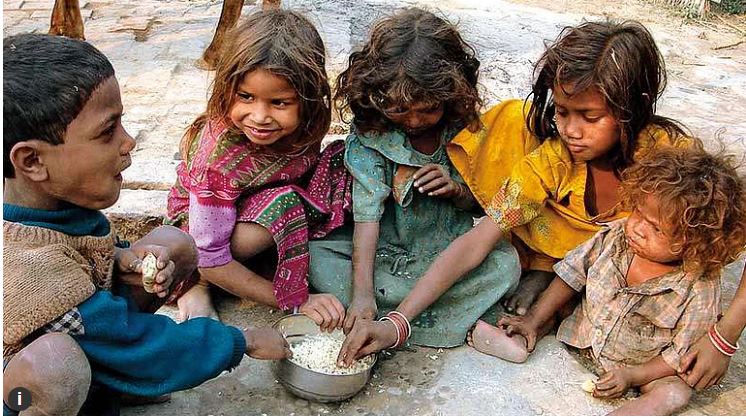
Recent FAO–WFP Hunger Hotspots reports bring this interaction into sharp focus. The November 2025–May 2026 outlook identifies 16 hunger hotspots where acute food insecurity is expected to worsen, with conflict and violence the primary drivers in 14 of them. These war‑driven shocks are interacting with the underlying climate crisis to entrench a vicious cycle of hunger and inflation. For poor urban consumers and rural net food buyers, this means spending a rising share of household income on basic staples, cutting back on diverse and nutritious foods, and often resorting to distress strategies such as reducing meals, taking children out of school or migrating in search of work. Food price spikes have also become a major driver of social unrest, with protests and instability feeding back into political tensions that further deter investment in climate‑resilient agriculture and sustainable food systems.
India’s climate and development trajectory illustrates how these global dynamics transmit into domestic vulnerabilities. India has progressively decoupled economic growth from emissions, reducing the emission intensity of its GDP by 36% between 2005 and 2020 and over‑achieving its earlier 2030 targets of a 33–35% reduction and at least 40% non‑fossil power capacity well ahead of schedule. In 2022, India raised its ambition to a 45% cut in emissions intensity and 50% non‑fossil electricity capacity by 2030, and has now announced updated targets for 2031–35 of a 47% reduction and 60% non‑fossil installed capacity. Yet these gains are exposed to energy and food price volatility imported from abroad. India’s annual LPG consumption more than doubled between 2011–12 and 2024–25, with more than 93% of incremental demand met through imports, leaving the clean cooking transition heavily dependent on global LPG prices and domestic subsidies. When wars in other regions push up energy and fertiliser prices, India faces difficult trade‑offs between absorbing costs through higher subsidies, which can crowd out spending on adaptation, social protection and rural infrastructure or passing them on to households, which risks reversing gains in clean cooking adoption and pushing vulnerable families back to biomass, with implications for health, gender equity and deforestation. So long as the dominant response to insecurity is to expand military capabilities rather than strengthen food, energy and climate resilience, this cycle will continue to deepen.
Way Forward
Reversing this trajectory requires explicitly reframing peace as a core pillar of climate and food‑security policy. Even a modest reallocation of the 2.7‑trillion‑dollar global military budget towards grant based climate and food‑system finance could go a long way towards closing the adaptation, resilience and Loss and Damage gaps identified by FAO, WFP and many independent assessments. For countries like India, this implies advancing a “peace–climate–food nexus” in forums such as the G20, BRICS and the United Nations, championing the protection of critical energy, water and food infrastructure; arguing for international norms against the weaponisation of food systems and renewable assets; and embedding climate and food‑system resilience into conflict prevention and peace building strategies. Domestically, insulating green and just transitions from external shocks will mean accelerating renewable deployment, reducing dependence on imported fossil fuels, scaling non‑fossil clean cooking solutions and deepening regional energy and food cooperation so that wars elsewhere do not automatically translate into hunger and inflation at home. What is needed is a fundamental reordering of global priorities from conflict to cooperation, from extraction to restoration, and from narrow notions of national security to a broader vision of planetary food and climate security.
*Editor, Focus Global Reporter