Dr. Arvind Kumar*

Delivering the Chief Guest address, Om Birla, Hon’ble Speaker of the Lok Sabha, articulated a compelling vision for sustainable development rooted in collaboration, innovation, and public participation. Emphasizing the need to move beyond the traditional perception of development and environmental protection as competing priorities, he observed that the two must instead be viewed as complementary pillars of long-term progress. He also expressed his appreciation to India Water Foundation for convening the important dialogue and for pioneering the model of transversality, which seeks to integrate water, energy, health, and environmental dimensions for the betterment of the world. He noted that such collaborative platforms are essential for fostering shared responsibility, knowledge exchange, and collective action towards achieving sustainable and resilient development pathways.
“Transversality: A Mantra for Integrated Solutions to Common Challenges and a Path to Sustainable Development”. Said Shri Om Birla, Speaker, Lok Sabha
The Water Transversality Global Awards and Conclave 2026, held on 6–7 March 2026 at India International Centre, New Delhi, convened global leaders, policymakers, industry representatives, and development practitioners to deliberate on one of the most pressing challenges of our time: integrating sustainability across sectors. Organized under the aegis of the Water Transversality Global Awards, the two-day conference was themed “ESG Transversality for a Sustainable Water–Energy–Health–Environment Nexus.”
The central premise of the conclave was the concept of transversality a governance and policy approach that recognizes the deep interconnections between water systems, energy production, environmental protection, and public health. In a world increasingly defined by climate risks, resource scarcity, and socio-economic vulnerabilities, siloed approaches are no longer sufficient.
To explore these intersections in depth, the conference featured five thematic plenaries and panel discussions, each addressing a key dimension of the ESG framework and its role in advancing sustainable development. The discussions highlighted innovative policy approaches, emerging technologies, financial instruments, and governance mechanisms that can accelerate progress toward integrated resource management.
A Platform for Integrated Thinking
The event also brought together an impressive line-up of global thought leaders and practitioners. Among the distinguished speakers were H.H. Shri Sadhguru Jaggi Vasudev, spiritual leader and environmental advocate; Dr Satya Tripathi, Secretary-General, Global Alliance for a Sustainable Planet; Shri Amit Kumar Additional Chief Sceretary Uttar Pradesh; Shri Sampath Kumar, CEO, MBDA, Government of Meghalaya; Ms. Ulrike Kelm, Deputy Executive Director, International Water Resources Association and others. Their insights collectively reinforced the importance of bridging science, policy, finance, and community engagement in addressing sustainability challenges.
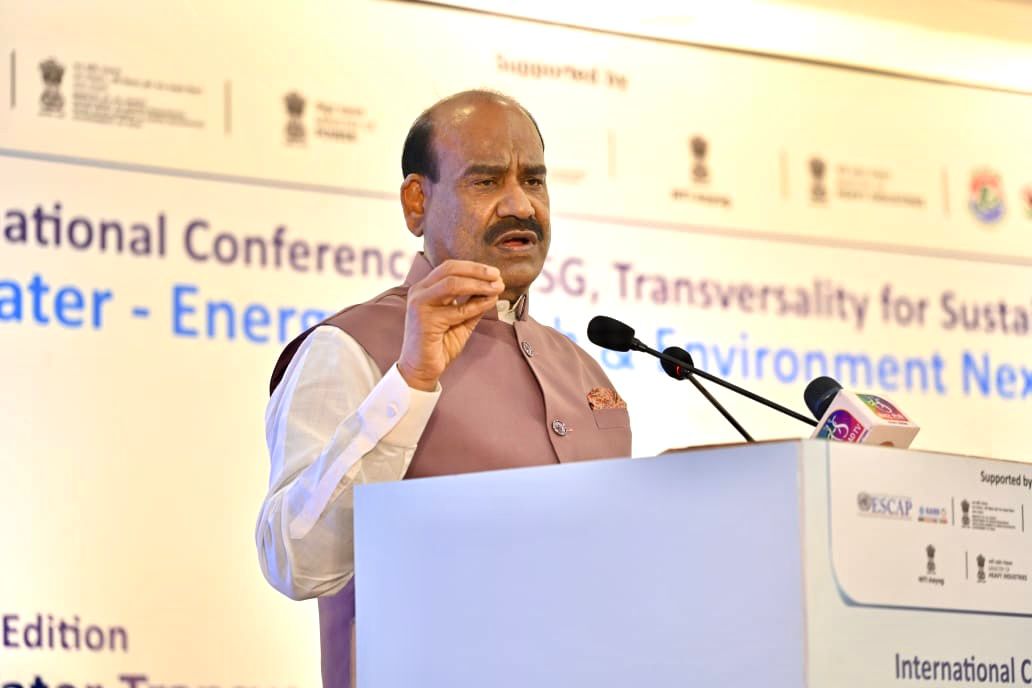
Delivering the Chief Guest address, Om Birla, Hon’ble Speaker of the Lok Sabha, articulated a compelling vision for sustainable development rooted in collaboration, innovation, and public participation. Emphasizing the need to move beyond the traditional perception of development and environmental protection as competing priorities, he observed that the two must instead be viewed as complementary pillars of long-term progress. He also expressed his appreciation to India Water Foundation for convening the important dialogue and for pioneering the model of transversality, which seeks to integrate water, energy, health, and environmental dimensions for the betterment of the world. He noted that such collaborative platforms are essential for fostering shared responsibility, knowledge exchange, and collective action towards achieving sustainable and resilient development pathways.
He highlighted that water conservation remains fundamental to the future of humanity and stressed that collective responsibility from policymakers to citizens is critical to safeguarding this vital resource. He also noted that water, energy, health, and environmental sustainability are deeply interconnected systems, requiring coordinated solutions rather than fragmented interventions.
A key message from his address was the importance of policy transversality, where government departments and stakeholders work in synergy rather than isolation. Such coordination, he argued, enables more coherent policymaking and strengthens the impact of development initiatives.
The Speaker also underlined the significance of community participation in sustainability initiatives, referring to national programmes such as Jal Jeevan Mission and the Catch the Rain campaign as examples of how citizen engagement can accelerate water conservation efforts.
In his remarks, Shri Birla further pointed to India’s progress in renewable energy including solar, wind, and green hydrogen as evidence that economic growth and climate responsibility can advance together. He concluded by emphasizing that a sustainable future depends not only on technology and policy but also on youth leadership, scientific innovation, and global cooperation.
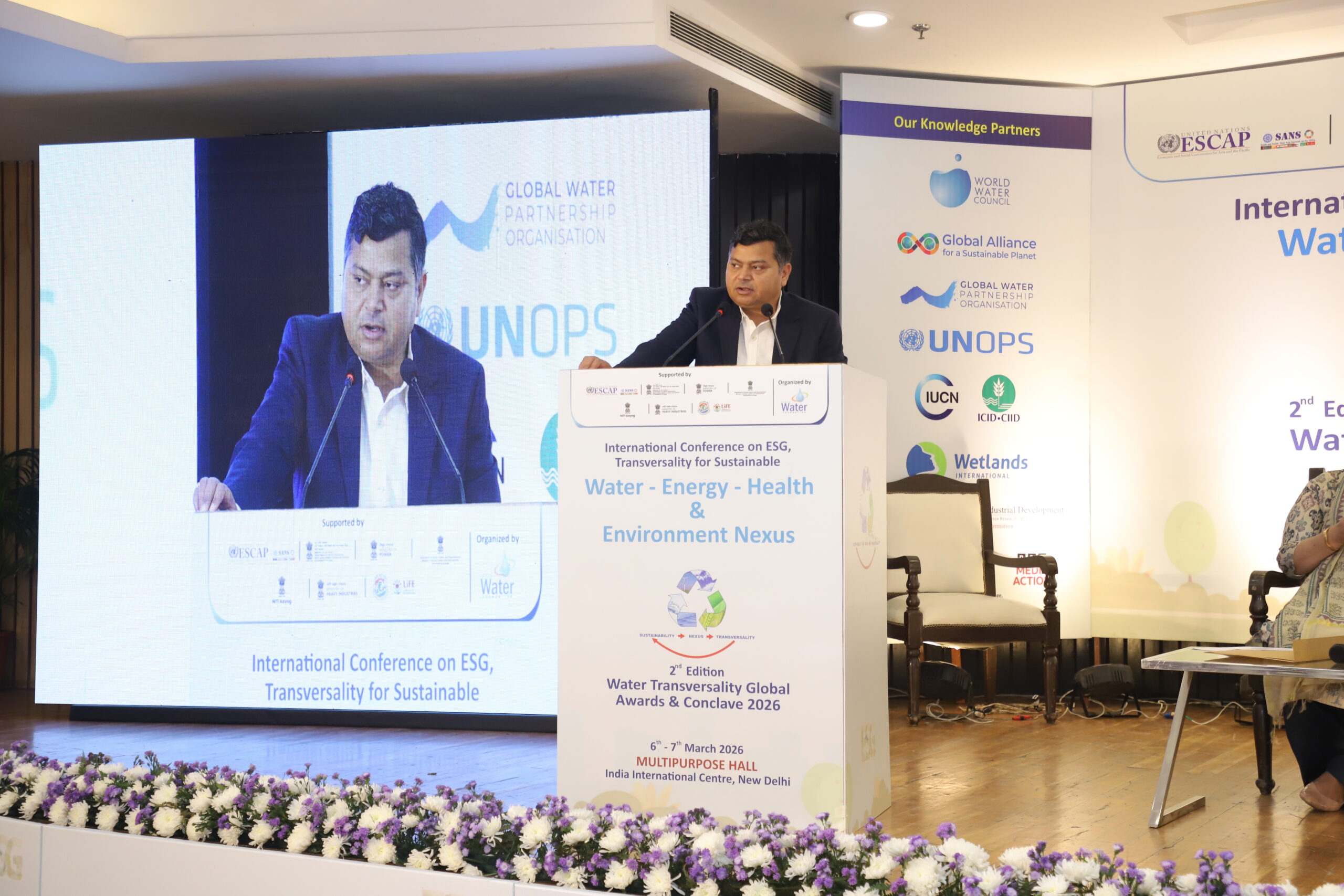
Addressing the opening Ministerial Plenary Shri Raj Bhushan Choudhary, Minister of State for Jal Shakti, reinforced the importance of adopting a whole-of-government approach to water governance. He highlighted that contemporary development challenges demand a fundamental rethinking of how institutions, ecosystems, and economies interact. He emphasized that flagship programmes such as the Jal Jeevan Mission demonstrate the transformative potential of integrated policy design, where water access simultaneously advances public health outcomes, gender empowerment, and rural resilience.
The Minister further stressed that effective ESG frameworks require credible data, transparent disclosures, and safeguards against greenwashing, while also ensuring that communities particularly women, youth, and marginalized groups are recognized as active partners in sustainability initiatives.
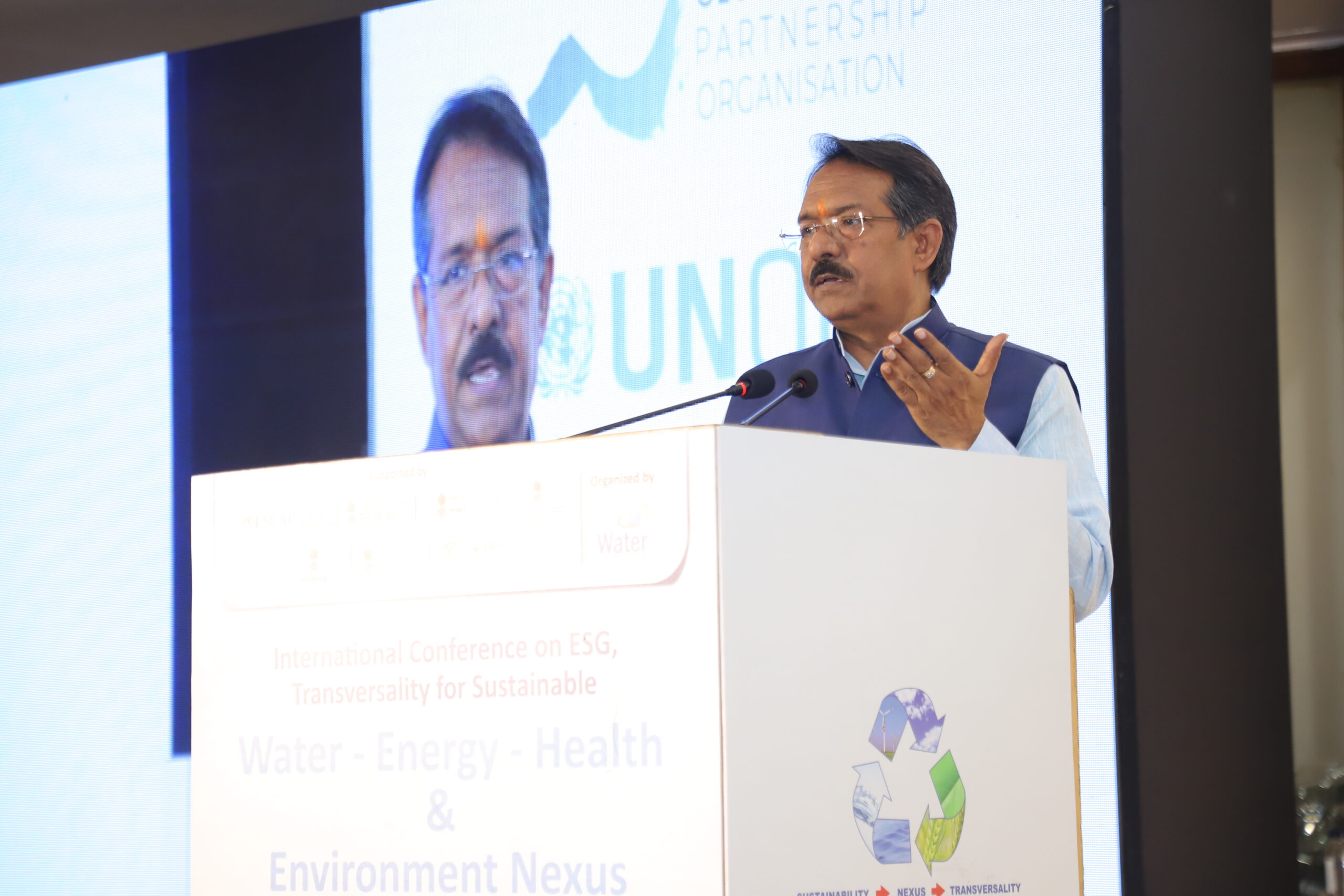
Another key highlight of the conclave was the special address delivered by Shri Harsh Malhotra, Minister of State for Corporate Affairs and Road Transport & Highways. He emphasized that the modern world faces multiple interconnected crises ranging from environmental degradation and water stress to energy insecurity and health emergencies and that meaningful solutions can emerge only when these challenges are addressed in an integrated framework.
Highlighting India’s policy momentum under the leadership of Narendra Modi, he noted the country’s ambitious commitment to increasing the share of non-fossil fuel energy to 50 percent before 2030, alongside its long-term net-zero target for 2070. He also referenced innovations in biofuels and ethanol blending derived from agricultural feedstocks such as maize and sugarcane as examples of how India is advancing cleaner transport solutions.
Importantly, he underscored that ESG is no longer merely a corporate compliance mechanism but has evolved into a strategic framework guiding responsible business conduct and sustainable economic development. The transformation of reporting frameworks from Business Responsibility Reporting to Business Responsibility and Sustainability Reporting reflects India’s commitment to enhancing transparency, accountability, and investor confidence in corporate sustainability performance.
The conclave was organized by India Water Foundation in collaboration with the United Nations Economic and Social Commission for Asia and the Pacific Subregional Office for South and South-West Asia (SSWA) and received support from several key Indian ministries including the NITI Aayog, the Ministry of Jal Shakti, the Ministry of Power, the Ministry of Environment, Forest and Climate Change, the Ministry of Social Justice and Empowerment, and the Ministry of Heavy Industries.
A diverse coalition of corporate and institutional partners including the Delhi Metro Rail Corporation, Air India Engineering Services Limited, Indian Oil Corporation Limited, Bharat Petroleum Corporation Limited, S M Sehgal Foundation, and Sulabh International also supported the initiative, underscoring the growing recognition that sustainable development requires coordinated action across public institutions, industry, and civil society.
Toward a Transversal Future
Beyond keynote speeches and panel discussions, the conclave also served as a platform for building partnerships and recognizing leadership in sustainability through the Water Transversality Global Awards. The awards celebrated institutions and individuals who have demonstrated exceptional commitment to advancing integrated solutions across water, energy, health, and environmental sectors.
Collectively, the discussions throughout the two-day event highlighted a central insight: the sustainability challenges of the 21st century cannot be solved within traditional sectoral boundaries. Addressing water scarcity, climate change, public health risks, and energy transitions requires coordinated governance frameworks, robust ESG standards, and active collaboration among governments, businesses, academia, and civil society.
As the Water Transversality Global Awards and Conclave 2026 concluded, it left participants with a clear message: the future of sustainable development lies in transversal thinking where policies, institutions, and communities work together to ensure that economic growth, environmental stewardship, and social well-being progress in harmony.
Through continued dialogue, partnerships, and innovation, initiatives such as this conclave can play a pivotal role in shaping a more water-secure, climate-resilient, and sustainable future for India and the world.
*Editor, Focus Global Reporter