
Dr. Arvind Kumar*

This energy war is not an isolated episode but the hard‑security expression of a deeper triple planetary crisis climate change, biodiversity loss and pollution colliding with water scarcity, food insecurity and eroding multilateralism, as military budgets soar while financing for the Sustainable Development Goals and climate adaptation shrinks. In this new geopolitics of pipelines and patrol boats, we are drifting from VasudhaivaKutumbakam to a bunker mentality of “my nation, my barrels”, even though the impacts of hunger, migration, climate disruption observe no borders; the urgent task is to bend this moment away from brinkmanship towards sectoral synergy, shared resilience and a re‑centring of humanity and the planet at the heart of policy.
The world today feels like it is balancing on the lip of a volcano, as the escalating US–Iran confrontation in West Asia turns oil tankers and gas pipelines into frontline trenches, blocks the Strait of Hormuz, pushes crude towards triple‑digit territory and threatens Iran’s own warning of 200‑dollar oil from the realm of rhetoric into policy risk. Iran has fired on merchant ships and struck Israel and other regional targets even after what the Pentagon calls the most intense US‑Israeli strikes yet, while its Revolutionary Guards have attacked vessels that tried to transit the blockaded Gulf, effectively trapping a fifth of the world’s oil behind a narrow, militarised channel. The International Energy Agency has already recommended an unprecedented release of strategic oil reserves to soften what it describes as one of the worst oil shocks since the 1970s, even as LPG supplies to Asia are singled out as the most disrupted product, with India’s clean‑cooking lifeline acutely exposed.
This energy war is not an isolated episode but the hard‑security expression of a deeper triple planetary crisis climate change, biodiversity loss and pollution colliding with water scarcity, food insecurity and eroding multilateralism, as military budgets soar while financing for the Sustainable Development Goals and climate adaptation shrinks. In this new geopolitics of pipelines and patrol boats, we are drifting from VasudhaivaKutumbakam to a bunker mentality of “my nation, my barrels”, even though the impacts of hunger, migration, climate disruption observe no borders; the urgent task is to bend this moment away from brinkmanship towards sectoral synergy, shared resilience and a re‑centring of humanity and the planet at the heart of policy.
Current instability
At the core of the current instability is a US–Iran–Israel war that has migrated from airstrikes and drones onto oil lanes and shipping insurance tables. Tehran’s military spokesperson Ebrahim Zolfaqari publicly warned that the world should “get ready for oil to be 200 dollars a barrel”, explicitly blaming Washington and its allies for destabilising regional security and threatening further attacks on banks doing business with the US or Israel. Traffic through the Strait of Hormuz chokepoint for roughly 20% of global oil flows has at times slowed to a near standstill as tankers are damaged or re‑routed, with US crude jumping more than 7% in a single day and Brent surging on fears that even a short disruption could mutate into a structural supply shock. The International Energy Agency has characterised this as one of the worst oil‑supply disruptions since the 1970s and has floated the idea of a massive, coordinated drawdown of strategic petroleum reserves to try to calm markets.
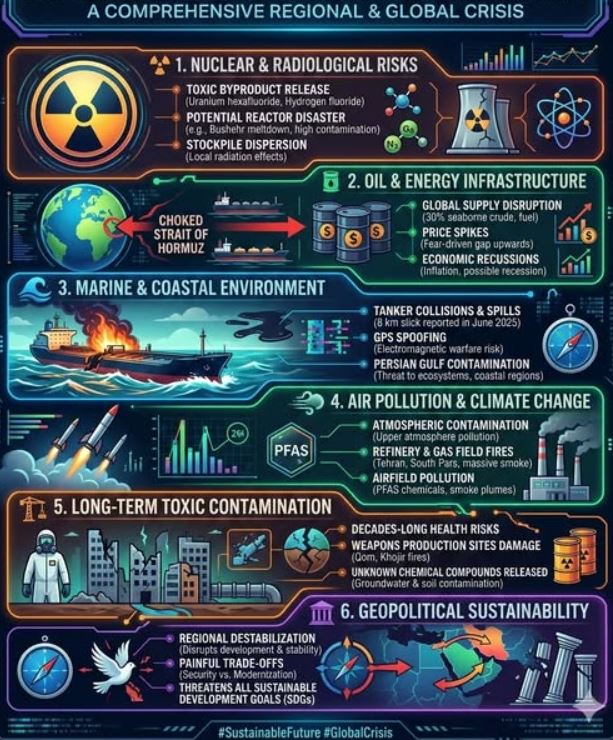
In its March 2026 assessment, the IEA notes that LPG is “the most affected of any product” in the current Iran‑centred war, as attacks and blockades along the Strait of Hormuz delay or strand cargoes that normally move from Gulf producers to Asian buyers. Nearly all Middle East LPG exports about 99% are destined for Asia–Pacific, with India alone accounting for more than 45% of that trade, and around 90% of India’s LPG use comes from the domestic sector, primarily poor and lower‑middle‑income households that adopted clean cooking under government schemes.
Think‑tanks from Columbia’s Center on Global Energy Policy to European security institutes have argued that the Russia–Ukraine conflict and now the US–Iran confrontation mark a “return of the energy weapon”, where pipelines, ports and energy contracts become active theatres of geopolitical competition rather than neutral economic connectors.
The immediate macroeconomic fallout of this weaponisation is visible in prices and volatility. News of US–Iran strikes and Hormuz disruptions has seen oil jump by more than 13% to cross 80 dollars per barrel for the first time since 2024, with tanker freight rates from the Gulf to Asia hitting all‑time highs as insurance premia and perceived risk explode. In the peak days of the current crisis, Brent has briefly approached 120 dollars before easing back towards the 90–100 corridor, but Iran’s threats and sporadic attacks keep a 150–200‑dollar spike within the realm of scenario planning, especially if physical damage to Gulf export facilities mounts. Moody’s and other rating agencies warn that for large, energy‑importing economies India, much of Asia, parts of Europe sustained high oil prices would stoke inflation, worsen current‑account deficits, weaken currencies and force tighter monetary policy that suppresses growth and jobs. In low‑income countries already burdened by debt, food import dependence and climate impacts, such price shocks risk turning a cost‑of‑living crisis into outright state fragility.
War is also directly shredding ecosystems and basic services. A 2026 UNEP assessment of Gaza documents “profound” damage to land, soils, trees, coastal waters and waste systems from repeated bombardments, warning that restoring safe water supply, sewage treatment and debris management are prerequisites before any talk of reconstruction can even begin. The ICRC has repeatedly stressed the imperative to protect water and water systems in armed conflict, pointing out that attacks on dams, pumping stations and treatment plants have been a feature of wars from Syria to Ukraine, with long‑lasting impacts on disease, agriculture and human displacement. Academic work on the Russia–Ukraine conflict similarly finds that destruction and militarisation of water infrastructure have contaminated rivers, disrupted hydropower and irrigation and will require years of ecological and institutional repair. Layered on top of climate‑induced droughts and floods, this militarised assault on lifelines like water and energy grids is a direct assault on sustainable development.
The human tally is counted not only in casualties but in empty plates and forced journeys. A joint FAO–WFP “Hunger Hotspots” report warns that acute food insecurity, driven largely by the combined effects of conflict, climate shocks and economic turbulence. WHO notes that around 3.6 billion people already live in areas highly susceptible to climate change, and that recent energy‑ and food‑price spikes have added tens of millions to the ranks of those who are food insecure. As water stress deepens and conflicts around basins and dams intensify, UN‑Water and other bodies warn of rising water‑related violence and migration, with women and children bearing disproportionate burdens in terms of health, safety and unpaid care work. What emerges is a vicious loop: war drives hunger, hunger fuels instability and crime, instability invites further militarisation, all under a heating sky.
Yet, while needs multiply, budgets are marching in the opposite direction. SIPRI data show that world military expenditure reached a record 2.7 trillion dollars in 2024, a 9.4real increase over the previous year and the steepest rise since the early 1990s, with spending in Europe alone up 17%. UN Secretary‑General António Guterres has warned that this “orgy of spending on weapons” dwarfs investment in peace, noting that global military outlays are almost 13 times total official development assistance and roughly 750 times the UN’s regular budget, even as only about one‑fifth of SDG targets remain on track. Deputy Secretary‑General Amina Mohammed has similarly told that “diverting political attention and scarce resources” from ending poverty and averting climate breakdown, urging them to cut arms budgets and re‑channel finance towards sustainable development and climate resilience. In effect, we are mortgaging schools, hospitals and solar parks to pay for missiles that further degrade our shared life‑support systems.
Overlaying all this is a disquieting shift from cooperative multilateralism to a fractious, securitised order. The IEA’s World Energy Outlook warns that “geopolitical tensions and the risk of fragmentation are casting a shadow over energy security and climate action”, as trade disputes, technology sanctions and critical‑mineral politics complicate clean‑energy transitions and investment flows. Legal and policy analyses of the emerging energy order highlight how export controls, snapback sanctions, “friend‑shoring” strategies and investment‑screening regimes are re‑wiring supply chains along geopolitical lines, raising costs and undermining trust. National security doctrines increasingly frame energy, data and even food as arenas of zero‑sum competition, encouraging leaders to double‑down on “my nation, my people, my security” and treat global norms from maritime law to climate agreements as optional when they collide with perceived interest. In the process, the civilisational ethic of VasudhaivaKutumbakam is squeezed between rhetoric and realpolitik.
Way Forward
If the policies and actions of the world have brought us to this brink, different choices can still help us step back. The first imperative is budgetary rebalancing: as Guterres and Amina Mohammed have argued, even modest cuts in the 2.7 trillion‑dollar global military spend could free resources sufficient to close core SDG gaps in health, education, basic services and climate adaptation, particularly in vulnerable countries. Second, countries especially major importers like India must treat this US–Iran energy shock as a strategic warning to accelerate domestic clean‑energy deployment, efficiency, storage and diversified supply routes, turning energy from a weapon others can wield against them into a shield of resilience built on renewables and regional cooperation. Third, the international community needs to strengthen and enforce norms that protect water, energy and health infrastructure in war, ensuring that even when diplomacy fails, the arteries of civilian life are not deliberately severed. Fourth, sectoral synergy must replace siloes: water, energy, food, health and climate policies need to be designed as a single transversal system, not as competing fiefdoms, an approach essential for navigating an era of polycrisis. Finally, countries like India, which have articulated VasudhaivaKutumbakam on the G20 stage, can use their diplomatic capital to push for “development‑first” de‑escalation in West Asia: energy corridors that are secure because they are jointly governed; climate finance and technology that are shared even across political divides; and a renewed commitment that the purpose of power is to protect people and planet, not to hold the world perpetually on a knife‑edge.
*Editor, Focus Global reporter