
Dr. Arvind Kumar*
The global energy system in 2025 is marked by a stark contradiction. Renewable energy is scaling at an unprecedented pace, yet fossil fuels continue to dominate overall consumption. As UN Secretary-General António Guterres has observed, “The energy transition is unstoppable, but it is not yet fast enough or fair enough.” With carbon emissions reaching a record 38.1 billion tonnes of CO₂ in 2025, it is evident that current progress falls well short of what climate stability requires. This imbalance is not simply a matter of technology or economics; it is fundamentally geopolitical, shaped by power asymmetries, structural dependency, and the erosion of effective collective global governance.

For more than a century, control over energy particularly oil has been central to the architecture of global power. The institutionalization of the petrodollar system in 1974 entrenched U.S. financial dominance by anchoring global oil trade to the dollar, transforming oil from a mere commodity into a strategic instrument of statecraft. History illustrates this clearly: the U.S. oil embargo on Japan in 1941 directly preceded the Pacific War. That lesson remains relevant. In 2025, nations that control energy supply chains continue to wield disproportionate influence over those dependent on imports. This imbalance is now widely acknowledged at the highest levels of global governance. As UN Deputy Secretary-General Amina J. Mohammed has cautioned, “Fossil fuel emissions continue to rise, renewable energy investments in developing countries are insufficient, and too many people still lack access to clean and affordable energy… The urgency for bold, collective action cannot be overstated.”
Despite decades of climate commitments, fossil fuels still account for roughly 64% of global energy consumption. Even optimistic transition scenarios project fossil fuels comprising 41–55% of the energy mix by 2050. This persistence reflects a deep disconnect between climate ambition and geopolitical reality. Energy policy is driven less by emissions targets and more by national security calculations, trade leverage, and strategic autonomy.
Energy paradox
The renewable surge is real and transformative but insufficient. In 2024, the world added a record 741 gigawatts of renewable capacity, with another 520 GW expected in 2025. Renewables surpassed coal in electricity generation for the first time in early 2025 and now provide around 30% of global electricity. By 2030, renewables are projected to supply nearly 45% of global electricity, with solar dominating new installations. Yet fossil fuel consumption continues to rise. In 2025, coal, oil, and gas demand all increased. As a result, renewables are expanding alongside fossil fuels rather than displacing them.
This paradox becomes dangerous when energy is weaponized geopolitically. The United States, while reducing domestic fossil fuel dependence, continues to leverage control over global energy flows. Its renewed interest in reviving Venezuela’s oil sector despite decades of sanctions reflects the enduring strategic value of oil. Venezuela holds the world’s largest proven reserves, and restoring production strengthens U.S. leverage over global markets and major importers, while reinforcing the petrodollar system.
Sanctioned exporters illustrate the vulnerability of fossil fuel dependence in a politicized system. Russia’s oil revenues have fallen sharply under sanctions, forcing nearly half of its exports into unregulated “shadow” fleets at discounted prices. Iran, similarly constrained, relies on elaborate evasion mechanisms ship-to-ship transfers, disabled tracking, and non-dollar payments to sustain exports. While these strategies preserve short-term revenue, they underscore a structural truth: energy exporters are deeply exposed when global trade is controlled through financial and political power. For energy-importing emerging economies, the dilemma is even sharper. India exemplifies this challenge. With a rapidly growing economy and population exceeding 1.4 billion, India’s energy demand is surging. Coal remains central, supplying nearly half of its energy mix, while 85% of crude oil is imported. This dependence exposes India to market volatility and geopolitical pressure, including explicit U.S. efforts to influence India’s oil sourcing and energy trade choices.
At the same time, India is executing one of the world’s most ambitious renewable energy expansions. By mid-2025, installed renewable capacity reached 251 GW, with solar leading. Non-fossil capacity has tripled since 2014, and clean electricity generation surged sharply in 2024–25. India has already met one of its Paris commitments five years early and aims to reach 500 GW of renewables by 2030. Yet even this scale of expansion cannot immediately eliminate fossil fuels. Electricity demand is expected to double by 2030, driven by development and climate-induced cooling needs. As a result, India continues to add coal capacity to avoid energy shortages. This is not policy inconsistency it is a reflection of physical and economic constraints shared by most developing economies. As Prime Minister Narendra Modi said in his 2025 Independence Day address, “Just like we are dependent on the world for energy… that money would have been used for the future of my country’s youth… Now we are working towards becoming self-reliant,” highlighting India’s pursuit of strategic energy autonomy even as it expands renewables.
Globally, the remaining carbon budget for limiting warming to 1.5°C is nearly exhausted. At current emission rates, only about 170 billion tonnes remain. Yet an abrupt fossil fuel exit would trigger economic collapse and mass energy poverty. The ethical challenge is therefore not whether to transition, but how to do so without sacrificing development and human dignity.
This challenge is compounded by the collapse of global climate governance. The Loss and Damage Fund—created to support countries suffering irreversible climate harm has received less than USD 1 billion in pledges, against projected needs of hundreds of billions annually. Initial disbursements are tokenistic relative to real losses. Meanwhile, wealthy nations continue to fall short on climate finance commitments. The situation has deteriorated further with the United States withdrawing from dozens of international institutions, including climate and development bodies. This retreat weakens multilateral capacity precisely when coordinated action is essential. The resulting vacuum is partially filled by China, which combines massive renewable deployment with strategic outreach to the Global South, even as global cooperation fragments.
This shift reflects a broader abandonment of collective responsibility. The principle of Vasudhaiva Kutumbakam, the world as one family has been replaced by zero-sum competition. Nations revert to fossil fuels when convenient, sanction rivals selectively, and prioritize short-term advantage over planetary stability. Energy security is framed as dominance, not resilience. For India, navigating this landscape requires redefining energy security as strategic autonomy rather than control. This means accelerating renewables as the backbone of the energy system, investing heavily in grids, storage, and demand management, and decentralizing energy production through rooftop solar and local systems. It also requires building a domestic manufacturing ecosystem for renewable technologies to reduce import dependence and create employment. At the same time, fossil fuels must be managed pragmatically during transition. Immediate phase-out is unrealistic. The priority should be capping expansion, maximizing efficiency of existing assets, and using gas selectively as a transitional balancing fuel. A phased transition renewable acceleration by 2030, peak fossil demand by the 2040s, coal phase-out by mid-century, and net-zero by 2050 offers realism without surrendering ambition.
Way Forward
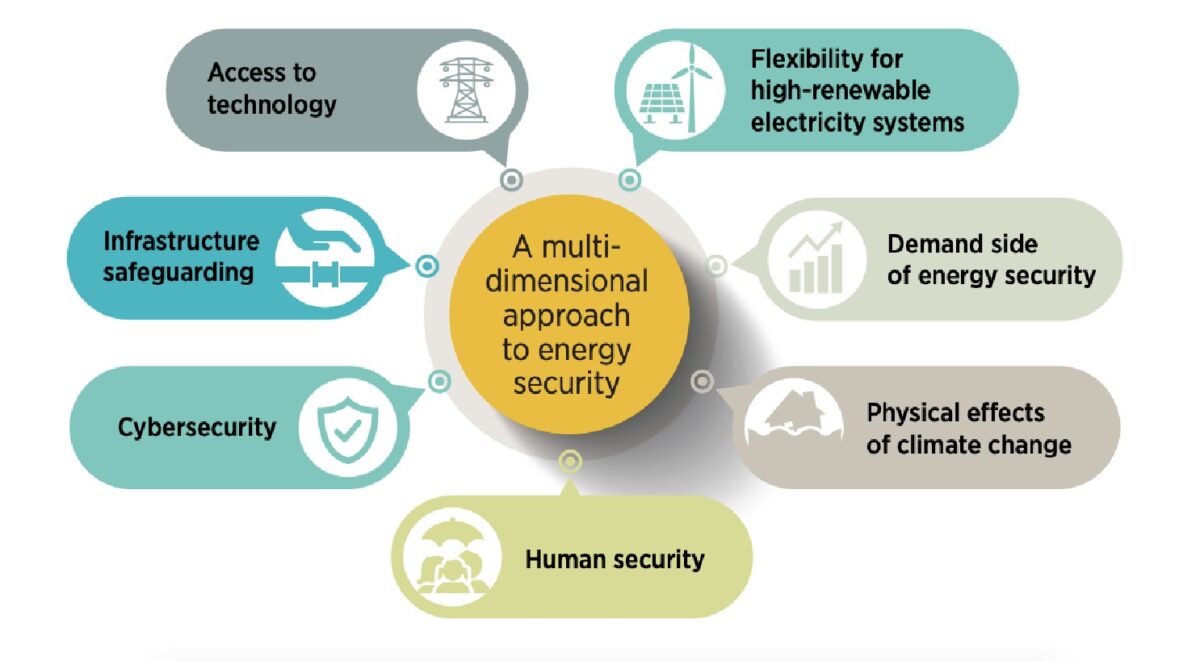
Globally, a similar approach is required. No new fossil fuel investments beyond committed projects, rapid retirement of inefficient coal, massive grid modernization, and accelerated storage deployment are essential. But none of this is achievable without restored trust in multilateralism, fair climate finance, technology transfer, and recognition of historical responsibility. Without systemic reform, the burden of climate impacts will fall overwhelmingly on those least responsible. India, Bangladesh, small island states, and much of Africa face escalating climate risks with inadequate support. The injustice is structural and unsustainable. Ultimately, the energy transition is not only technological, it is civilizational. Humanity must choose between fragmented competition for energy dominance and cooperative stewardship of a shared future. Energy security, in an interconnected world, is collective security. Without that recognition, rising renewables will coexist with rising emissions, and progress will remain dangerously illusory.
*Editor, Focus Global Reporter