
Dr. Arvind Kumar*

The triple planetary crisis of climate change, pollution, and biodiversity loss does not wait for peace negotiations or rate cuts. It compounds while the world is distracted. And of the three, biodiversity loss remains the least headlined, least understood, and most catastrophically underestimated crisis of our time. Astrid Schomaker, Executive Secretary of the Convention on Biological Diversity, put it with quiet devastation at the SBSTTA-27 meeting in October 2025: “While recognition of the Framework is steadily growing, determination is not always keeping pace, deadlines have been missed, and resource mobilization remains challenging.” Recognition without determination is just well-informed surrender.
Biodiversity, the variability among living organisms across terrestrial, marine, and freshwater ecosystems, underpins all life on Earth. It includes diversity within species, between species, and across ecosystems, sustaining the ecological processes that support food security, climate stability, water systems, soil fertility, and human well-being. Far from being merely an environmental concern, biodiversity is the living infrastructure of civilisation itself.
Yet humanity confronts this reality in an age of cascading and compounding uncertainties. Wars in Ukraine and the Middle East have disrupted energy markets, food systems, and global diplomacy simultaneously, while inflation, debt crises, and the erosion of the post-Cold War economic order have pushed governments toward reactive policymaking rather than long-term ecological stewardship.
And through it all the planet has been haemorrhaging something far more fundamental than GDP or trade routes. It has been haemorrhaging life itself. The triple planetary crisis of climate change, pollution, and biodiversity loss does not wait for peace negotiations or rate cuts. It compounds while the world is distracted. And of the three, biodiversity loss remains the least headlined, least understood, and most catastrophically underestimated crisis of our time. Astrid Schomaker, Executive Secretary of the Convention on Biological Diversity, put it with quiet devastation at the SBSTTA-27 meeting in October 2025: “While recognition of the Framework is steadily growing, determination is not always keeping pace, deadlines have been missed, and resource mobilization remains challenging.” Recognition without determination is just well-informed surrender.
Autopsy in progress
Biodiversity is the operating system of the planet. Pollination services, estimated to support over $577 billion worth of annual global food production, depend on species we rarely think about until they vanish. Mangrove forests which have shrunk by over 3% in just two decades sequester carbon at rates four times greater than terrestrial forests and protect coastlines from storm surges that would otherwise be lethal. Soil biodiversity drives nutrient cycling, decomposition, and water filtration. Natural wetlands regulate floods. Indigenous medicinal knowledge, rooted in biological diversity, underlies a significant share of pharmaceutical innovation. When we allow biodiversity to collapse, we are not just losing nature, we are dismantling the infrastructure of human civilisation without a backup plan.
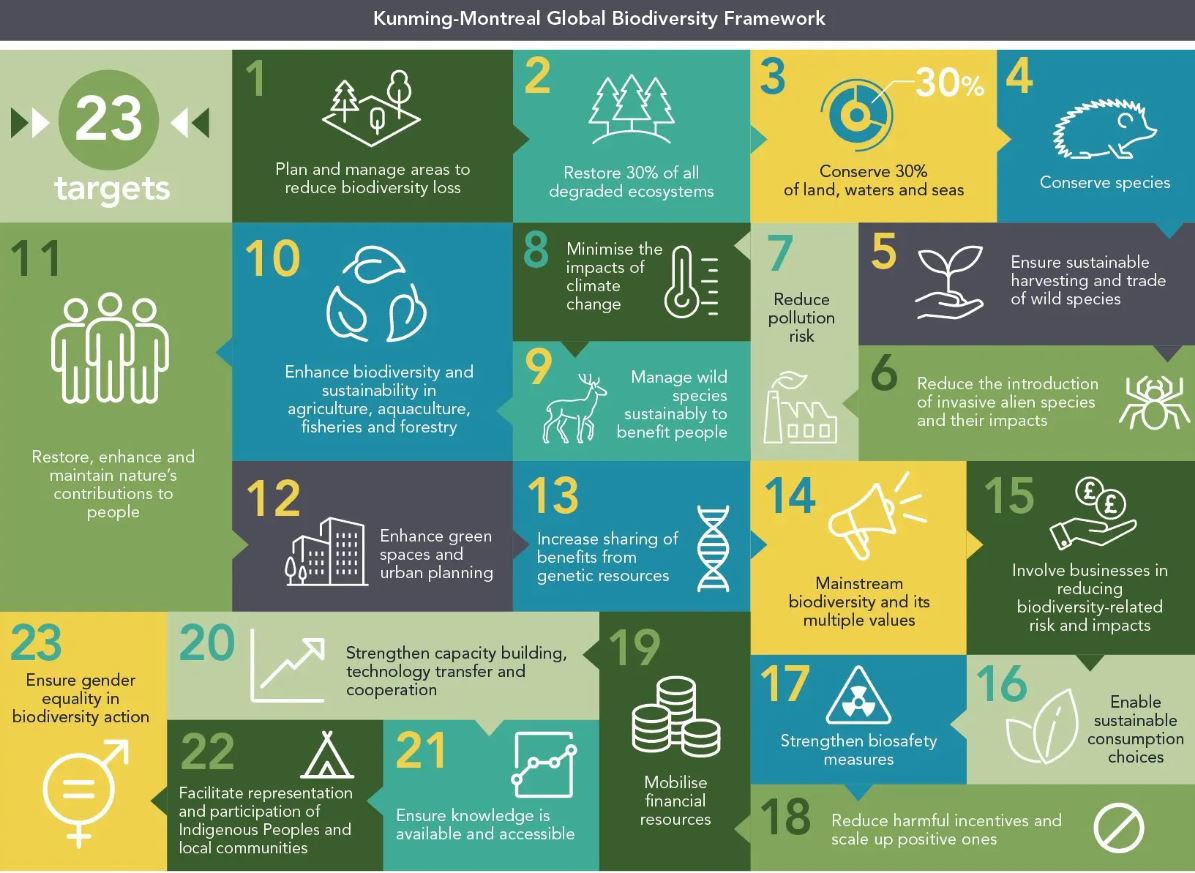
There have been moments of genuine ambition at the global level. The Kunming-Montreal Global Biodiversity Framework (KMGBF), adopted at COP15 in December 2022, set the most comprehensive biodiversity targets in history conserving 30% of land and oceans by 2030, restoring 30% of degraded ecosystems, mobilising $200 billion annually for biodiversity finance. Marine coverage of Key Biodiversity Areas under protection has climbed from 25.8% in 2000 to 46% in 2025. And yet, more than 85% of countries failed to submit new national biodiversity pledges ahead of COP16 in Colombia a staggering indictment of the gap between declaration and action. Ambition on paper and ambition on the ground are two very different animals, and the former is going extinct far more slowly than the latter.
India, as a megadiverse nation hosting 7–8% of the world’s recorded species on just 2.4% of its landmass carries a disproportionate weight of planetary biological responsibility. The recently submitted 7th National Report to the CBD, the first full progress assessment since the KMGBF’s adoption, reflects both the country’s institutional ambition and its ground-level complexity. Prepared with inputs from 33 central ministries and aligned to 23 National Biodiversity Targets across 142 indicators, the report acknowledges real wins: India’s tiger population has reached 3,167; the country ranks 5th among the world’s top carbon sinks with forests removing 150 million tonnes of CO₂ annually; the NBSAP 2024–2030 commits Rs. 81,664 crores per year to biodiversity conservation and explicitly integrates ecosystem-based management and bottom-up policymaking. These are not cosmetic achievements. But the report’s sobering underbelly is that only two of the 23 national biodiversity targets are clearly on track for 2030 NBT1 (biodiversity-inclusive land and sea-use planning) and NBT2 (ecosystem restoration). The remaining 21 require not incremental effort but structural course correction.
Issues and Challenges
However, they are an autopsy in progress. The WWF’s 2025 Living Planet Report, documents a 73% average decline in wildlife populations since 1970. Not a gradual fade, a haemorrhage across fifty years. Latin America and the Caribbean have seen a 95% collapse. Africa, 76%. The Asia-Pacific, 60%. Freshwater species, which are perhaps the most essential barometer of ecological health, have fared worst of all. Meanwhile, the IUCN Red List now places over 44,000 species, 28% of all assessed species in the threatened category, with the Red List Index having deteriorated by 12% between 1993 and 2025. 70% of cycads and 41% of amphibians face extinction risk. And climate change, far from being a separate crisis, is the accelerant on a fire already burning. It is shifting species ranges poleward, disrupting seasonal cues, intensifying droughts and floods that fracture habitats, and pushing species past thermal thresholds they have never encountered in evolutionary history. The crises are not parallel, they are entangled.
And then there is Great Nicobar, a question that cuts to the core of how India reconciles development aspiration with ecological stewardship. The ₹81,000 crore “holistic development” mega-project on an island that is home to one of the world’s most pristine rainforest biospheres, and the indigenous Shompen tribal community, received its environmental clearance after a process that independent scientists, ecologists, and former environment ministers have publicly characterised as grossly inadequate. The National Green Tribunal, in February 2026, declined to interfere, citing “adequate safeguards.” But when 130 sq km of tropical rainforest faces diversion; when baseline ecological data was collected over days, not seasons; when the island’s population is projected to increase by 4,000%; the question is not strategic versus ecological, it is whether India’s legal and institutional architecture can honestly evaluate both simultaneously.
Therefore root-level revolution in how communities, governments, and ecosystems through Ecosystem-based Adaptation (EbA), defined by the CBD as the use of biodiversity and ecosystem services as part of an overall adaptation strategy. Ecosystems are not static assets to be protected behind a fence, they are dynamic, self-organising systems that generate resilience when communities are empowered to manage them. India’s updated NBSAP 2024–2030 explicitly endorses this approach through ecosystem-management-based bottom-up policymaking, a directional signal that must now translate from ministry circulars into village reality. The India Water Foundation has been building that ground for precisely this moment.
Precepts of good governance
Our work embedded within the IBDLP Programme in Meghalaya, we have long argued, and demonstrated that ecosystem restoration and livelihood security are not competing objectives they are complementary ones. As of 2025, 400 village communities have brought 31,000 hectares of land under enhanced conservation and sustainable management. Communities have conserved 131 registered Jingkieng Jri, the iconic living root bridges woven by Khasi and Jaintia communities over decades, now anchoring both watershed stability and cultural identity. India’s first and largest Payment for Ecosystem Services initiative, piloted across two critical catchments, now incentivises communities financially for conserving their natural forests. These are not anecdotal successes, they are proof-of-concept at scale that the principle holds: when local communities own the ecological mission, they deliver outcomes that no centralised programme can replicate.
Way Forward
On this International Day for Biological Diversity the world does not need another resolution. It needs to reckon with a foundational truth that has been politically inconvenient for too long: the global biodiversity crisis cannot be solved in conference halls. It will be won or lost in the watershed, the village commons, the mangrove edge, and the forest-farm interface. Policy must follow practice, and practice must trust the community. Every degraded wetland restored by a local institution is a climate buffer built. Every sacred grove protected by a tribal council is a species sanctuary maintained. Every traditional farming system preserved is a genetic library kept open. The architecture of ecological salvation is local in its execution, indigenous in its knowledge, and ultimately universal in its consequence. The roots must go deeper before we reach for any rocket. The planet cannot afford otherwise.
*Editor, Focus Global Reporter