Excerpts from an interview of Mr. Matthieu Pegon, Deputy Chief Executive Officer, Climate Investment Funds by Dr. Arvind Kumar, Editor, Focus Global Reporter.
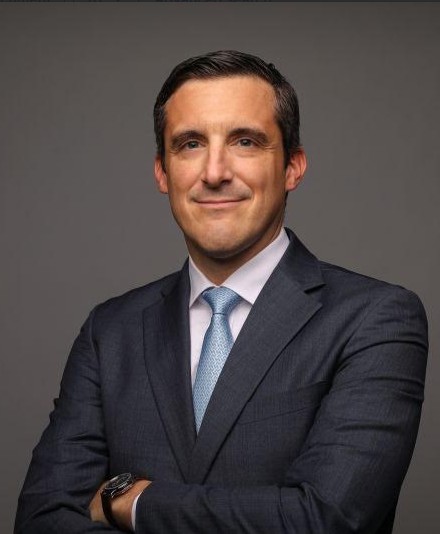
Mr. Matthieu is a Deputy Chief Executive Officer. Previously, Matthieu served as Director of Blended Finance at IDB Invest. In this role, he oversaw the deployment of IDB Invest’s concessional resources in private sector investments where risks are too high for commercial finance alone.
Prior to joining IDB Invest, Matthieu worked in various origination and structuring roles at multilateral climate fund Green Climate Fund and BNP Paribas, a global investment bank.
Matthieu holds a bachelor’s and a master’s degree from Grenoble École de Management, a master’s degree from ESCP Business School, and is a PhD candidate at ESCP Business School.
INTERVIEW
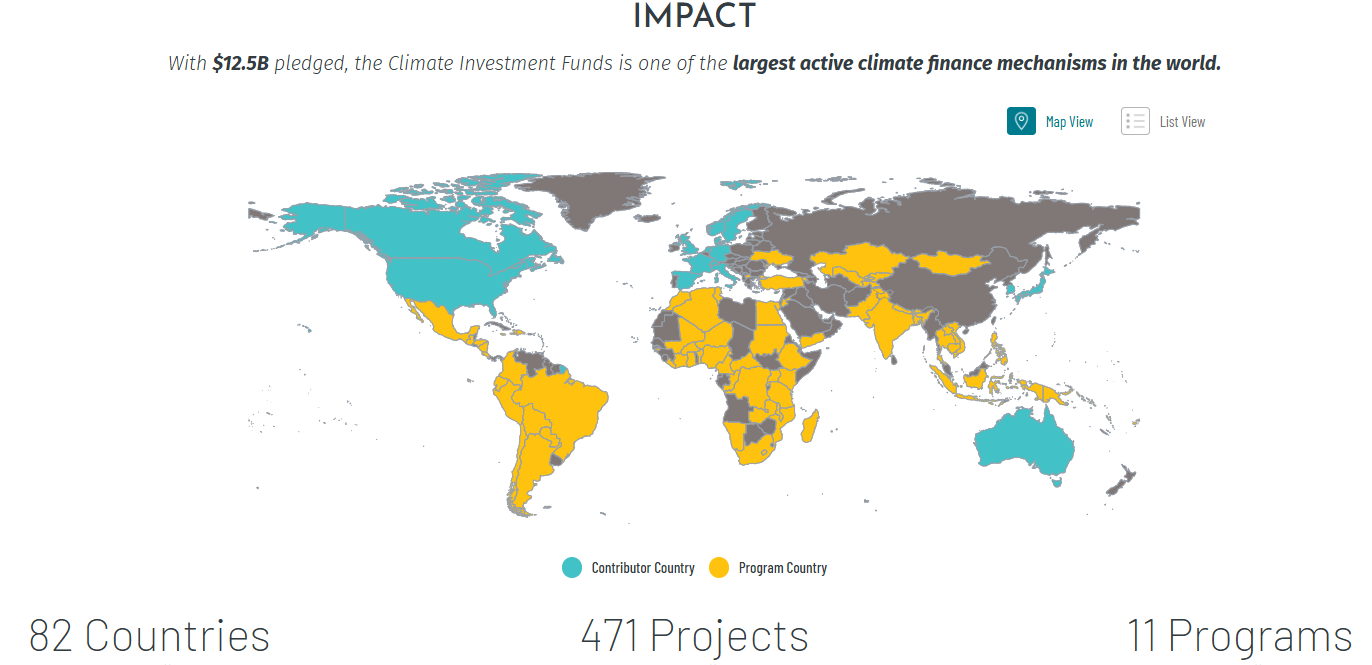
EDITOR: With over US$14 billion in pledges and operations across 80+ developing countries, how do you personally define CIF’s unique role in the global climate finance architecture, and what is the single biggest shift you are seeking to bring to the institution?
MR. MATTHIEU PEGON: The nearly $14 billion CIF is a pioneering multilateral climate fund delivering catalytic, low-cost finance. With our funding, developing countries crowd in the investments needed to drive economy-wide transformation through resilience, nature-based solutions, or clean technology. On average, every CIF dollar generates $10 in co-financing.
CIF works at the nexus of climate and development, driving economic resilience, competitiveness, and inclusive growth. We work exclusively through six multilateral development banks to create quality jobs, strengthen productivity, stabilize incomes, and enhance long-term energy and macroeconomic security.
And results show our model works. Our funding has reduced or avoided 52 million tonnes of CO₂ equivalent annually. We have delivered 28.4 GW of installed renewable energy capacity, brought 38+ million hectares of land under sustainable management, and improved the lives of 70+ million people through our forestry and resilience programs.
In terms of current shift, we see growing demand to harness CIF’s funding to catalyze private investments. We are meeting it with innovative approaches.
EDITOR: CIF’s 2025 Strategic Directions paper reportedly called for a formal Private Sector Strategy. How do you see the private sector’s role evolving in CIF’s work, particularly in de-risking and crowding in commercial finance for climate action in emerging economies?
MR. MATTHIEU PEGON: Public concessional finance will never be sufficient on its own to address the scale of the climate challenge. For example, clean energy investment in emerging markets must grow sevenfold to $1.9 trillion by 2030 (IEA), with private sector covering more than half. For resilience, developing countries need $310 billion per year, or twelve times current flows.
CIF’s approach has always been to enter early, absorb first-mover risk, prove viability, and then step back as commercial investors step in. We are now doubling down on this approach, as made clear in our private sector strategy published in March 2026.
CIF’s Industry Decarbonization Program features a 50 to 100 percent private sector set-aside, with Brazil and Mexico’s plans just endorsed. We are also working on a high-leverage mechanism designed to crowd in $6 to $12 in private finance for every $1 of CIF investment. Our ARISE resilience program has a mandatory 40 percent private sector set-aside built into every country envelope.
EDITOR: The CIF Capital Markets Mechanism (CCMM) made history in January 2025 with a US$500 million inaugural bond, oversubscribed six times with a US$3 billion orderbook. You called it “a proof of concept for a new way of raising climate finance.” How do you see this instrument transforming the sustainability and scalability of climate finance for the Global South?
MR. MATTHIEU PEGON: CCMM, rated Aa1 by Moody’s and AA+ by Fitch, is financial instrument through which CIF raises bonds from international capital markets. Proceeds are channeled to the Clean Technology Fund (CTF) to accelerate financing for clean energy and technologies in emerging economies.
With CCMM, CIF is the only multilateral climate fund with access to capital markets. This means our donor funding’s reach is extended: we harness it to draw in additional private capital for climate action.
With this pioneering move, we learned something important: institutional investors are keen to invest in well-structured climate finance vehicles that channel financing to developing countries. The demand is there.
EDITOR: ARISE is CIF’s next-generation resilience program, launched in April 2026. How does ARISE differ from CIF’s earlier Pilot Program for Climate Resilience (PPCR), and what makes this moment particularly urgent for resilience investments, given that every US$1 invested yields US$10.5 in benefits?
MR. MATTHIEU PEGON: You are right: investing in climate resilience is a smart economic choice – for progress, for people, for prosperity. Resilience is the backbone of livelihoods, economic growth and stability.
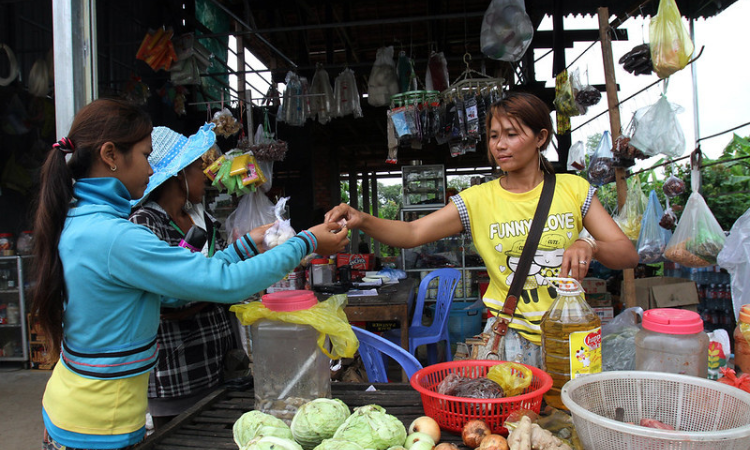
CIF has been ahead of the curve since 2008, delivering the world’s first large-scale resilience program – with $1 billion invested – surpassing all our targets and learning valuable lessons. Our investments reached 65 million+ people, in 31 countries, integrated resilience into more than 800 policies/plans, built 16,000+ climate-resilient infrastructure assets (roads, wharfs, energy, water resources), and mobilized $3+ for every CIF $.
PPCR proved the model, ARISE takes it to the next level as our next generation resilience program. Climate impacts are intensifying, eroding productivity, disrupting supply chains, destroying jobs, and countries are facing growing fiscal pressures from these climate disasters. ARISE helps countries develop investment pipelines, strengthen resilience markets, and deploy innovative financial instruments that attract private investment and unlock long term economic value.
EDITOR: What does success look like for ARISE five years from now, and how do you ensure that the most vulnerable countries—including small island developing states and least developed countries—are not left behind in the selection process?
MR. MATTHIEU PEGON: The overwhelming response to ARISE’s call for expressions of interest reflects the high global demand for catalytic resilience finance from developing economies. Submissions cover 76% of the African continent (41 countries), with 73% of all least developed countries (33 LDCs) applying. Small Island Developing States (SIDS) also represent a major group of applicants (18 countries), highlighting the acute exposure of these economies to climate-related shocks.
Our vision for ARISE is that resilience is mainstreamed into national economic strategies, budgets, and investment planning. Concretely, it means countries use CIF’s catalytic, concessional finance to crowd in private capital, build investment pipelines, and put in place the fiscal tools — resilience bonds, parametric insurance, blended finance structures — that reduce their vulnerability to climate shocks over the long term.
The selection process is informed by an Independent Expert Group with expertise spanning climate adaptation, resilience finance, and development economics. It reviews all expressions of interest and submits a ranked list to the Strategic Climate Fund Trust Fund Committee for final selection.
EDITOR: CIF’s US$1 billion Industry Decarbonization Program is the first global concessional finance initiative dedicated to cutting industrial emissions in developing countries. Heavy industries like cement, steel, and fertilizers are notoriously hard to abate. What is CIF’s distinct value proposition in this space, and how do you balance industrial transformation with protecting jobs and livelihoods?
MR. MATTHIEU PEGON: CIF’s Industry Decarbonization Program is the first global concessional finance initiative specifically dedicated to hard-to-abate sectors in developing countries. Green industrial products (near-zero emissions steel, cement, aluminum and ammonia) represent a $5 to $20 trillion market value by 2035, and countries that decarbonize now will be better positioned to compete.
Hard-to-abate sectors face unique challenges: there’s no off-the-shelf green substitute for clean steel or low-carbon cement, the retrofits are capital-intensive, and producers in developing countries increasingly face carbon border measures that penalize high-emission exports. CIF’s concessional finance is designed to absorb that first-mover cost gap – the premium for green inputs and process retrofits – so the first plants get built and prove the model for private capital to follow.
Just transitions are at the core of the program. Investment plans must include concrete measures for workforce reskilling, protecting livelihoods, inclusive green job creation, and addressing gender and social equity gaps. This includes understanding who is currently employed in these industries, where vulnerabilities lie, including for women and informal workers, and how transition pathways can expand access to new opportunities. This is the smart thing to do to ensure people are equipped to participate in the industries defining the next decade of growth.
EDITOR: India, with its target of 500 GW of non-fossil capacity by 2030, received US$70 million in concessional funding under CIF’s Renewable Energy Integration Program, mobilizing an additional US$865 million in co-financing. What makes India’s energy transition journey distinctive, and what are the most critical barriers CIF is helping India overcome in integrating intermittent renewable power?
MR. MATTHIEU PEGON: CIF and India have been partners since 2011. Our partnership illustrates the full continuum of energy and clean technology transition.
When CIF first engaged in 2011, solar energy in India was nascent and commercially unproven — we helped lower the risk of the earliest utility-scale solar plants and opened the door for private investment to follow. As the market matured, we moved with it: in 2019, when floating solar and battery storage had yet to attract mainstream institutional support, CIF stepped in to finance the pilots that proved their viability. We also financed the transmission infrastructure needed to physically connect private solar parks to the grid. The seemingly unglamorous but essential work that determines whether renewable capacity actually delivers power.
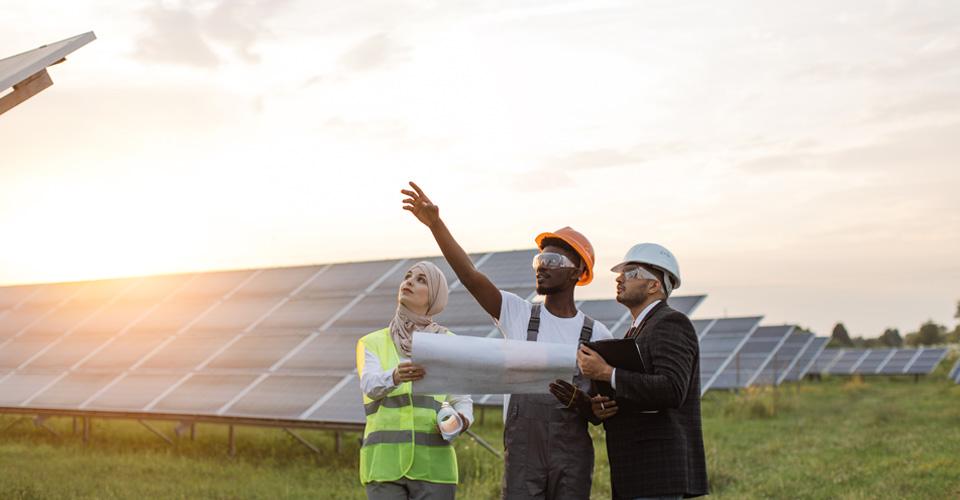
The results compound: a single $16 million CIF investment mobilized over $2 billion in co-financing, of which $1.47 billion came from the private sector — a mobilization ratio of 1 to 142 for this specific project. The storage and transmission investments now being made will allow India to absorb and dispatch intermittent renewable power at scale, directly supporting energy security in the country, and the NDC goal of 60 percent of installed electric capacity from non-fossil fuels by 2035.
This is what a continuum of support looks like — not a one-time intervention, but a partnership that evolves as a country’s ambition grows and its market deepens. Please note that REI India projects corresponding to the $70 million envelope referenced in the question are still being developed and have not yet been submitted to the TFC for funding approval.
EDITOR: The Nature, People, and Climate (NPC) program supports nature-based solutions that bridge mitigation and adaptation. How do you measure success in nature-based investments where outcomes—biodiversity, ecosystem health, community resilience—are often harder to quantify than in energy projects?
MR. MATTHIEU PEGON: CIF’s nature and resilience investments have already brought more than 39 million hectares — an area larger than Germany, under sustainable land or water management, and have benefited over 70 million people.
Our new Nature, People, and Climate program uses an Integrated Results Framework built around six categories of indicators – some flexible to meet country needs, and others designated as core indicators. This layered structure allows us to capture both aggregated portfolio-level results and specific country priorities.
For co-benefits such as biodiversity, the framework applies established methodologies and requires multilateral development banks (MDBs) to report on at least one co-benefit indicator per project.
Measurement is supported by a Monitoring and Reporting Toolkit and an Evaluation and Learning Toolkit, with indicators integrated into countries’ own national frameworks so that measurement capacity endures beyond CIF funding.
EDITOR: Given that CIF’s mandate emphasizes that “Indigenous Peoples and local communities, women, men, youth, and other vulnerable groups have access to opportunity,” how do you operationalize gender and social inclusion beyond rhetoric—and what accountability mechanisms ensure these commitments translate into tangible benefits on the ground?
MR. MATTHIEU PEGON: Successful climate transitions require investing in people — all people. CIF embeds gender and social inclusion into program design and monitoring systems from the outset. For example, we require results frameworks with disaggregated indicators from our MDB partners.
CIF funding focuses on tackling structural barriers through policy reform, institutional strengthening, and direct access grants, most notably our $11 million Women-Led Coal Transitions mechanism, WOLCOT, which channels funding directly to local women’s organizations in South Africa, Indonesia, the Philippines, North Macedonia, and the Dominican Republic, empowering them to take a seat at the table in coal-to-clean transition strategies.
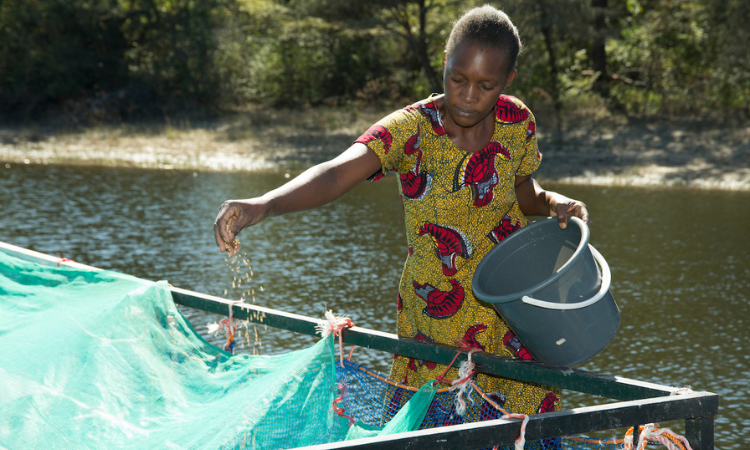
Our nature programs have committed $110 million in direct grants to Indigenous Peoples and local communities since launch, grants that are showing strong results at the community level. In Indonesia, for example, women in forest communities used these grants to add value to forest products, becoming entrepreneurs selling directly to consumers and meaningfully improving their livelihoods. CIF evaluations consistently show that when women and marginalized groups have secure livelihoods, access to finance, and a voice in decision-making, climate investments deliver deeper and more durable results.
CIF recognizes that women, Indigenous Peoples, and marginalized communities are not simply beneficiaries of climate action, they are its leaders. Our next generation resilience program, ARISE, is built on this principle, championing locally-led adaptation solutions and empowering communities and women to drive innovation with funding approaches rooted in the places most affected by climate change.
To reinforce consistent delivery, CIF is strengthening implementation support and accountability, including clearer results tracking, stronger requirements for disaggregated reporting, and closer engagement with MDB partners throughout implementation. We are also evaluating new frontiers in social inclusion accountability: adaptive social protection mechanisms that build country capacity to respond fast and equitably to climate shocks, directing resources to those most in need; and performance-based incentives that support our MDB partners in delivering measurable results for marginalized communities.
EDITOR: CIF’s mandate as a “learning laboratory” places strong emphasis on South-South knowledge exchanges. In your view, what is the most underutilized source of climate knowledge in the Global South, and how is CIF working to unlock peer-learning among countries facing similar climate challenges?
MR. MATTHIEU PEGON: The most underutilized source of climate knowledge in the Global South is the firsthand experience of the countries that have already navigated climate transitions or are currently deploying CIF funding.
CIF delivers on our learning laboratory mandate by generating rigorous evaluative evidence on just transitions, transformational change, and scaling climate finance. We anchor our decisions in that evidence and share it globally. We also promote real-time learning, for example through our annual knowledge exchange events.
The last one happened in April 2026, when we convened 160 participants from 30+ countries in Addis Ababa, Ethiopia for our first Global Knowledge Exchange, where peer learning on country platforms drove the agenda. In September 2025, we launched the Clean Energy Learning Laboratory (CELL), a pioneering platform linking energy transition and integration experts with implementers across developing nations to share lessons and unlock financing. CELL has already delivered numerous learning events and webinars, driven by country demand.
If a country can reach its climate goals five years faster by learning directly from a peer that faced the same challenges, the value is enormous and the cost of brokering that connection is negligible relative to learning everything from scratch.
EDITOR: As someone who has spent over two decades in emerging market finance, what is your message to developing countries that are simultaneously pursuing poverty alleviation, economic growth, and climate action in an increasingly constrained global fiscal environment?
MR. MATTHIEU PEGON: Low carbon and climate resilient development requires whole-of-system transformation — addressing policy, capacity, and investment barriers. Underpinning all of this lies sustainable and inclusive economic growth; productive climate investments create economic growth, which raises tax revenues and shrinks public debt burdens. That shift in logic is what defines effective climate finance today.
The foundation of all of it is countries ownership and quality national institutions. CIF provides scaled-up, predictable, low-cost finance through our MDB partnerships and works directly with Ministries of Finance.
This supports platforms that bring together national leadership, cross-sectoral coordination, and a clear investment pathway — defining the strategic vision before selecting individual projects and then aligning international partners around priorities that countries themselves have set.
……………..