
Dr. Arvind Kumar*

Climate change is rapidly transforming agriculture from a sectoral concern into a systemic global challenge, with cascading impacts on food security, water resources, biodiversity, energy systems and livelihoods. UN Secretary-General António Guterres warns that “a global food crisis is creating a hellscape of hunger and the climate crisis is accelerating with a deadly force. This is backed by the data: WMO confirms that 2015–2025 were the hottest 11 years on record, and 2025 alone was about 1.43 °C above pre-industrial levels. FAO Director-General QU Dongyu similarly cautions that extreme heat “is a major risk multiplier, exerting mounting pressure on crops, livestock, fisheries and forests, and on the communities and economies that depend upon them”. Therefore, fragmented approaches are no longer sufficient and we need a Hydro-Climate-Food Security Framework based on transversality, ecosystem-based adaptation and integrated water governance.
Global climate data show alarming trends. According to the joint FAO–WMO report, “the frequency, intensity and duration of extreme heat events have risen sharply over the past half century”. Models project each extra 1 °C of warming could slash yields of staples like maize and wheat by roughly 4–10 %. In fact, a single extreme heatwave can cut farm output in the affected area by nearly 50 %. Meanwhile, crop productivity which did increase over decades has already been slowed by climate trends, especially in mid- and low-latitude regions. Rising temperatures also stress water resources: roughly half the world’s population now faces severe water scarcity for at least part of each year. The net result is severe: an estimated 1.23 billion people live under conditions where extreme heat threatens their food systems. OECD-FAO projections show world agricultural production expanding ~13% by 2035 but at high cost. Modelled data indicate that direct agricultural greenhouse gas emissions will rise by about 6%, and price or supply shocks could still cause a one-in-four chance of a 3% drop in farm incomes by 2035.
The Ripple Effects
The impacts are already being felt across agriculture. Most crops experience yield declines when temperatures exceed roughly 30 °C, and livestock suffer heat stress above ~25 °C. Prolonged heatwaves and droughts trigger flash drought events, wiping out harvests. For example, agricultural workers worldwide lost about 470 billion work-hours to extreme heat in 2021, and are 35 times more likely to die from heat exposure than non-agricultural workers. Marine and terrestrial ecosystems that support food production are also collapsing; in 2025 over 90 % of the global ocean experienced at least one marine heatwave, lowering oxygen and devastating fisheries. Wildfires fuelled by heat have destroyed farms, forests and pasture across continents. In short, the IPCC confirms that climate damages are “widespread” and “unequally distributed” across nature and people, with observed economic losses in all climate-exposed sectors including agriculture, forestry, fishery, energy and tourism.
The UN World Water Development Report 2026 highlights that unequal water access has long hampered health and livelihoods, and notes that “climate change, water scarcity and disasters” are now intensifying these inequalities. Biodiversity too is caught in the crossfire, shifting land use and agrochemical inputs to adapt to climate often undermine the very pollinators and soil biota that agriculture needs. IPCC experts and FAO biologists stress that climate impacts on farms have “direct consequences for… biodiversity”. For instance, prolonged drought and heat in Brazil (2023–24 El Niño) triggered major wildfires that destroyed habitat and reduced national soybean yields by ~10 %. On the energy front, farming’s dependence on fuels and fertilizers exposes it to price shocks: 35 % of global fertilizer trade, and 20–30 % of LNG and crude, pass through chokepoints like the Strait of Hormuz. FAO notes that rising energy costs and fertilizer disruptions already are pushing farmers to cut applications, with some switching crops or fallowing land.
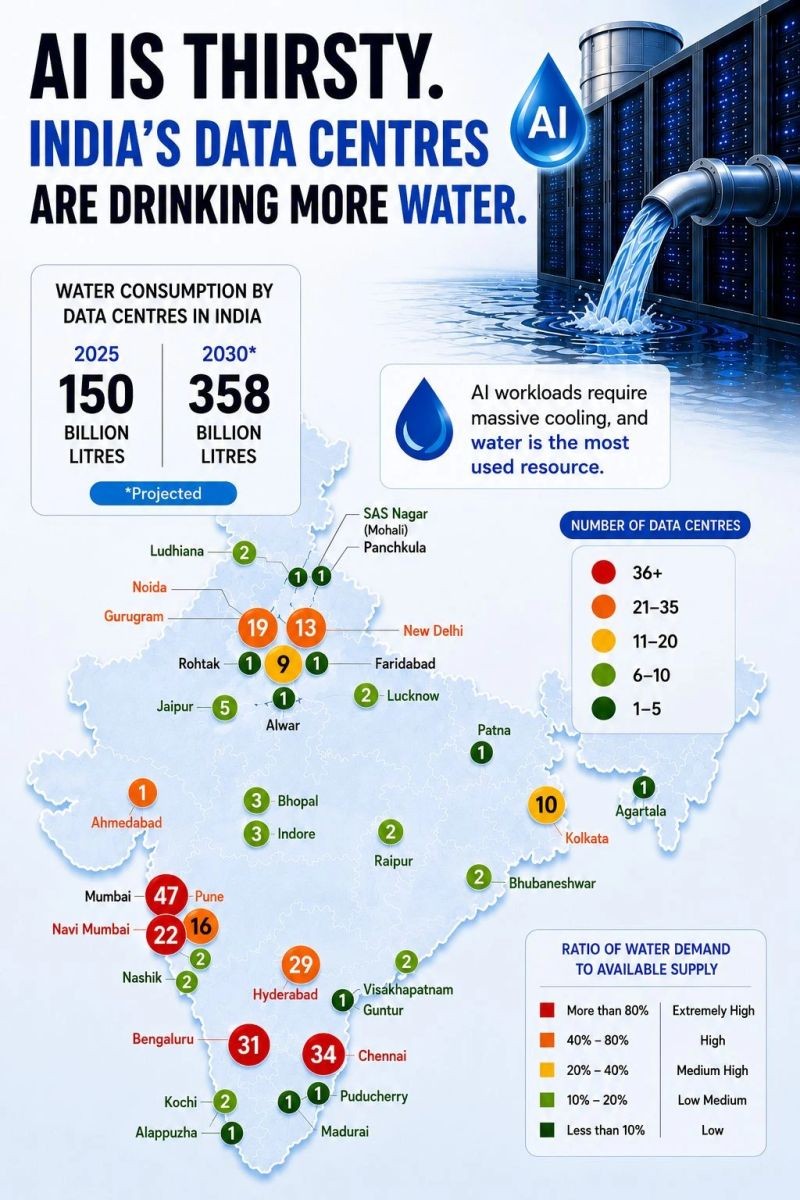
India presents perhaps the world’s most striking climate-development paradox. While nearly 60% of its net sown area remains rainfed, contributing around 40% of national food production, the country is simultaneously accelerating investments in water-intensive growth sectors from biofuel expansion and semiconductor manufacturing to AI-driven data centres. The challenge is not technological ambition but resource alignment. The Government projects electricity demand from data centres to reach 13.56 GW by 2031–32, driven largely by AI expansion, while independent estimates suggest India’s data centres already consume nearly 150 billion litres of water annually, with demand potentially more than doubling to 358 billion litres by 2030 as AI infrastructure expands.
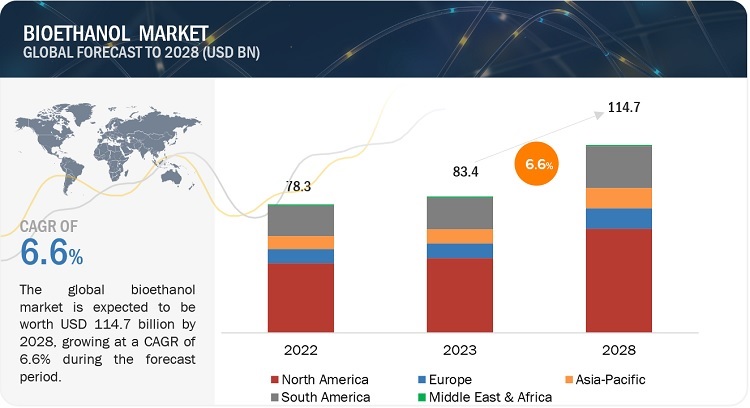
At the same time, ethanol blending continues to rely substantially on water-intensive feedstocks such as sugarcane and rice in several regions, even as groundwater depletion intensifies. International assessments warn that South Asia could experience up to 250 extremely hot days annually, rendering outdoor agricultural labour increasingly unviable, while every additional 1°C of warming may reduce wheat and rice yields by 5–10% without adaptation. The emerging question, therefore, is not whether India should pursue digital transformation, clean energy or biofuels, but whether these transitions are being planned within the country’s finite water budget. Without embedding water accounting into industrial, energy and agricultural policies, are today’s green and digital transitions risk reproducing the unintended legacy of the Green Revolution?
Pathways to Resilience.
The FAO–WMO extreme heat report calls explicitly for “innovation and the implementation of adaptive measures such as selective breeding and crop choices… adjusting planting windows and altering management practices” to suit the new climate reality. Early-warning systems and seasonal forecasts are vital so farmers can anticipate heatwaves and droughts, shifting sowing dates or stocking water in advance. For example, India’s National Mission for Sustainable Agriculture already promotes micro-irrigation and integrated rainfed farming systems to buffer variability. Ecosystem-based approaches (agroforestry, soil restoration, wetlands) are also advocated to soak up floods or retain moisture.
As preparations advance for the 2026 United Nations Water Conference, scheduled for December in the United Arab Emirates, there is a unique opportunity to fundamentally reshape the global discourse on agriculture and water. The Conference’s six adopted interactive dialogues inevitably converges on agriculture whether through the water-energy-food nexus, integrated water resources management, ecosystem restoration, climate resilience, financing or technology. It should therefore move beyond discussions centred solely on water supply, sanitation and infrastructure, and instead embrace a Hydro-Climate-Food Security Framework that recognises agriculture as the world’s largest water management system rather than merely its largest water consumer. Such an approach would integrate climate-resilient agriculture, ecosystem-based adaptation, regenerative farming, integrated water resources management, groundwater recharge, climate-resilient crop breeding, circular water use, renewable-energy-powered irrigation, digital climate advisory systems, biodiversity restoration and landscape-level governance into one coherent policy architecture.
It would also operationalise the water-energy-food-ecosystem nexus through transversality, ensuring that investments in one sector generate co-benefits across multiple Sustainable Development Goals. This transformation would shift policy thinking from producing more food with more water towards restoring water systems while producing nutritious food, thereby making agriculture an engine of climate resilience rather than a casualty of climate change.
*Editor, Focus Global Reporter