Excerpts from an interview of Dr. Nidhi Pundhir, SVP, Global CSR, HCL Tech & Director, HCL Foundation by Dr. Arvind Kumar, Editor, Focus Global Reporter
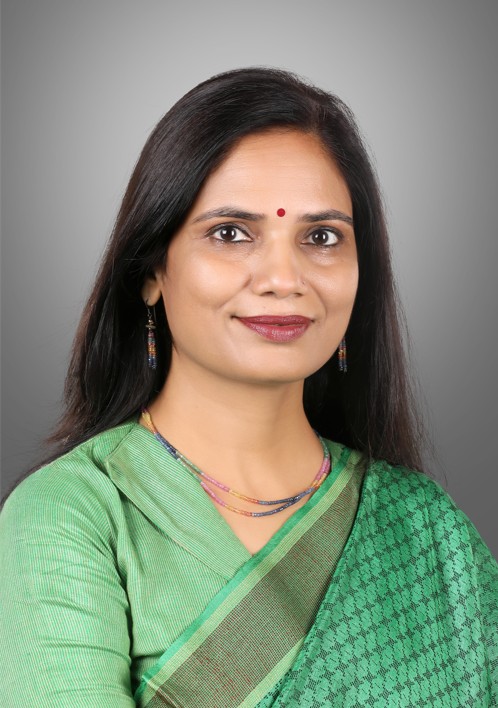
Dr. Nidhi Pundhir is an international humanitarian services and socio-economic-environmental development specialist. In the capacity of Senior Vice President, Global CSR, she leads the global CSR agenda for HCL Tech and heads the HCL Foundation, which is the CSR arm of HCL Tech, in India.
Dr. Pundhir has strategized as well as executed impactful programmatic frameworks that are aligned to the global Sustainable Development Goals, for the most disadvantaged and isolated communities, including environmental targets. She has a deep understanding of poverty issues and delivers realistic approaches towards poverty alleviation. In her current role, Nidhi has envisioned HCL Tech’s flagship Global CSR Policy. She has built the HCL Foundation’s vision, mission, and strategy to the next level, ensuring high-quality programme delivery, that brings about meaningful difference on ground.
With more than 27 years of experience in actualizing Human Rights and Environmental action at national and international levels, some of the key portfolios she has held were with SOS Children’s Villages as Director Programme Development, Asia, and at Plan International’s International Headquarters as Global Advisor on Child Protection in Development.
Dr. Pundhir holds a doctorate in Public Health Management, with her thesis on “Right to Health During First 1000 Days of Life for Children Living in Slums”, from IIHMR University, Jaipur and M.Phil. in Health Systems Management from BITS, Pilani, India.
INTERVIEW
EDITOR: Over the years, HCL Foundation has grown into one of the largest CSR arms in India, impacting millions of lives. If you were to capture the ethos and journey of the organization in one narrative, what would that story look like?
DR. NIDHI PUNDHIR: The story of HCL Foundation is ultimately a story of possibility, a story of transformation.
Over the past decade, we have maintained that sustainable development need not be delivered to communities; it must be built with them. What began as a commitment to responsible corporate citizenship(we had humble roots in HCL Techies’ volunteering contributions even before CSR became a mandate) has today evolved into a mission of enabling lasting social transformation across education, skill development and livelihoods, environment, health, water stewardship, biodiversity, sports for development, disaster risk reduction and response and so much more.
The journey is a testament of purpose, technology and compassion collaboratively transforming communities at scale, we have positively impacted more than 8.54 million lives thus far, with over half of them being women reaching Our mission through this, has remained constant: to be the source code for socio-economic and environmental development. If you look at our story you’ll see these constant patterns of us identifying local strengths, investing in long-term partnerships, and creating systems that outlast projects.
The impact story told through the changing lives of farmers embracing sustainable practices, para-athletes breaking barriers on international platforms, artisans rediscovering economic dignity via digital marketplaces and communities restoring ecosystems while reclaiming ownership of their future. But the true essence of this journey lies in how it’s been walking with communities, not just for them.
EDITOR: At IWF’s International Conference on ESG Transversality, you spoke about how technology-enabled mapping uncovered thousands of water bodies that existed on the ground but not on record. What did that gap tell you about how India has historically governed its water commons?

DR. NIDHI PUNDHIR: That discovery highlighted a fundamental challenge: what is not visible in governance systems often becomes invisible in planning and protection. It is mind boggling to see traditional water bodies do so much i.e. they continue to support groundwater recharge, biodiversity and local climate resilience, and despite it all they remain absent from formal records!
This gap reflects a historical disconnect between community knowledge and institutional data systems. Communities often know these assets intimately, but planning frameworks have not always captured them comprehensively. Technology helps bridge this divide by creating a common evidence base. However, mapping alone is not the solution. The real opportunity lies in combining geospatial intelligence with local stewardship, enabling governments, communities, and civil society to manage water commons more effectively and equitably.
For example, we are actively exploring this convergence through the Water DaMS ecosystem currently being piloted in Madurai. The initiative integrates a web-based management platform, field-data mobile applications, GIS mapping, and a decision-support system to strengthen evidence-based governance of water bodies.
As part of this pilot, the initiative includes geo-referencing revenue village maps, generating shape files for water bodies and waterways, and collecting detailed field data for 120 water commons, including irrigation tanks, ponds, ooranis, temple tanks, and their respective channels.
EDITOR: In May 2025, HCL Foundation introduced a dedicated Water category under HCL Tech Grant. What gap in the CSR-water ecosystem was this designed to fill, and what kind of innovations are you hoping NGOs will bring?
DR. NIDHI PUNDHIR: Water is central to both human survival and climate resilience. Water challenges today are increasingly complex, intersecting with climate resilience, agriculture, public health, livelihoods, and ecosystem restoration. Yet many promising organizations working in this space struggle to access patient, scale-oriented funding. The dedicated Water category under HCL Tech Grant was created under the leadership of Ms. Roshni Nadar Malhotra, Chairperson HCL Tech, towards recognizing water security as a strategic development priority in its own right. We wanted to encourage ambitious, evidence-based solutions that address governance, sustainability, and resilience.

At HCL Foundation, we take a holistic approach that combines infrastructure creation, ecosystem rejuvenation, and community participation. To date, we have harvested more than 155 billion liters of water and rejuvenated over 400 water structures, ensuring that water security is restored where it is needed most. But beyond numbers, the most critical part of our model is community ownership. We work with farmer cooperatives, women’s groups, and fisherfolk to ensure they not only benefit from water conservation projects but also take responsibility for their upkeep.
A powerful example is Project Vembanad in Kerala, where fisherfolk are actively engaged in removing invasive weeds to protect their livelihood and ecosystem. When communities are stewards of their resources, sustainability moves from being a project to becoming a lived practice.
We are particularly interested in innovations that integrate technology with community ownership, strengthen watershed management, improve water-use efficiency, restore ecological systems, and generate measurable long-term outcomes. Equally important are innovations in institutions and governance, because enduring water security is as much a social challenge as a technical one.
EDITOR: India Water Foundation champions a ‘Putting People First’ approach. Where have you seen this convergence produce the most durable water security outcomes, and where does it still break down?
DR. NIDHI PUNDHIR: The most durable outcomes emerge when communities are involved from planning through implementation and stewardship. We have seen remarkable success where local institutions, particularly women-led groups, farmer collectives, and village committees, become custodians of water assets rather than beneficiaries of projects.
However, the model breaks down when participation becomes symbolic rather than substantive. Infrastructure can be built quickly, but ownership cannot. Sustainable water security requires long-term engagement, local capacity building, and shared accountability. Projects that prioritize construction over governance often struggle to maintain impact over time.
The lesson is clear: people are not a component of water solutions; they are the foundation of them. For instance, in addition to the Water DAMS portal describes above, a Decision Support System (DSS) is being developed to analyze the current condition of these waterbodies, prioritize restoration feasibility, and generate data-driven restoration estimates, enabling a holistic and technology-enabled rejuvenation framework under HCL Foundation programmes. GIS-based mapping and topographical analysis were used for site selection, catchment assessment, and hydrological planning.
EDITOR: HCL Foundation has established STEM and digital labs and is running coding and AI initiatives for students. Is technology-in-education CSR closing the learning gap or merely adding devices to classrooms?
DR. NIDHI PUNDHIR: The strength of technology lies in its ability to democratize access and accelerate equity, and we see it as an enabler across all our focus areas.
While technology has transformative potential in education, a device in a classroom does not automatically improve learning outcomes. What creates impact is the combination of relevant content, teacher capacity, student engagement, contextual pedagogy, and continuous support.
We have already seen success with our coding and AI initiatives in government schools and the establishment of over 70 STEM and digital labs reaching many students. In healthcare, telemedicine and AI-driven diagnostics are bridging critical gaps in underserved regions. At the same time,
The SRoI of our projects stand testimony to the fact that outcomes, not equipment, should remain the benchmark of success.
EDITOR: HCL Tech Grant replaced its Environment category with a standalone Biodiversity category in FY26. What does a biodiversity-positive CSR programme actually look like?
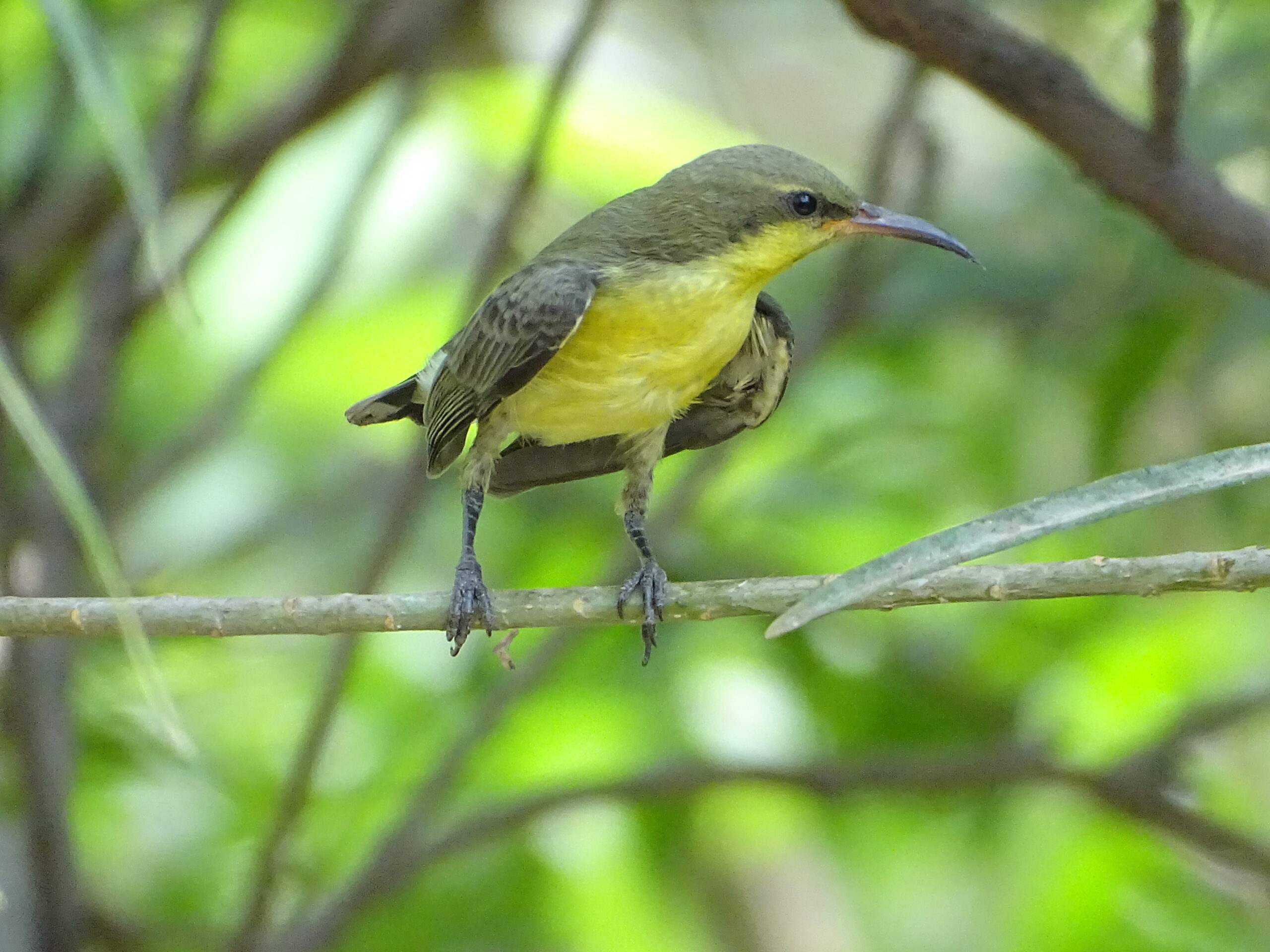
DR. NIDHI PUNDHIR: A biodiversity-positive programme goes far beyond plantation counts. While sapling plantations have their own value, biodiversity is also equally about restoring ecological relationships, strengthening habitats, protecting species diversity and enhancing ecosystem functionality.
Core pillars of a Biodiversity-Positive CSR Programme, where we believe in in-situ conservation leading to Ecosystem/Habitat Restoration, landscape and associated biodiversity conservation, and soil and moisture conservation. A few real examples of biodiversity-positive responses include Forest Ecosystem Revival (West Singhbhum, Jharkhand), Coastal & Aquatic Biodiversity (24 Parganas, West Bengal), Empowers marginalized groups to take over the local governance of natural ecosystems to avoid resource exploitation and utilize them sustainably.
Additionally, the landscape-level grassland restoration aims to conserve the critically endangered bird, the Great Indian Bustard (GIB)in western India, and to conserve the Horseshoe Crab, one of the planet’s oldest “living fossils” in the Indian Sundarbans.
Success therefore, should be measured through indicators such as ecosystem health, species richness, habitat restoration, community participation and long-term ecological outcomes. Not simply counting trees!
EDITOR: My E-Haat is digitising the artisan economy. What has it taught you about the difference between creating a marketplace and creating sustainable income?
DR. NIDHI PUNDHIR: My E-Haat is not just a marketplace — it’s a market access movement. From the start, it has maintained that digital platforms alone are never enough. Artisans also require design support, quality enhancement, branding, logistics, financial literacy, customer engagement capabilities and consistent market linkages.The initiative creates sustainable livelihoods by strengthening the value chain of the arts and crafts sector and by connecting artisans directly to markets through online and offline platforms.
We believe in empowering collectives and SHG’s for long term impact and sustainability, because a successful artisan isn’t merely selling products online; they are building micro-enterprises. ZingnZest, a women led social enterprise in Noida led by women working on bakery products, making savouries and various food items while FPO-Melagiri Natural Products Private Limited incorporated in NTFP Products is working in Karnataka.
EDITOR: Where is the CSR sector still getting women’s empowerment wrong?
DR. NIDHI PUNDHIR: Our sector sometimes focuses on inclusion without adequately addressing agency. Empowerment is not simply about involving women in existing systems; it is about enabling them to shape those systems. We must expand access to education, mentorship, and leadership opportunities for women across sectors. Equally important is recognizing the leadership women already demonstrate at the grassroots—whether through self-help groups, farmer collectives, or community institutions.
In-fact my commitment to this field is rooted in my own journey. I grew up in Rajasthan in a family of educators, yet I saw how girls around me were discouraged from pursuing education, with ‘settling after marriage’ seen as their only path. This reality instilled in me a sense of responsibility to break barriers—not just for myself, but for others.
When women lead community institutions, producer groups, cooperatives, and governance structures, the benefits extend far beyond individual outcomes and strengthen entire communities.
EDITOR: If the next generation of CSR leaders could leave behind one practice and adopt one new practice, what would they be?
DR. NIDHI PUNDHIR: I would encourage the sector to move beyond short-term project thinking and embrace systems thinking.
I have seen that people who genuinely enjoy engaging with communities and solving problems collectively often find the work very meaningful. On the other hand, those looking only for quick outcomes or very structured environments may sometimes find the sector difficult. What really helps is a balance of professional capability and empathy. The work becomes far more impactful when you approach it with both competence and humility.
EDITOR: How is HCL Foundation aligning its priorities with the UN SDGs, and what systemic changes need urgent attention in the next 5–10 years?
DR. NIDHI PUNDHIR: All our flagship programmes are mapped to the UN SDGs and our focus is to contribute measurable outcomes through advance these goals at both the community and national level.
Looking ahead, the most urgent systemic shifts needed are in three areas. First, climate resilience, as communities are already facing the brunt of environmental degradation and extreme weather events. Second, universal access to quality healthcare, which remains a fundamental gap. And third, digital equity, because without closing the digital divide, millions will be excluded from opportunities for education, employment, and participation. We believe these areas will define sustainable progress in the next decade.
EDITOR: If you could change one thing about how India’s corporate sector approaches water stewardship in its CSR mandates, what would it be? And what role can civil-society think tanks play?
DR. NIDHI PUNDHIR: I would encourage a shift from viewing water primarily as a project area to viewing it as a shared strategic resource requiring collective stewardship.
Our CEO championing the cause of the Yamuna River Basin through the Yamuna River Basin challenge is testimony to this collective I mentioned. And not just fellow corporates. Water challenges are so interdisciplinary that they transcend organizational boundaries. Any aquifer or water body demands a greater degree of collaboration among businesses, governments, civil society organizations, academic institutions and local communities.
Civil-society think tanks have a critical role to play in this transition. They can generate evidence, facilitate dialogue, identify emerging risks, build consensus around policy solutions, and help translate knowledge into action. In a rapidly changing climate context, institutions that connect science, policy, and practice will become increasingly important in shaping India’s water future.
At its core, effective water stewardship is not about managing scarcity; it is about creating resilience. And resilience can only be built collectively.
HCL Tech reduced its greenhouse gas emissions by 46%, and achieved zero waste-to-landfill across all campuses, replenished more than 31x its water usage and is committed to achieving net-zero emissions by 2040 and continuing to advance responsible governance and social impact initiatives.
……………..