
Dr. Arvind Kumar*

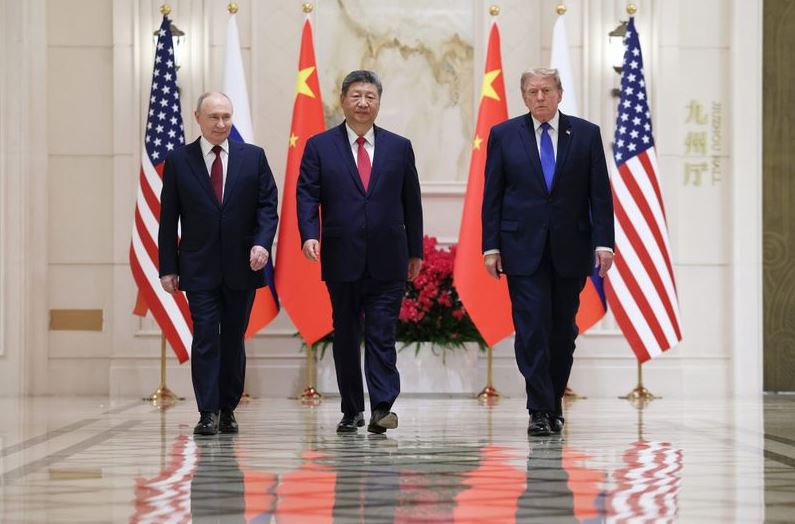
At a time when wars continue to disrupt energy supplies, inflation erodes household incomes, mounting debt constrains developing economies and climate change intensifies vulnerabilities. Yet, despite repeated declarations of cooperation and collective action, the gap between global commitments and tangible outcomes remains a concern. Against this backdrop, major global developments are unfolding simultaneously, from the G3 meeting in Shenzhen to COP31 in Antalya and other high-level multilateral engagements, bringing renewed attention to the direction of international cooperation. A fundamental question therefore arises: are these gatherings translating diplomatic dialogue into meaningful solutions to the interconnected challenges of our time, or are they signalling the emergence of a new world order? UN Secretary-General António Guterres cautioned that “global problems will not be solved by one Power calling the shots.” His observation assumes particular significance in the context of the recent Shenzhen meeting involving Donald Trump, Xi Jinping and Vladimir Putin. Beyond its immediate diplomatic implications, the gathering raises a larger question about whether the international system is moving towards an arrangement in which a handful of powerful nations increasingly shape global priorities, rules and outcomes, while the wider international community struggles to secure an effective voice in decisions that directly affect its future.
The significance lies in the symbolism of the gathering. This resembles a return to great-power diplomacy, where the balance of influence is determined less by universal participation and more by the ability to negotiate from a position of strength. The historical comparison with Yalta may be overstated, but the underlying concern is relevant: international arrangements negotiated by powerful states can have consequences for entire regions without those regions having an equivalent voice. The United Nations system, despite its institutional limitations, was founded on the principle of collective security and sovereign equality. An international environment dominated by exclusive directorates risks reducing multilateral institutions to platforms that legitimise decisions already negotiated elsewhere.
The consequences of this geopolitical fragmentation are already visible in the global economy. Wars are no longer confined to territorial boundaries or military theatres; their economic impact travels through oil markets, shipping routes, agricultural supply chains, insurance premiums and financial systems. The Russia-Ukraine conflict continues to expose the vulnerability of energy infrastructure and agricultural trade. The Iran conflict and continuing disruption in the Strait of Hormuz have added another dimension to global economic uncertainty. On 26 November, Brent crude settled at $96.57 per barrel as attacks on shipping and concerns over Middle Eastern supplies intensified. The United Kingdom Maritime Trade Operations’ 26 November advisory reported 17 tankers struck in the Strait since 1 November, with commercial shipping movements remaining severely disrupted.
For energy-importing economies, such developments translate into higher import bills, currency pressures, transportation costs and inflation. The consequences extend to fertiliser manufacturing, electricity generation, petrochemicals and food production. A conflict thousands of kilometres away can therefore affect the cost of cooking fuel, public transport and agricultural inputs in countries that have no direct involvement in it. The inflation figures underline this vulnerability. The IMF reported that global inflation reached 4.9 per cent in September 2026, while inflation across emerging and developing economies stood at 5.7 per cent. Its October outlook projected global economic growth of just 3.1 per cent for 2026.
The Global South pays the price
The most troubling aspect of the emerging order is the unequal distribution of geopolitical costs. Developing countries are deeply integrated into global trade and financial systems but frequently possess limited influence over the decisions that disrupt them.
Food security illustrates this imbalance. The World Bank’s November 2026 update projects food prices to rise by 10.3 per cent in 2026 and a further 7.2 per cent in 2027. It identifies conflict, transport costs, logistical constraints and climate-related risks as important sources of vulnerability. Similarly, the World Bank’s International Debt Report 2026 records developing-country external debt at a record $9.4 trillion in 2025. Low- and middle-income countries paid approximately $1.4 trillion in principal and interest during the year.
The implications are profound. Governments already struggling with debt servicing must simultaneously manage expensive energy imports, food inflation, climate disasters and infrastructure requirements. Resources that should finance education, healthcare, employment and development are redirected towards managing external shocks. This is the central contradiction of contemporary globalisation: economic consequences are shared across borders, but geopolitical decision-making remains concentrated. The countries that bear the consequences of conflict are not necessarily the countries that determine its course
The same contradiction is visible in climate diplomacy. COP31 in Antalya recorded progress on climate finance, adaptation, just transition and electrification, but governments failed to agree on the Presidency-led overarching decision. The emerging world order must therefore be judged not only by how effectively major powers manage their strategic competition but also by whether the international system can address the interconnected challenges of energy, food, water, climate and development.
India’s strategic moment
For India, Shenzhen is not a reason for diplomatic alarm; it is a reminder that strategic autonomy must translate into strategic capability. India maintains relationships with Washington, Moscow, Beijing, Europe and the wider developing world. Its participation in the Quad, BRICS, G20 and other multilateral platforms provides multiple avenues for engagement. However, diplomatic visibility alone does not guarantee influence. Economic resilience, technological capabilities, diversified energy supplies, strategic reserves, manufacturing strength and secure supply chains are essential to preserving independent decision-making.
India must also strengthen its neighbourhood as its first circle of strategic engagement. Connectivity, cross-border electricity trade, energy cooperation, transport corridors and institutional partnerships with Nepal, Bangladesh, Bhutan and Sri Lanka can create regional resilience against external disruptions. These relationships must be sustained through mutual trust, respect for sovereignty and predictable commitments. Against this backdrop, last week’s Nepal visit deserves more than a footnote. Balendra Shah, Nepal’s youngest prime minister and once a sharp critic of Delhi, made India his first bilateral destination, even as lawmakers from his party headed to Beijing: Kathmandu’s way of keeping both neighbours in the frame. The deliverables are concrete in a way Shenzhen’s were not: a Dharchula–Darchula bridge, the Sarayu–Kamala Express linking Ayodhya and Janakpur, a new transit route for Nepal’s trade through Kandla, a second phase of the Motihari–Amlekhgunj pipeline, a two-way air route via Bhairahawa and an offshore IIT campus. Nepal gains sea-access options, energy security and a hydropower market; India gains a calmer northern frontier, clean power and goodwill that concrete alone cannot buy. Yet Lipulekh and Kalapani, and quarrels over aid and aviation, remind us that connectivity bridges rivers faster than memories.
The Global South needs practical mechanisms rather than another collection of declarations. Coordinated procurement, regional emergency reserves, resilient trade corridors and stronger South-South cooperation can provide developing countries with greater negotiating capacity.
Way Forward
The Shenzhen meeting may not produce a lasting strategic alliance among its three participants. Its significance lies in the possibility that the international system is entering a period in which great powers increasingly seek to negotiate global stability through selective arrangements, even as the consequences of their decisions extend far beyond their own borders. India must respond through four priorities. First, practice strategic autonomy as active statecraft, using the Quad for maritime security, BRICS for a stronger Global South voice, and partnerships across the Gulf, Russia, Europe, ASEAN and the Americas to diversify markets, energy and technology dependencies. Second, strengthen domestic resilience through strategic reserves of crude oil, LPG and fertilisers, diversified supply contracts, renewables and energy storage. Third, make neighbourhood stability a strategic priority through reliable connectivity, cross-border power trade and development partnerships, while resolving sensitivities such as Lipulekh through quiet diplomacy. Fourth, convert diplomatic influence into collective action by building a developing-country agenda around food and fertiliser security, affordable energy, climate finance, debt relief and meaningful UN reform.
The Shenzhen photograph will fade; the geopolitical reality it represents may not. India’s task is not merely to secure a seat at the table of great powers, but to ensure that the Global South has a voice in deciding what happens around it. Strategic autonomy must mean the capacity to shape outcomes, not simply navigate between competing powers.
*Editor, Focus Global Reporter