Dr. Arvind Kumar*

Global climate indicators are all “flashing red”. 2024 was the hottest year on record, likely the first to exceed 1.5 °C above preindustrial levels. Even decades of scientific warnings are now concrete reality: we’re already facing 1.5–2°C warming, and at current emissions pathways we’ll likely blow past that. In fact, we’re on track for ~2.5°C or more by century’s end. WMO’s State of the Global Climate report 2025 confirms that 2015-2025 are the hottest 11-years on record, at about 1.43 °C above the 1850-1900 average. As UN Secretary-General António Guterres warns, when Earth’s climate breaks “eleven times” in a row, it’s no coincidence. “The State of the Global Climate is in a state of emergency. Planet Earth is being pushed beyond its limits. Every key climate indicator is flashing red,” “Humanity has just endured the eleven hottest years on record. When history repeats itself eleven times, it is no longer a coincidence. It is a call to act,” said Mr Guterres.
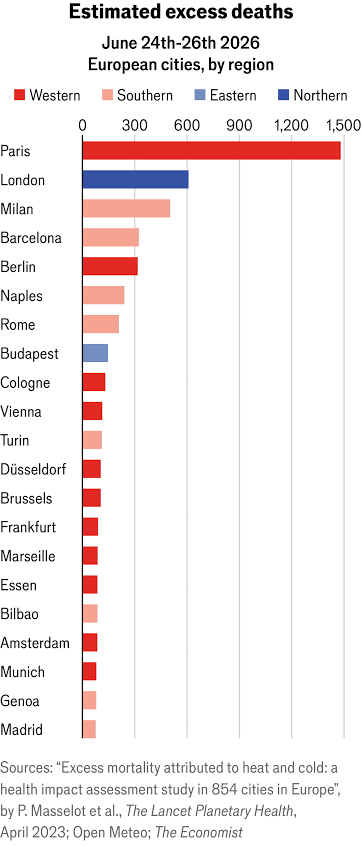
Climate change is no longer a future projection; it is unfolding in real time. Europe, often regarded as the world’s fastest-warming continent, has once again become the epicentre of this reality. Following the record-breaking summers of 2023 and 2024, the continent is now grappling with another exceptional heatwave in 2026, with temperatures exceeding 44–46°C across parts of Spain, Portugal, France, Italy and the Balkans. The latest heatwave has once again triggered widespread health alerts across southern Europe. European Commission Executive Vice-President Teresa Ribera described these unprecedented extremes as a “dramatic warning” against climate denial, emphasizing that nature is now delivering unmistakable evidence of a rapidly changing climate. However even as evidence mounts, political responses have been uneven. Some leaders and nations are already retreating into old patterns. A few powerful countries are downplaying climate risks or pulling back from multilateral climate commitments, even as they enjoy short-term economic gains.
The Water Dimension
Climate change is not just a heat or El Nino phenomenon – it supercharges the global water cycle, with cascading effects on food, energy, ecosystems and lives. Higher temperatures increase evaporation and evapotranspiration. Observations show global land evapotranspiration has risen roughly 10% since 2003. Warming also makes rainfall more extreme: heavier downpours saturate some areas, leaving many others parched. By altering rainfall patterns and snowmelt, climate change is pushing “water, the canary in the coal mine,” out of balance.
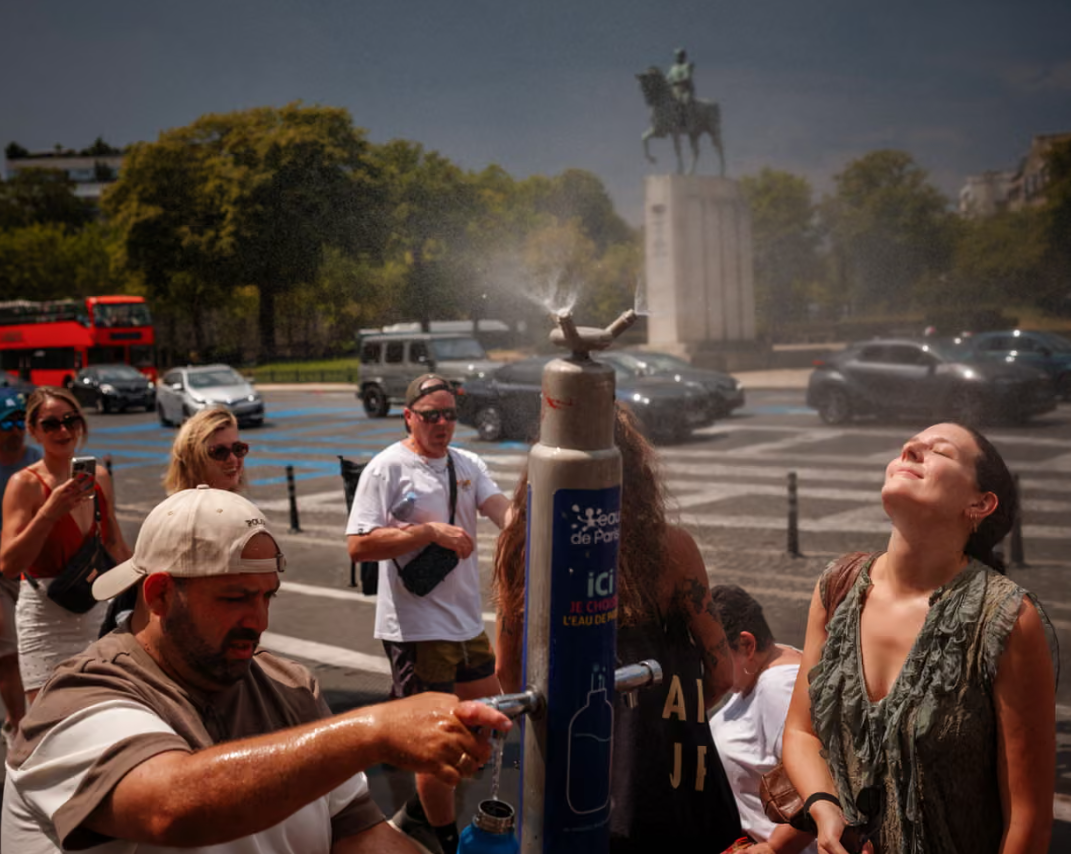
Meanwhile water demand is skyrocketing. Global freshwater withdrawals have increased roughly six-fold since 1900, driven by population growth, irrigation expansion, industry and rising living standards. As climates heat up, demand surges further: for example, recent research published in Scientific Reports (2025) finds that temperature shocks significantly intensify household water poverty in India, as rising heat reduces water availability while increasing demand, particularly among low-income and water-insecure households. At the same time, studies on domestic water use show that per-capita water consumption in India has been increasing steadily with rising incomes, urbanisation and changing lifestyles, with summer demand substantially exceeding the national urban service benchmark of 135 litres per capita per day (LPCD) in several cities.
Stumbling Blocks
WMO reports that in 2025 over half of the world’s river basins experienced “abnormally low” flows. Global snow and glacier melt continue apace, reducing mountain water storage. On nearly every continent lakes are shrinking and rivers running dry: one-third of global lakes have lost half their volume in the past century. As per WWF Wetlands our natural sponges and water filters have been decimated: roughly 35% of the world’s wetlands disappeared from 1970–2015. These natural reservoirs have been drained for agriculture, dammed or contaminated. Forested watersheds are dying or burning. In short, “rivers, lakes and aquifers are drying up or becoming too polluted to use”.
The UN’s World Water Development Report and IPCC forecasts concur: at current trends global water demand (agricultural, industrial, domestic) could rise 20–30% by 2050. Yet renewable water supplies are finite and often falling: already 2.5 billion people endure water stress some of the year, and 4 billion face “severe water scarcity” at least one month per year. This imbalance demand outpacing replenishment is already causing crisis.
The human toll is vast. As heatwaves and drought intensify, public health is endangered. Heat stress and dehydration spike as households use more water just to survive the heat. High temperatures accelerate spread of waterborne diseases in warm stagnant water. According to the World Health Organization (WHO), approximately 489,000 people die from heat-related causes every year worldwide, with nearly 45% of these deaths occurring in Asia and 36% in Europe. Elsewhere, malaria and diarrheal diseases are expanding into newly hospitable areas as water and sanitation services falter.
The social and geopolitical stakes are just as high. Studies find that without major adaptation, climate-driven water shortages could cut global GDP significantly by mid-century, hitting low-income countries hardest. Communities in sub-Saharan Africa and South Asia already migrate seasonally for water and work; these flows will intensify, fuelling conflict over scarce resources. Armed disputes over shared rivers could flare if cooperative management fails.
Emerging climate solutions must place water at their core. Climate actions influence water resources across sectors including agriculture, energy, ecosystems, public health, and WASH and water, in turn, shapes the effectiveness of climate responses. Ignoring these interconnections can create unintended consequences, deepen existing inequalities, and shift burdens onto already vulnerable communities. Therefore, climate solutions should be evaluated not only for their economic costs and carbon benefits but also for their impacts on water security, social equity, and ecosystem resilience.
Toward Integrated, Transversal Solutions
The complexity of the crisis demands integrated responses. National and international policies must mainstream transversality into climate and development plans. Experts agree we cannot fight climate change, water scarcity and food insecurity in silos. Initiatives like the UN’s upcoming 2026 Water Conference emphasize a “nexus” approach: Water for Prosperity will explicitly link the water–energy–food system and promote integrated, efficient use of water across sectors. These frameworks highlight solutions that cut across traditional boundaries: climate-smart agriculture (more crop per drop), renewable energy (with far lower water footprint than fossil fuels), nature-based water storage (wetland restoration, green infrastructure), and advanced technologies (smart irrigation, desalination, water recycling). Transversality also means better governance and finance. Internationally, water diplomacy (e.g. transboundary river treaties) must be strengthened, with shared data and early-warning networks. Donor and private finance needs to pivot heavily toward adaptation: building reservoirs, modernizing irrigation, and expanding sanitation. Studies find that water-related adaptations work much better under 1.5°C of warming than under 3°C. Thus, aggressive emission cuts (toward net zero by mid-century) remain the cornerstone. Embracing green economy transitions phasing out fossil fuels, ending deforestation, shifting to plant-rich diets reduces both heat and water stress. Adopting a water–climate nexus approach in policy, governance, research, and practice is essential for delivering integrated, inclusive, and sustainable climate solutions that strengthen resilience across sectors.
The world now stands at a crossroads. Only a unified, transversal strategy can ensure that our children inherit a world with flowing rivers, fertile fields and safe drinking water not just heatwaves.
*Editor, Focus Global Reporter