Shweta Tyagi*
World Water Week is the leading global platform for dialogue, collaboration and innovation on water, organized annually by the Stockholm International Water Institute (SIWI). The 2026 edition was held in Stockholm from 23-27 August 2026 under the theme “Water for people and progress,” with the programme focusing on water security and safely managed drinking water and sanitation as foundations for human development, health and resilience, with particular attention to communities facing persistent inequality. The primary focus of event is on turning ambition into reality. As Helena Thybell Executive Director of SIWI, emphasized that the world already has many solutions to water challenges, but the urgent need is to implement them together through collective action. As discussion in Stockholm highlighted not only where the challenges remain, but also emphasized where meaningful progress is possible through innovation, partnerships, and inclusion. The opening panel reflects on how international process can better reinforce one another, and how governments, businesses, researchers and civil society can work together to accelerate implementation in the lead-up to the UN 2026 Water Conference.
Five Key Trends from World Water Week 2026
Five defining trends emerged from this year’s deliberations reflecting how the global water agenda is evolving in response to technological, climatic, economic and institutional pressures.
- AI will bring profound changes to water management
Artificial intelligence is transforming water management, offering opportunities for better monitoring and decision-making but also creating new water-related risks. AI requires significant amounts of water for Computational Modeling; this directly place threat upon water resources. Governments and businesses therefore need greater transparency, regulation and sustainable planning of AI-related water demand. Stronger cooperation and governance can help manage shared water resources and build trust among stakeholders.
- Climate Pressure will require new forms of governance

Porto Alegre and Rio Grande do sul experienced their worst flooding in more than 80 years in 2024, climate emergencies resulted into damaging houses, displacing thousands of people and additionally causing economic loses estimated up to USD 2 Billion. The disaster reflects how climate change intensifying water related extremes, in this context world water week highlighted that resilient water services depend on resilient watersheds. The discussion emphasized the need for stronger coordination in planning and financing to build climate-resilient water and sustainable sanitation system.
- Water is becoming a strategic business issue
Private-sector interest in water is increasing, but investment remains limited because water is often undervalued. World Water Week highlighted the need for better governance, early-stage financing and clear pricing signals to make water projects attractive for private investment. Water should be treated as a strategic economic risk and investment priority.
- Sanitation Services must remain functional during crises.
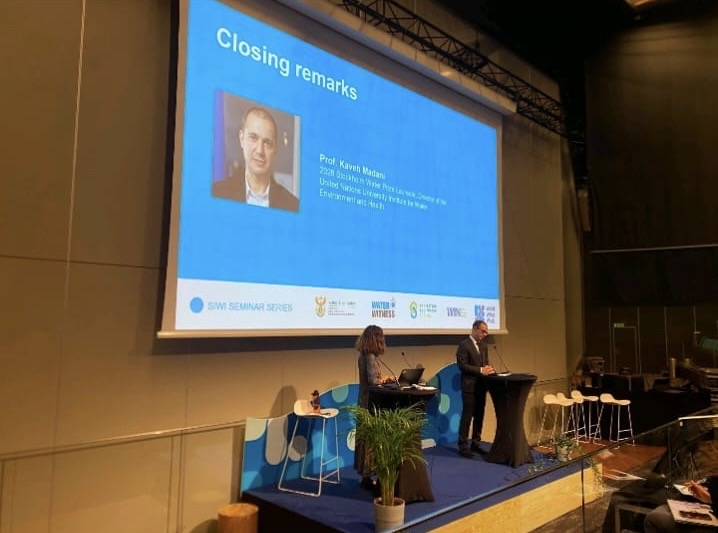
Session explored how Conflict, persecution, disasters and climate emergencies are forcing increasing numbers of people from their homes, making access to water, sanitation and hygiene (WASH) more difficult and create systematic inequalities. World Water Week highlighted the need to move beyond short-term humanitarian responses and strengthen long-term WASH planning investment and reduce sanitation vulnerabilities. Bridging humanitarian and development approaches is essential to ensure water and sanitation services remain functional during crises and support displaced and vulnerable communities over the long term. Fiona Duggan of Unilever broadened the frame to how climate change is reshaping WASH systems globally, and why locally led models are increasingly what the global sustainability agenda needs. Between them, a shared conclusion: resilient sanitation is not built by infrastructure or by communities alone, but by both together.
- Water is gaining ground in climate and biodiversity policy

Climate High-level Champion Dan Ioschpe underscored the central role of water in addressing the climate crisis, stating that “we cannot talk about climate action without talking about water.” Growing prominence of water across the UNCCD, CBD and UNFCCC COPs, reflects water as critical component of climate resilience, ecosystem protection, biodiversity conservation and sustainable development. The world water week highlighted the growing importance of water in international policy, particularly in the lead-up to the UN Water Conference in December 2026.
Furthermore, the event emphasized that strengthening policy coherence, international cooperation, and cross-sectoral action is essential to advancing climate adaptation, responsible water stewardship and sustainable sanitation system.
Water for People and Progress: Leaving no one behind
A central strand of this year’s discussions examined how water security and safely managed drinking water and sanitation can strengthen health, resilience and human development. Despite decades of progress, billions of people still lack access to these essential services, with marginalised communities consistently facing the greatest barriers. Aligning with World Water Day 2026 and the United Nations World Water Development Report, water and gender remain prominent topic. The Event placed particular attention on women and girls, Indigenous peoples, migrants, refugees, and people living in poverty.
The week helps advance water priorities within global and regional processes, including COPs and the UN Water Conference. Knowledge shared informs policy, research, and practice across sectors. Also acknowledged to support women’s rights and responsibilities relating to water, appreciate and learn from Indigenous science and knowledge, and share knowledge and learning across generations. sessions discussed progress on water for people in the SDGs and look ahead to the successors to the SDGs.
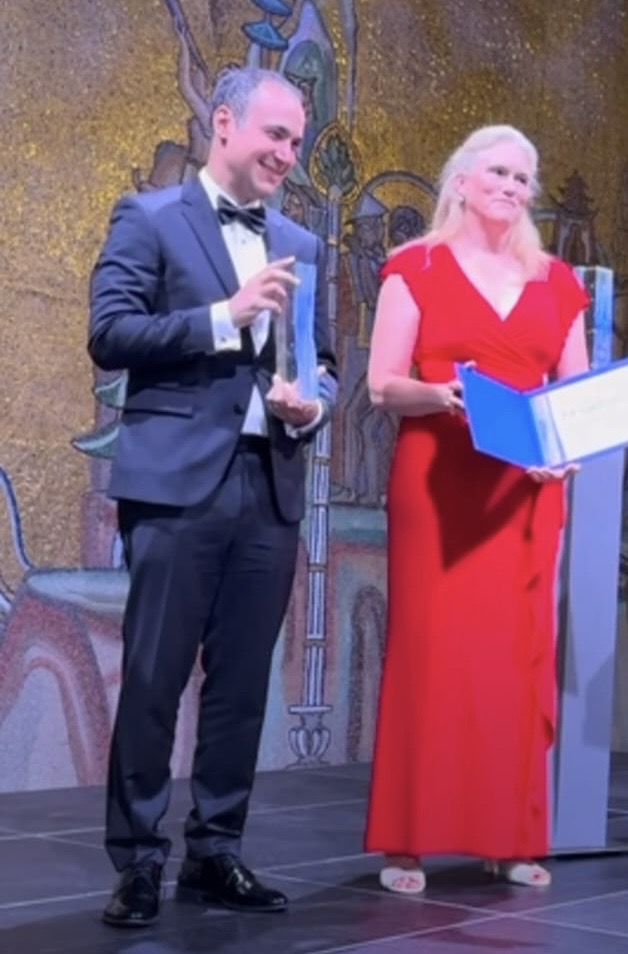
Another major highlight of World Water Week is the Royal Award Ceremony. This year Professor Kaveh Madani Awarded in the category of Stockholm Water Prize Laureate for advancing Water Science, Policy, Diplomacy and Public Engagement he gave an important message that the world is entering an era of “global water bankruptcy”- societies are using water beyond sustainable limits. Moroti Adegboyega in the category of Stockholm Junior Water Prize for Ecoferroquatics, a platform that uses AI and Magnets to selectively remove plastic from water.
Dynamic Participation
This year event brought together 3,600 participants from 133 countries. The Netherlands actively engaged and co-hosted official sessions focusing on innovative water governance. United Arab Emirates (UAE) connected global dialogues with upcoming 2026 United Nation Water Conference in Abu Dhabi. South Africa delegation was heavily regaining focus upon inclusive water governance, transformation, and agricultural investment. Jessika Roswall — European Commissioner for Environment, Water Resilience and a Competitive Circular Economy highlighted the importance of water resilience and the EU’s ambition to restore and protect the water cycle. Several other countries sent ministerial and technical delegations to present.
India’s Participation
India’s Ministry of Rural Development participated in World Water week 2026 in stockholm, Sweden reaffirming its commitment to strengthening water security through community-led development, technology-enabled governance and sustainable management of natural resources The participation also contributed to the global dialogue on strengthening water security through local planning, technology-enabled governance and community-led action.
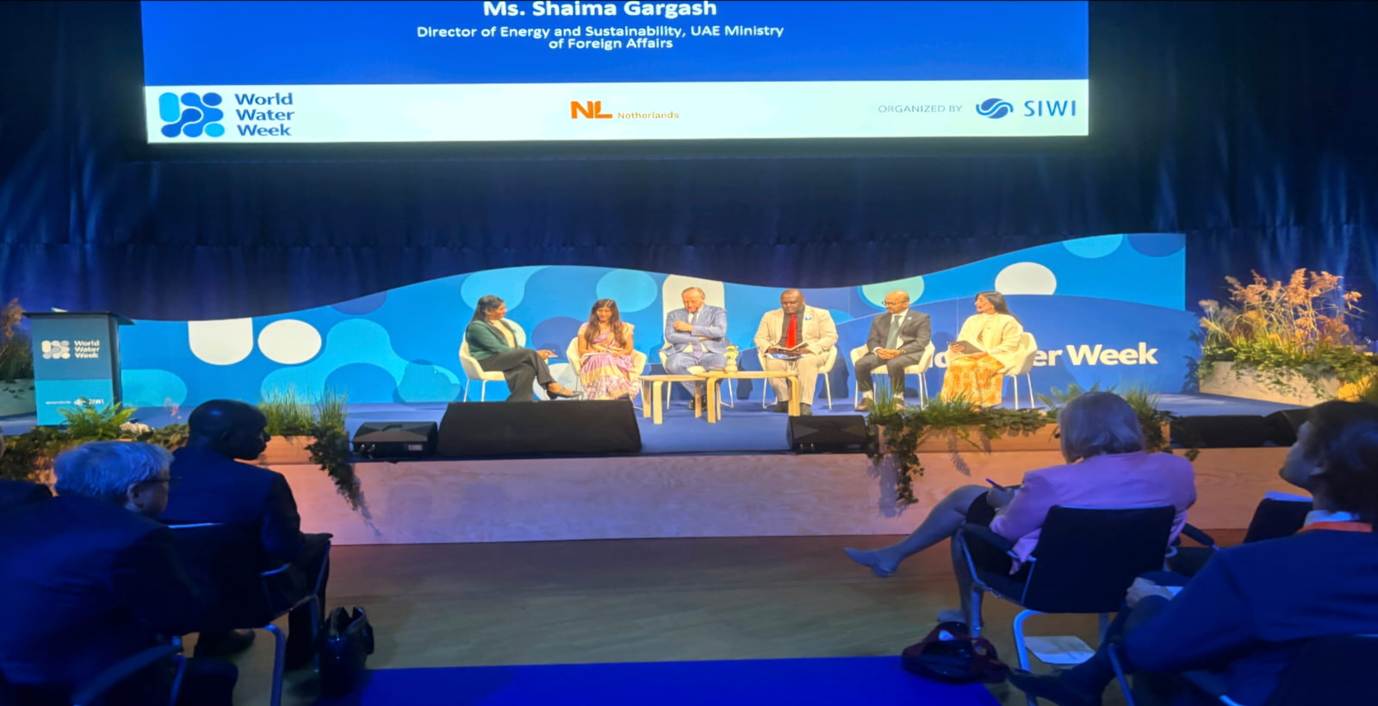
Ms. Rohini R. Bhajibhakre-Joint Secretary for India’s Ministry of Rural Development participated in a high-level panel at World Water Week 2026 in Stockholm to discuss global water security and resilient rural communities. She highlighted India’s experience in translating Water Visions to Reality: What Works?” and shared India’s experience in translating its long-term water vision into institutional and operational approaches for strengthening water security at the grassroots level. The session, convened by GIZ and IWMI, provided a platform to exchange global best practices and emphasise political commitment, cooperative federalism, digital public infrastructure, and community-centred planning for climate-resilient and inclusive water management. The Ministry highlighted that India’s water security framework is being advanced through a combination of flagship initiatives, including the Jal Jeevan Mission and the National Initiative on Water Security (NIWS). While Jal Jeevan Mission is strengthening access to safe drinking water in rural areas, NIWS is reinforcing investments in water conservation, groundwater recharge, water harvesting and other water security-related assets through scientific and data-driven planning.
India’s participation in World Water Week 2026 reflects the Ministry of Rural Development’s continued commitment to advancing water security as an integral component of rural development, livelihoods, climate resilience and sustainable management of natural resources. The participation also contributed to the global dialogue on strengthening water security through local planning, technology-enabled governance and community-led action.
Key takeaways
1. Water is an Indispensable Pillar of Climate and Sustainable Development
World Water Week 2026 reinforced the transversal of water across climate adaptation and resilience, food and energy security, health, ecosystems, livelihoods and economic development. Water should therefore be positioned not as a siloed sector, but as a strategic foundation to address climate vulnerabilities and leads a sustainable agenda.
2. From Dialogue to Systematic Action
The discussions highlighted the need to move beyond repetitive dialogue and execute sustainable actions and fragmented interventions. The week explains how to prioritize new form of governance approach towards upcoming interconnected water challenges and their systemic impacts across interconnected social, economic, and ecological system.
3. Hidden Challenges Behind AI water Management
Discussions highlighted that while artificial intelligence can improve water management, it drastically increases resource strain through Processor execution and data center cooling. Experts stressed the need for water-just AI regulations and transparent supply chain management.
4. Equity, Inclusion and Resilience Must Remain at the Centre
The Week highlighted persistent inequalities in access to safe drinking water, sanitation and hygiene, particularly among women and girls, Indigenous peoples, migrants, refugees and vulnerable communities. Building resilient water and sanitation systems therefore requires inclusive, locally led approaches that connect humanitarian responses with long-term development and resilience planning.
5. World Water Week Can Build Momentum Towards COP31 and Beyond
World Water Week 2026 provided an important bridge to COP31 for strengthening dialogue, consensus and action ahead of COP31 and the 2026 UN Water Conference. By positioning water as a fundamental pillar of climate action and resilience, world water week 2026 provides a clear pathway towards COP 31 supporting the effective integration of water into climate action, adaptation and broader international development processes
Way Forward
World Water Week 2026 reinforced the need to move from fragmented, sector-specific interventions towards integrated and transversal water action. Water is no longer simply a standalone development sector; it connects climate resilience, food and energy security, public health, biodiversity, livelihoods, technology and economic development. The way forward should therefore be to mainstream Water Transversality as an implementation approach that brings together policy, science, technology, finance, institutions and communities around shared outcomes. Greater emphasis is needed on trusted and hyper-local water data, climate-resilient infrastructure, nature-based solutions, circular water systems, community-led governance and responsible application of AI, while linking water data with investment decisions to unlock public, private, philanthropic and climate finance.
Looking ahead to COP31 and the 2026 UN Water Conference in Abu Dhabi, the global water agenda should focus increasingly on implementation, measurable outcomes and cross-sectoral partnerships. Water can serve as a “super-connector” between the climate, biodiversity, land, food, energy, health and sustainable development agendas, enabling different actors to work through a common framework rather than in silos. The opportunity now is to translate the momentum of Stockholm into practical coalitions, investment pipelines, data-driven governance and scalable local solutions. The pathway is therefore from water as a sector, to water as a nexus, to Water Transversality, and ultimately to water as the super-connector for climate resilience, human development, ecological security and sustainable economic progress.
*Associate Editor, Focus Global Reporter