Excerpts from an interview of Shri Dr. Amit Kumar Ghosh, IAS, Additional Chief Secretary (Health & Family Welfare), Department of Health & Family Welfare and Medical Education, Government of Uttar Pradesh by Dr. Arvind Kumar, Editor, Focus Global Reporter
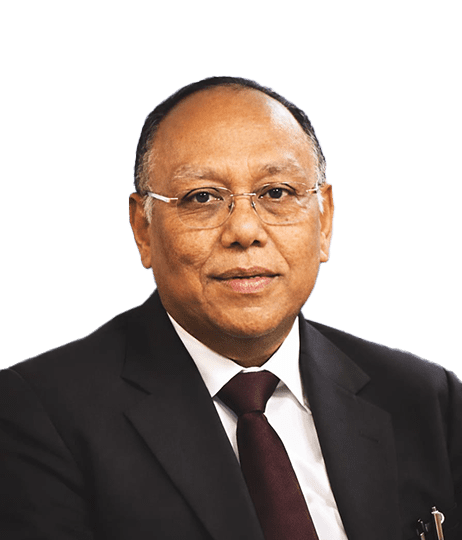
SHRI DR. AMIT KUMAR GHOSH, is a senior Indian Administrative Service officer of the 1994 batch (Uttar Pradesh cadre) who currently serves as Additional Chief Secretary-Medical Health, Family Welfare & Medical Education, Government of Uttar Pradesh, one of the state’s most critical administrative positions responsible for public health strategy, healthcare delivery, and medical education governance. He was promoted to the rank of Additional Chief Secretary in 2025 after serving as Principal Secretary in the same department, reflecting his extensive administrative experience and leadership in shaping UP’s health and medical education programs. In his role, Dr. Ghosh oversees policy formulation and implementation for public health services, hospital systems, preventative health campaigns, and medical education institutions across Uttar Pradesh—India’s most populous state. He has led initiatives such as establishing centers of excellence in surgical care, expanding cancer screening, and strengthening essential medicine supplies, and he plays an active role in leveraging digital health and AI-enabled healthcare transformation for the state. Dr. Ghosh regularly engages with stakeholders across government, healthcare providers, and community groups to drive improvements in health outcomes, quality of care, and equitable access to services in both rural and urban areas. His leadership reflects a commitment to enhancing health system performance through evidence-based policy, operational excellence, and collaborative governance.
INTERVIEW
EDITOR: In over three decades you have held charge of portfolios as varied as industries, highways, social justice, and now health and medical education. How has that range of experience shaped the way you approach public health governance today?
DR. GHOSH: If I look back at the trajectory of my career, I see three decades of continuous learning in how governance actually works on the ground, a wide range of responsibilities at both the state and central levels, from district administration to industrial development, infrastructure, social welfare, and now public health, each one adding a layer I draw upon daily in the health department. My years leading industrial development as Managing Director of UPSIDC and as Director of Industries gave me an appreciation for project economics, capacity planning, and the discipline of execution timelines skills that translate directly into building and equipping medical colleges and hospitals at scale. My time in the Ministry of Road Transport and Highways, working on major infrastructure initiatives including the Bharatmala Pariyojana, sharpened my understanding of how large, multi-agency projects succeed only when logistics, land, finance, and political will are aligned simultaneously a lesson invaluable when expanding hospital infrastructure across a state as vast as Uttar Pradesh. And my stint as Additional Secretary in the Ministry of Social Justice and Empowerment, working on welfare reforms for marginalized sections, kept equity at the center of my thinking reminding me that public health is not just about building capacity, but about ensuring that capacity actually reaches the poorest, the most remote, and the most vulnerable. Field postings as District Magistrate in districts as varied as Lucknow, Meerut, and Uttarkashi further grounded me in the realities of implementation because policy that looks elegant on paper can fail entirely at the last mile if it doesn’t account for local terrain, culture, and capacity. Health governance, in the end, is a synthesis discipline: it needs the project rigor of industry, the execution muscle of infrastructure, and the moral compass of social justice, all working together.
EDITOR: Uttar Pradesh recorded the sharpest improvement of any state in NITI Aayog’s latest SDG India Index, moving into the “Front Runner” category on a 25-point gain over its baseline score. How much of that leap would you credit to the health sector specifically, and what changes now that the state carries “front runner” expectations?
DR. GHOSH: I’d say health has been one of the genuine engines of this transformation. Uttar Pradesh’s overall SDG score climbed from 42 to 67 between 2018-19 and 2023-24 the sharpest jump of any state in the country and on the National SDG Index, we moved 11 places, from 29th to 18th, crossing from the “Performer” band directly into “Front Runner.” What’s notable is that the health goal didn’t just ride along with that overall climb, it led it in relative terms: independent analysis of the underlying data shows Uttar Pradesh’s SDG 3 score itself rose by roughly 35 points between the 2018 baseline and the 2020-21 assessment, a faster rate of improvement than India’s national health-goal gain of 22 points over the same window. That’s the kind of granular movement that tells you the sector isn’t coasting on the composite number it’s actually outperforming within it.
The underlying indicators back this up with real specificity. Institutional deliveries in the state rose from 67.8 percent in NFHS-4 (2015-16) to 83.4 percent in NFHS-5 (2019-21), full immunisation coverage among children aged 9-11 months now stands above 93 percent, and maternal mortality fell from 197 per lakh live births in 2016-18 to 141 in the most recent Sample Registration System reporting period; a decline of close to 30 percent in under half a decade. On financial protection, Uttar Pradesh has issued more Ayushman Bharat cards than any other state in the country around 5.64 crore so far, covering 87 percent of our 9 crore eligible families backed by 6,099 empanelled hospitals, again the highest of any state, split between 2,921 government and 3,088 private facilities. Since the scheme’s inception, 74.4 lakh beneficiaries in the state have received free treatment worth over Rs 12,283 crore, with Rs 4,200 crore of that going specifically toward tertiary care like cancer treatment, cardiology, and organ transplants. Add to that a wave of new medical colleges, from 17 before 2017 to over 80 today, changing the doctor-to-population ratio in districts that had never had a college before, and you have primary access, secondary and tertiary capacity, and financial protection all moving in the same direction simultaneously, precisely the kind of systemic, cross-cutting progress the SDG framework is designed to reward.
What changes with Front Runner status is the ambition we now hold ourselves to. We’re no longer measuring ourselves only against our own past; we’re benchmarked against states scoring in the high 70s where we’re still climbing toward that range. Our clear next frontier is maternal health outcomes, where, even with the gains I’ve described, we remain some distance from the SDG target of below 70 maternal deaths per lakh live births by 2030. That’s why we’re now directing focused investment into emergency obstetric care, blood bank networks, and referral transport because Front Runner status isn’t a finish line, it’s an invitation to close the remaining distance faster than anyone else has.
EDITOR: Under the “One District, One Medical College” mission, the state has grown from 17 functional government medical colleges before 2017 to 81 by March 2026, with more opening this year and public-private partnership colleges coming up in districts such as Hathras, Baghpat and Kasganj. What has been hardest about scaling this fast, and how are you making sure faculty strength and teaching quality keep pace with the new seats?
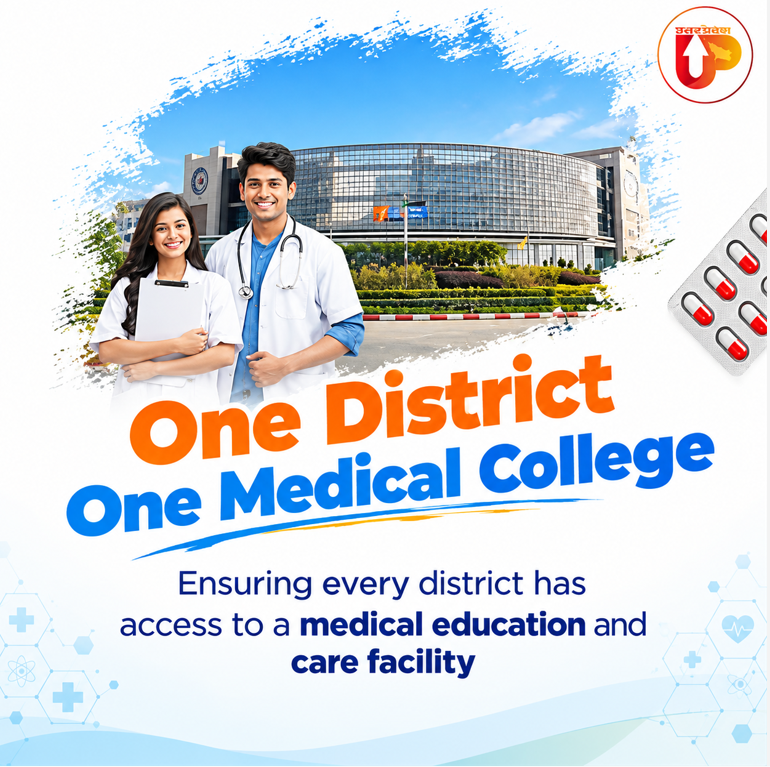
DR. GHOSH: The numbers really do tell the story of intent: from 17 functional government medical colleges before 2017 to 35 by 2022, and now 81 as of March 2026; a scale of expansion no other state has attempted in this timeframe. The genuine challenge has been faculty; specifically, senior faculty in specialities like radio-diagnosis, anaesthesia, and psychiatry, where the national pool of qualified professors and associate professors is limited and every state is competing for the same talent.
We’ve tackled this on three fronts simultaneously. First, the Medical Bond Scheme, introduced in 2018, requires every MBBS graduate from a government college to serve within the state for two years, which has meaningfully expanded our pipeline of junior residents feeding into future faculty positions. Second, we opened the door to retired professors, engaging them as consultants at a competitive monthly remuneration so that decades of teaching experience aren’t lost to the system just because someone has crossed the retirement age this has been particularly valuable for stabilising new colleges in their first few academic sessions. Third, we brought most of our new autonomous medical colleges under Atal Bihari Vajpayee Medical University, which lets us standardise curriculum, faculty benchmarks, and clinical training protocols across all of them rather than each college improvising its own standards.
The public-private-partnership route in districts like Hathras, Baghpat, and Kasganj alongside Mahoba, Mainpuri, and Hamirpur is a further multiplier: the state provides land on long-term lease and viability gap funding support, while private operators bring in capital and specialised faculty recruitment networks, letting us reach underserved districts faster than the government-only model could alone. The result is a system where seat expansion and faculty strength are being built as one integrated pipeline, not two separate races.
EDITOR: Uttar Pradesh has been recognised as the country’s best-performing state in the recent 100-day TB-Mukt Bharat Abhiyan, screening over 15 lakh people and notifying more than 68,000 patients in the campaign’s first six weeks alone. Beyond the intensity of a 100-day sprint, what is the department doing to convert this into a lasting reduction in the state’s TB burden on case-finding, drug-resistant TB, and Ni-kshay Mitra-backed nutrition support?
DR. GHOSH: The 100-day intensity was never meant to be a one-off event, by the time TB Mukt Bharat Abhiyan 2.0 concluded, Uttar Pradesh had screened over 31 lakh people and detected 1.85 lakh new TB patients, nearly 52,000 of them asymptomatic cases who would very likely have gone undiagnosed under passive surveillance alone. We achieved 91% coverage of our identified high-risk villages and urban wards, deploying more than 1,000 X-ray machines and an equal number of NAAT machines so that 91% of notified patients received molecular-grade diagnostic confirmation rather than symptom-based guesswork. As I said at the AIIMS Gorakhpur conclave, our strategy has rested on innovation, technology, partnerships, and community ownership and it’s the institutionalisation of that combination, not the sprint itself, that will determine whether this becomes a durable shift in the state’s TB curve.
On case-finding, the campaign’s real legacy is structural: our roughly 22,000 Ayushman Arogya Mandirs now function as the operational backbone for continuous, not just campaign-period, case detection, and I’ve directed all districts to upload screening and testing data to the Nikshay Portal in real time, so we can identify slow-progress blocks and course-correct on a rolling basis rather than waiting for the next national drive. Between January and June 2026 alone, the state notified 3.37 lakh cases against our annual target of seven lakh 96% of the pro-rata target which tells me the underlying case-finding machinery is holding its pace well beyond the 100-day window.
On drug-resistant TB, we’re integrating the shorter, six-month BPaLM regimen Bedaquiline, Pretomanid, Linezolid, and Moxifloxacin into our MDR/RR-TB treatment protocol, cutting what used to be a gruelling multi-year regimen down dramatically and improving adherence rates. And on nutrition, Ni-kshay Mitra sponsorships remain central to treatment completion because a TB patient who is also food-insecure is a patient at high risk of default, so we’re actively expanding community, corporate, and PSU sponsorship enrolment alongside the clinical push, treating nutrition support as a core pillar of cure, not an add-on to it.
EDITOR: Rural tap water connections in Uttar Pradesh have risen from barely 2 percent in 2019 to over 90 percent today under the Jal Jeevan Mission, alongside near-universal sanitation coverage under Swachh Bharat. How do you see the broader connection between water and health playing into the state’s public health strategy, and what remains to be done?
DR. GHOSH: I think of water as the most basic infrastructure of preventive health — more foundational, in a sense, than a hospital bed, because it determines how much people need that hospital bed in the first place. When clean drinking water access in this state moved from around 74 percent in the early 1990s to nearly universal today, and sanitation coverage climbed alongside it, we weren’t just improving quality of life in an abstract sense we were removing entire categories of preventable illness before they could ever reach our health system. A robust curative system matters enormously, but a population with reliable clean water and functioning sanitation simply needs less of that curative care to begin with. That’s the philosophy I try to bring to how the health department engages with our colleagues in the water and sanitation departments, we’re not adjacent missions, we’re the same mission approached from two different points of entry.
The pace of change on tap water has been extraordinary in practical terms: from barely 2 percent of our roughly 2.67 crore rural households connected in August 2019 to over 90 percent today under Har Ghar Jal. For a household, that means women and young girls are freed from hours once spent fetching water, time that now goes toward income generation, education, or simply rest and that has its own quiet but real effect on maternal and family health. For our own institutions, it means health centres, schools, and anganwadis functioning with running water on-site, which changes everything from basic hygiene practices to how confidently a frontline worker can manage a delivery or a minor procedure.
What remains is really about depth rather than breadth. Coverage numbers tell you a household has a tap; they don’t tell you what’s coming out of it, how consistently, or in what quantity. We’re now pushing hard on water-quality testing and surveillance, strengthening village-level water and sanitation committees, and making sure that a connection isn’t treated as the finish line but as the start of an ongoing quality and reliability commitment. Water and health, in my view, will only get more tightly integrated in how this state plans public health going forward because you cannot build a resilient health system on top of an unreliable water system.
EDITOR: Uttar Pradesh now leads the country under the Ayushman Bharat Digital Mission, with well over ten crore health records linked to ABHA IDs through platforms including the state’s own eKavach system. In practical terms, what has this changed for a patient or a frontline worker in a UP village, and where is the department headed next on AI-enabled healthcare?
DR. GHOSH: The scale here is worth stating plainly: Uttar Pradesh now leads the entire country with over 15 crore ABHA-linked health records, well ahead of the next largest contributor, and we were the first state to achieve 100 percent registration of both health facilities and health professionals on the national registries. That’s not a vanity statistic it’s the plumbing that makes everything else possible.
For a patient in a village in, say, Balrampur or Chitrakoot, what this actually means is that their health record no longer lives only in a folder they have to remember to carry. Through eKavach, which feeds directly into the national ABDM architecture, a person’s prescriptions, lab results, and treatment history from an Ayushman Arogya Mandir visit are available by QR-code scan-and-share at the district hospital they’re referred to next, without repeating tests or re-explaining their history to a new doctor. We’ve already generated over 1.4 crore OPD tokens digitally, which cuts the queuing and paperwork burden that used to consume a frontline worker’s morning. For an ASHA or ANM, it means the anaemia and immunisation tracking I described earlier isn’t running on a separate paper register it’s tied to the same patient ID across her entire care journey, so follow-up doses and referrals don’t fall through the cracks.
On AI, we’ve moved from pilots to a funded roadmap. The state’s new AI Mission, backed by roughly ₹2,000 crore over three years, has named healthcare as a cornerstone application area specifically early disease diagnosis, critical care decision support, and data-driven public health management and we’re setting up dozens of AI and data labs across the state to support this. We’re already working with IIT Kanpur’s Gangwal School of Medical Sciences and Technology on AI-enabled telemedicine and point-of-care diagnostics, aimed at giving a primary health centre in a remote block access to something close to specialist-level triage support. With a data foundation as large as ours already built through ABDM, the honest next step is turning that data into predictive tools flagging disease outbreaks, high-risk pregnancies, and TB clusters before they escalate, rather than only recording what already happened.
EDITOR: The state is positioning itself as a national hub for pharmaceutical and medical device manufacturing, with the Bulk Drug & Pharma Park coming up in Lalitpur and a Medical Device Park near the Noida International Airport. How does this industrial push connect back to your core mandate as a health administrator — in terms of drug affordability, supply security, and local access to devices and diagnostics?
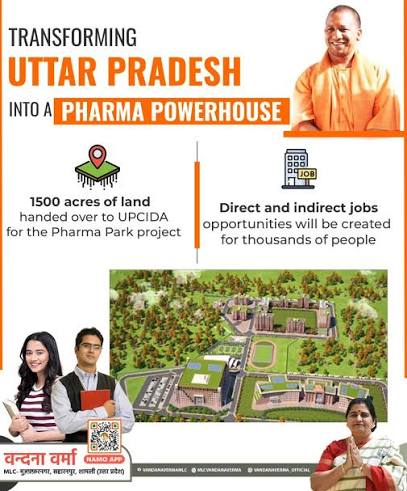
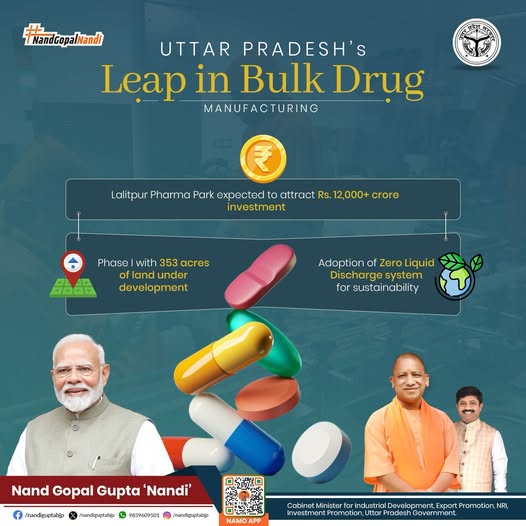
DR. GHOSH: I look at this less as an industries-department project I happen to be adjacent to, and more as the upstream half of the same mandate I hold on the health side. The Lalitpur Bulk Drug & Pharma Park, spread across nearly 1,472 acres in the Bundelkhand region, with Phase I already covering over 350 acres of formulation units, bulk drugs, and common infrastructure, is fundamentally about ending our dependence on imported active pharmaceutical ingredients largely sourced from China today for the generic medicines that our own Ayushman Bharat and state health programmes procure at scale every year. When the state controls bulk drug production closer to home, procurement costs come down and price shocks from global supply disruptions, the kind we all remember from the pandemic years, become far less likely to disrupt our essential drug list.
The Medical Device Park 350 acres near the Noida International Airport under the Yamuna Expressway Industrial Development Authority, complemented by a further 250-acre Pharma Formulation Park nearby speaks directly to a statistic I think about often: India still imports roughly 80 percent of its medical devices. Every X-ray unit, NAAT machine, or diagnostic kit we deployed during our TB elimination drive, for instance, currently carries import lead times and currency exposure that a domestic manufacturing base would eliminate. The park’s planned ASCA-certified testing laboratories are particularly significant for me as a health administrator, because they mean devices can be tested and certified within the state rather than shipped overseas and back, cutting the time between a device being designed and it reaching a primary health centre in Bahraich or Sonbhadra.
We’ve also brought in CSIR and DRDO as knowledge partners specifically to steer R&D toward affordable generics and diagnostics relevant to our own disease burden anaemia, TB, maternal health rather than purely export-oriented product lines. So when I’m asked how an industrial park connects to my job, my answer is simple: a state that manufactures its own medicines and devices is a state that can guarantee its own citizens affordability and supply security, rather than being a price-taker in a global market it doesn’t control.
EDITOR: As the countdown to the 2030 SDG deadline shortens, what is your own vision for where Uttar Pradesh’s health system needs to be by then, and what message would you leave with readers; policymakers, global partners and citizens alike about what it will take to get there?
DR. GHOSH: I believe a credible vision has to be honest about the distance still ahead, not just the distance already covered. And we have covered real distance: Front Runner status in the SDG India Index, medical colleges up from 17 to over 80, the best TB case-finding performance of any state in the country, anaemia among pregnant women falling even as the national figure rose, and a digital health backbone that now leads India in scale. My vision for 2030 is that this becomes one connected system rather than a set of parallel wins where the same ABHA-linked record that tracks a woman’s anaemia treatment also flags her as a high-risk pregnancy, routes her to the nearest equipped facility, and where that facility has a full complement of trained faculty and a locally manufactured, affordable supply of the medicines and devices it needs.
To policymakers, my message is that health outcomes are won or lost in the years between elections, not the year of one sustained capital and human-resource investment matters more than any single announcement. To global partners, I’d say Uttar Pradesh’s scale, 240 million people, makes it a meaningful place to test what works at population level, and we remain genuinely open to that collaboration. And to citizens, the honest ask is trust and participation showing up for screening camps, completing treatment courses, and using the facilities we’ve built, because a health system’s outcomes ultimately depend on the households it serves choosing to walk through its doors.
……………..