Dr. Arvind Kumar*
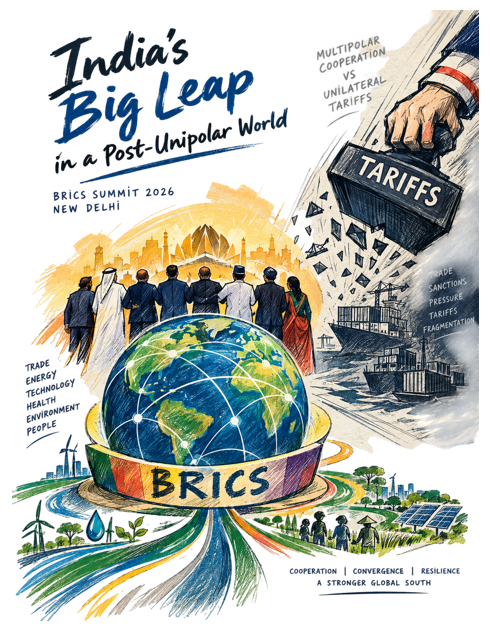
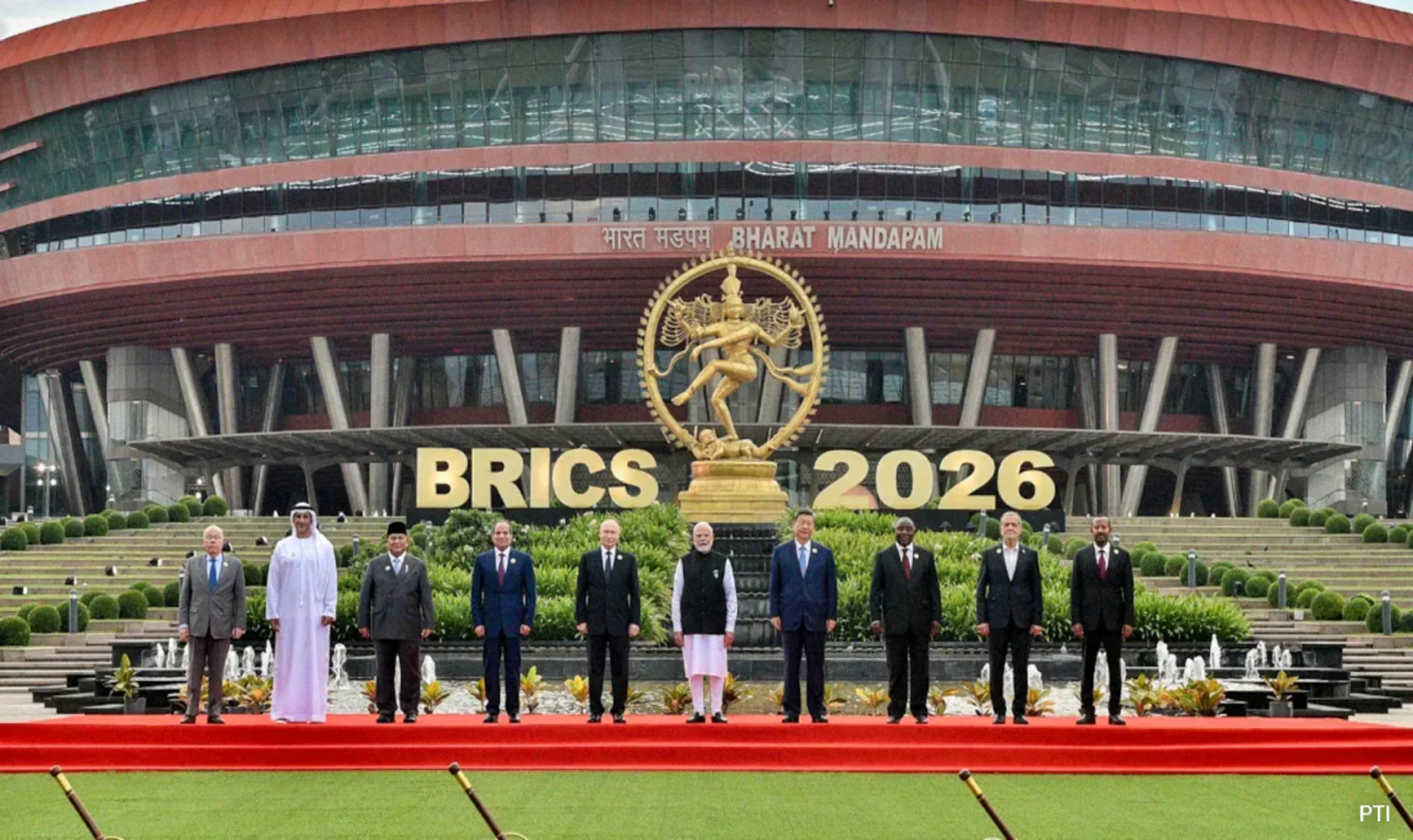
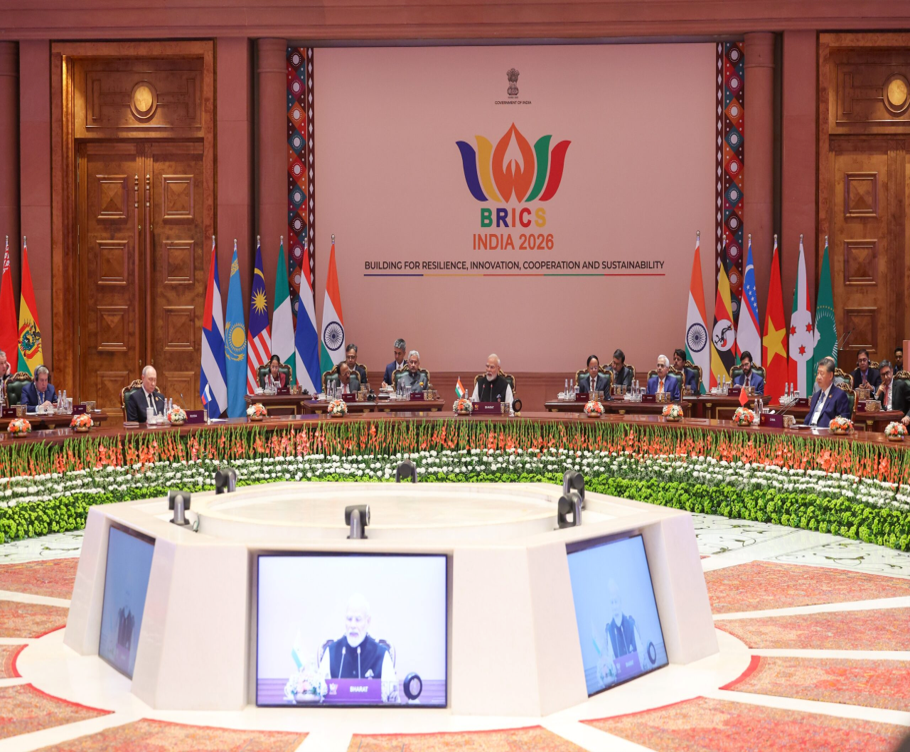
The 18th BRICS Summit in New Delhi (12–13 Sep 2026) convened all 11 BRICS members (Brazil, Russia, India, China, South Africa plus new entrants Egypt, Ethiopia, Indonesia, Iran, Saudi Arabia, UAE) and invited partners. Heads of state/Government – including Modi (India), Xi (China), Putin (Russia), Ramaphosa (SA), Indonesia’s Prabowo and Iran’s President Pezeshkian attended, alongside Brazil’s President (represented by FM Mauro Vieira) and others. Over two days, leaders endorsed a broad New Delhi Declaration condemning “trade wars” and urging “maximum restraint” in the Middle East. China drove initiatives on AI and supply chains (proposing a BRICS AI Open-Source Zone and economic corridors), while India stressed Global South roles. Bilateral side-talks were brisk: for example, Modi and Putin deepened India–Russia energy and defence ties (Modi proposed a 20-year BRICS agenda), and Iran’s Pezeshkian met UAE’s Crown Prince Khaled to de‑escalate the Iran–Gulf conflict.
In parallel, Washington pressed its unilateral trade agenda. This week the White House announced sweeping retaliation against Canada: it revised Section 338 tariffs (50%) on selected Canadian goods (adding items like metals, vehicles, paper) effective 15 Sep, and banned imports of certain Canadian alcohol, dairy and autos effective 29 Sep. These moves followed Canada’s own tariff hikes (15–50%) on US goods which took effect on 8 Sep. On 16 Sep, the US House prepared to vote on a new sanctions bill (the Lindsey Graham Act) empowering 100% tariffs on countries (notably India and China) importing Russian oil. In markets, fears of trade fragmentation have stoked volatility – for instance, prior US tariff threats helped push the rupee to record lows.
BRICS’ high-minded communiqués and expansion set an alternate global order in contrast to concurrent US protectionism. The causal linkages (e.g. whether BRICS unity emboldens Washington’s “America First” tariffs, or vice versa) and implications. In sum, BRICS proclaimed multipolar cooperation (, while the US doubled down on bilateral coercion. This dual narrative suggests enduring trade friction ahead: US tariffs may push allied importers deeper toward BRICS partnerships, whereas BRICS outcomes will likely be ignored in US trade policymaking.
Participants and Roles
India, as chair, hosted leaders of all 11 BRICS members. Key attendees included Prime Minister Narendra Modi (India), Presidents Xi Jinping (China), Vladimir Putin (Russia) and Cyril Ramaphosa (South Africa). Brazil’s President Luiz Inácio Lula da Silva did not attend due to domestic elections and was represented by Foreign Minister Mauro Vieira. Among the newly joined members, Indonesia’s President Prabowo Subianto, Iran’s President Masoud Pezeshkian, Egypt’s President Abdel Fattah el-Sisi and Ethiopia’s PM Abiy Ahmed participated. Saudi Arabia sent Foreign Minister Prince Faisal bin Farhan and the UAE was represented by Crown Prince Sheikh Khaled bin Mohamed Al Nahyan. For completeness, the summit also drew international figures: UN Secretary-General António Guterres, WHO’s Tedros Adhanom and WTO’s Ngozi Okonjo-Iweala were present as special invitees.
This broad lineup underscores India’s attempt to build a consensus: traditional BRICS players met alongside former rivals (e.g. India–Iran, Iran–UAE). For example, Iranian President Pezeshkian and UAE Crown Prince Khaled at odds over the war in Yemen made history by meeting at this summit.
- Financial, Economic & Trade Initiatives
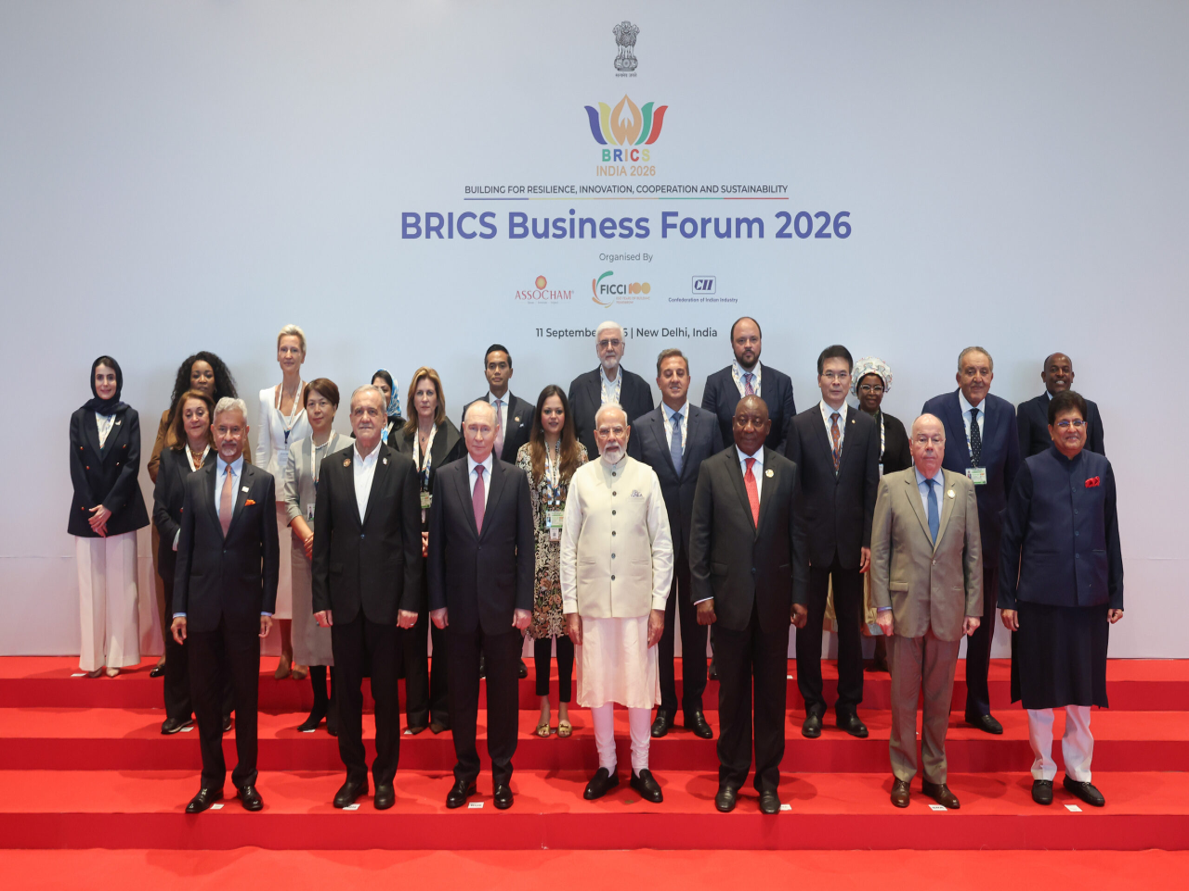
The two-day summit was primarily focused on advancing trade, finance, and investment cooperation among BRICS members. Key areas of discussion included advancing the Strategy for BRICS Economic Partnership 2030, cross-border payments, the New Investment Platform, MSME financing, customs cooperation, resilient supply chains, and technology cooperation. A key economic outcome was progress on the Strategy for BRICS Economic Partnership 2030, which provides an overarching framework for cooperation among BRICS members, including sectoral strategies, programmes, and roadmaps.
The summit also advanced discussions on the New Investment Platform (NIP), with members expressing broad support for continuing the work through a consensus-based, phased, and member-driven approach, while respecting national regulatory frameworks and existing institutional mandates. Complementing this India also emphasized upon Cross-Border Payments & Local Currency Mandated the BRICS Payment Task Force to advance the interoperability of payment and messaging channels for trade settlements using local currencies, aiming to insulate BRICS economies from Western financial sanctions and exchange rate volatility. India further proposed a BRICS Risk Lab at GIFT City IFSC, Gujarat, aimed at strengthening GIFT City’s role as a platform for cross-border financial cooperation. The chairship also pushed for greater integration of MSMEs into global value chains, as MSMEs can contribute to more resilient and reliable supply chains and enhance the participation of developing countries in global trade.
Overall, these initiatives could create wider opportunities to strengthen cooperation among BRICS members and, additionally, create opportunities for Indian financial services companies.
- Science, Technology, and Digital Infrastructure

The BRICS Summit 2026 advanced cooperation in science, technology, and innovation.
BRICS strengthened cooperation in technology and innovation through the expansion of the Remote Sensing Satellite Constellation and progress towards a BRICS Space Council, aimed at improving access to space technology and supporting disaster and climate monitoring. Members also approved a BRICS Digital Public Infrastructure (DPI) Repository to promote the sharing of open-source digital solutions.
The GRAIN Action Plan was adopted to pool resources for major scientific research projects, while a feasibility study was initiated for a high-speed submarine cable networkto enhance secure and resilient connectivity. Additionally, the Digital Centre of Excellence for Smart Grids and the BRICS Incubator Network were established to promote renewable-energy integration, innovation, entrepreneurship, and technology-driven growth.
- Advancing Climate-Resilient and Productive Agriculture
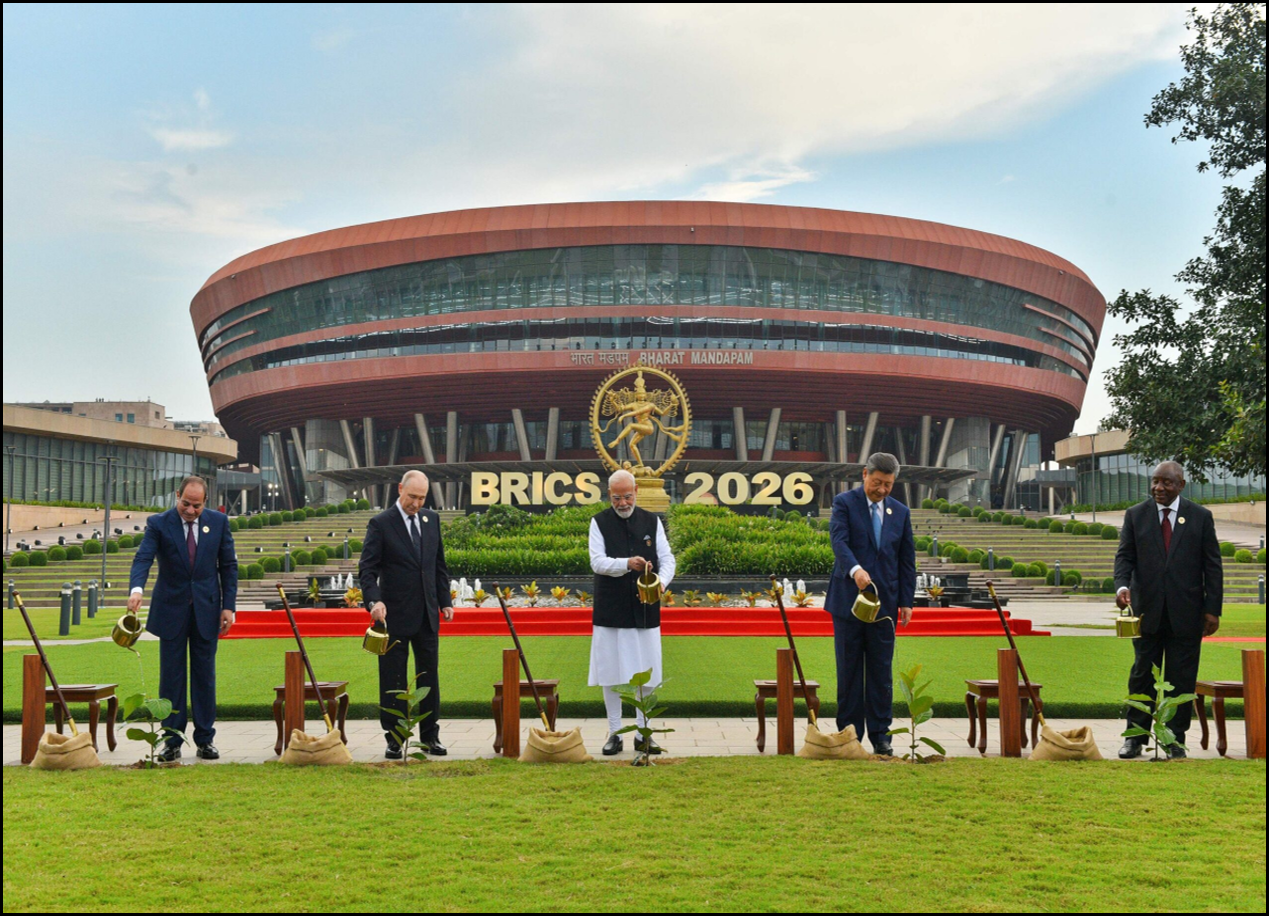
The BRICS nations has announced four new agriculture initiatives, including the establishment of Agroecology and Regenerative Agriculture for Climate Resilience and Productivity and Digital Agriculture. Which leads to advanced cooperation on agriculture and food security. The BRICS Grain Exchange, proposed in 2023 and championed by Russia, BRICS aims to targeted for launch by 2027. It seeks to strengthen strengthen food security, reduce grain price volatility, and facilitate intra-BRICS agricultural trade. The summit also introduced BRICS AGRIN (Argo-Inputs, Genetic Resources, and Information Network) a collaborative, voluntary, farmer-centric framework established by BRICS nations to strengthen joint efforts in seeds, germplasm, and agriculture inputs.
Members also advanced the Global Forum on Farmers’ Rights in Seed Systems a platform to protect farmers’ rights and preserve traditional agricultural knowledge, alongside Centers of Excellence on Agroecology and Regenerative Agriculture to promote sustainable and climate-resilient farming practices. The BRICS Network on Digital Agriculture further seeks to promote the adoption of digital technologies across agriculture, agroforestry, fisheries, and aquaculture.
India also highlighted its local agricultural and culinary heritage by showcasing Gucchi Marmik, featuring Himalayan Gucchi mushrooms, and Koraput coffee from Odisha, supporting local value chains and grassroots economic empowerment.
- Security, Law and Youth Cooperation
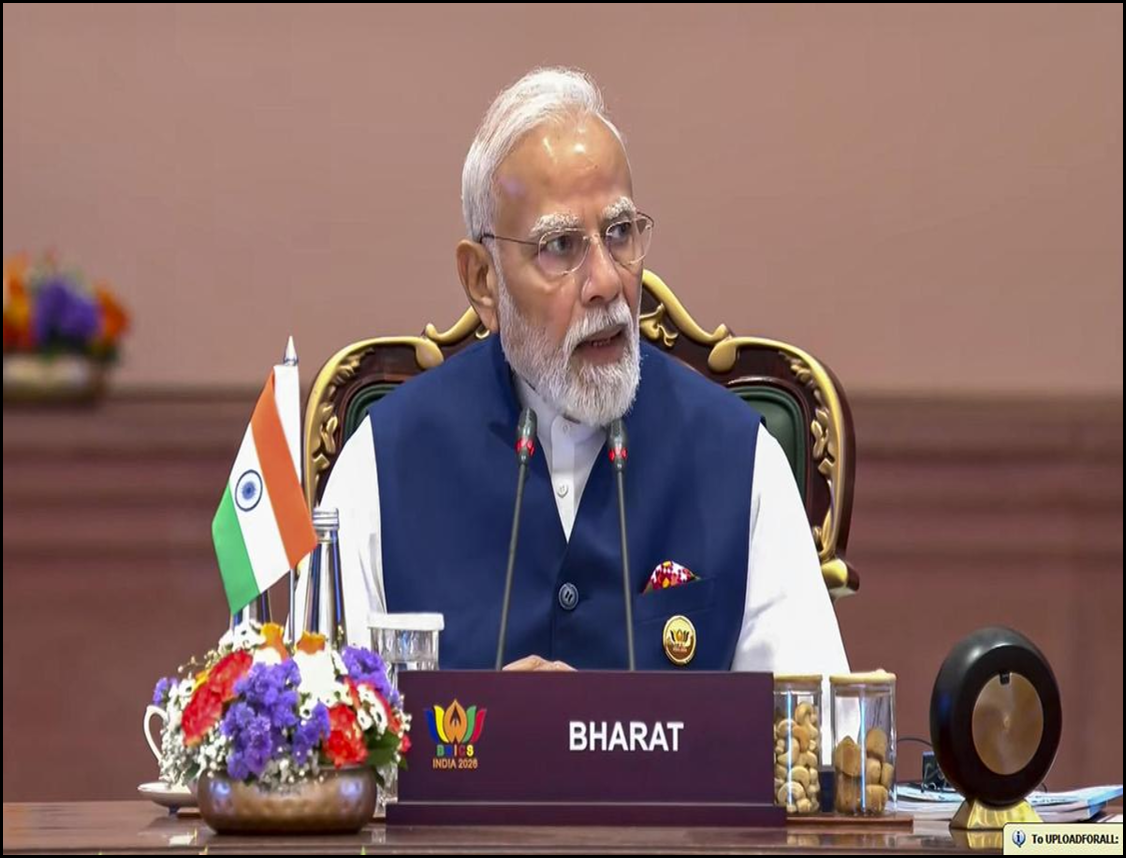
BRICS strengthened cooperation across security, governance, social development, and youth affairs during the 2026 Summit. On counter-terrorism New Delhi condemned cross-border terrorism and the 2025 Pahalgam terror attack, PM Modi warns at BRICS Summit against technology weaponization, urging unity for global prosperity and resilience amid rising tensions. while reiterating the importance of the UN Comprehensive Convention on International Terrorism and strengthening measures to disrupt terrorist financing networks.
On asset recovery and anti-corruption, BRICS established an Expert Network and a Repository for Tracing Fugitive Offenders to support the identification of illicit financial flows, prevent safe havens for economic offenders, and facilitate the legal recovery of stolen assets. In the areas of labour, social security, and culture, members welcomed BRICS CONNECT, aimed at strengthening the rights and employability of gig workers and promoting the portability of social-security benefits across borders, alongside an Artist Registry to safeguard cultural heritage and combat the illicit trafficking of antiquities.
The Summit also advanced youth cooperation through the adoption of the BRICS Youth Cooperation Framework 2026 and the Joint Statement of the 2026 BRICS Youth Ministers’ Meeting, while establishing a Working Group on Sport Technology to promote collaboration in sports and technology.
- Global Governance and Institutional Reforms
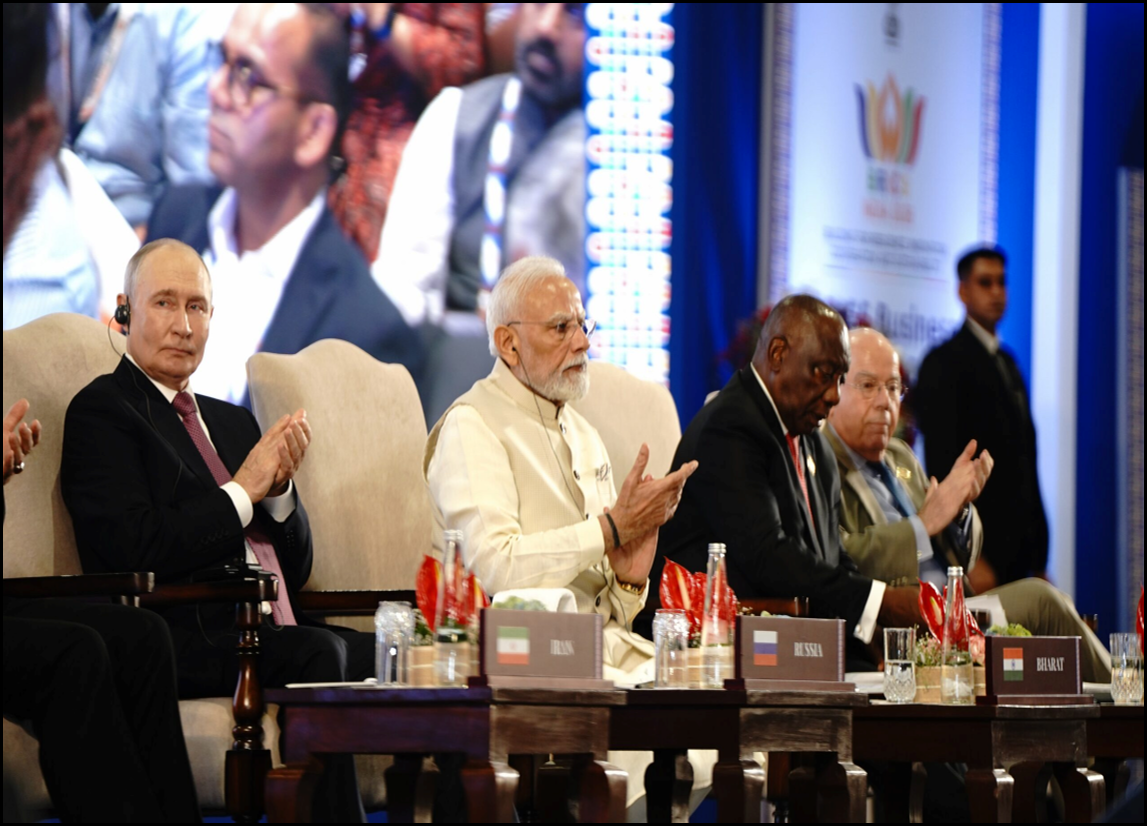
BRICS placed significant emphasis on strengthening representation and participation of developing countries in global governance. On UN Security Council (UNSC) reform, the grouping reaffirmed support for the Ezulwini Consensus and Sirte Declaration, to secure African representation in a reformed UN Security Council. Alongside, China and Russia also expressed support for the aspirations of India and Brazil for aiming to rectify the Global South’s historical underrepresentation of the Global security decisions.
In multilateral institutions, BRICS endorsed the WTO accession bids of Ethiopia and Iran and backed Ethiopia and Indonesia for expanded representation on the International Civil Aviation Organization (ICAO) Council. India also proposed a 10-point roadmap for global governance reform, structured around the principles of Representation, Responsiveness, and Rule-making (3Rs), with the objective of promoting a more inclusive and responsive international system. The grouping further confirmed China as the host of the 19th BRICS Summit in 2027, ensuring continuity in implementing the commitments of the New Delhi Declaration.
- Health and Medicine
The BRICS countries have strengthened cooperation in the field of health and medicine through several initiatives aimed at promoting healthy lifestyles, mental well-being, traditional medicine, and healthcare innovation. The BRICS Mission for Healthy Lifestyle, supported by a Joint Roadmap for Healthy Lifestyle Promotion for the period 2026–2029, seeks to encourage healthier practices and strengthen preventive healthcare approaches across member countries.
In the area of mental health and traditional medicine, a Training Hub Network led by India’s National Institute of Mental Health and Neuro Sciences (NIMHANS) has been established to enhance capacity-building and promote mental well-being. In addition, an Expert Working Group has been constituted to facilitate the safe and evidence-based integration of traditional medicine into modern healthcare systems, with the broader objective of supporting affordable and accessible Universal Health Coverage. The BRICS Bio Design Initiative represents another significant development in healthcare cooperation, with the newly launched BRICS Bio Design Centre being spearheaded by the Andhra Pradesh MedTech Zone (AMTZ). The initiative aims to promote cross-border collaboration and innovation in healthcare by bringing together scientific and technological expertise from BRICS countries. It seeks to translate medical research and innovative ideas into accessible, practical, and deployable healthcare solutions, particularly addressing the healthcare needs and challenges of countries in the Global South.
Bilateral Meetings & Side Discussions
Many leaders used the summit for one-on-one talks. Highlights included:
- India–Russia: Modi met Putin to reaffirm their strategic partnership. Reportedly they discussed expanding energy and defence ties for example, finalising cooperation on nuclear energy and pipeline projects though no formal MoUs were released. Modi’s public pitch (“new and ambitious 20-year agenda”) and earlier joint statements suggest this exchange was positive.
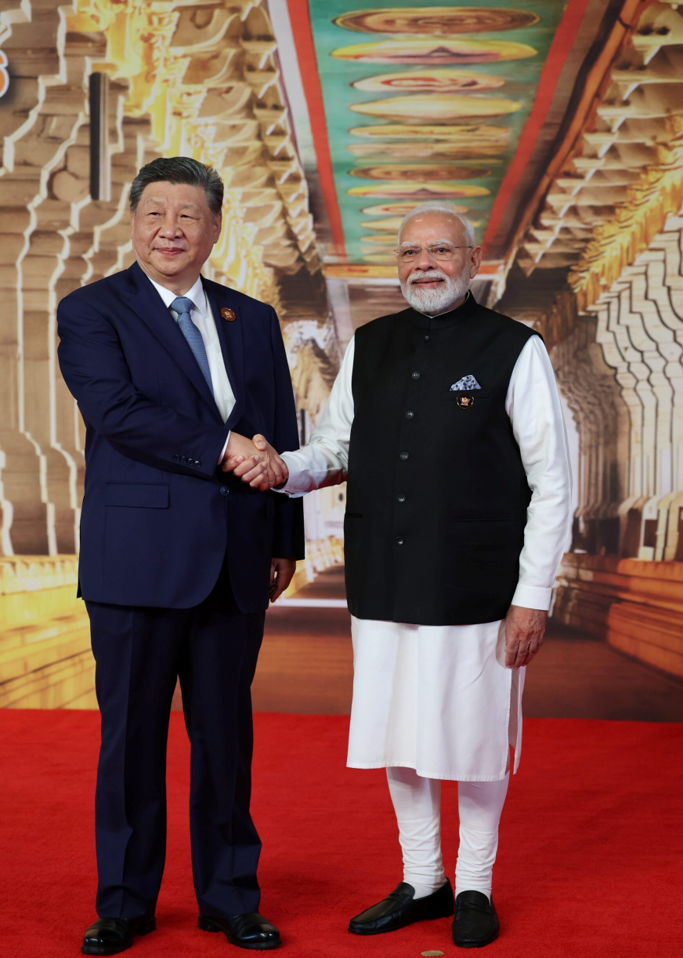
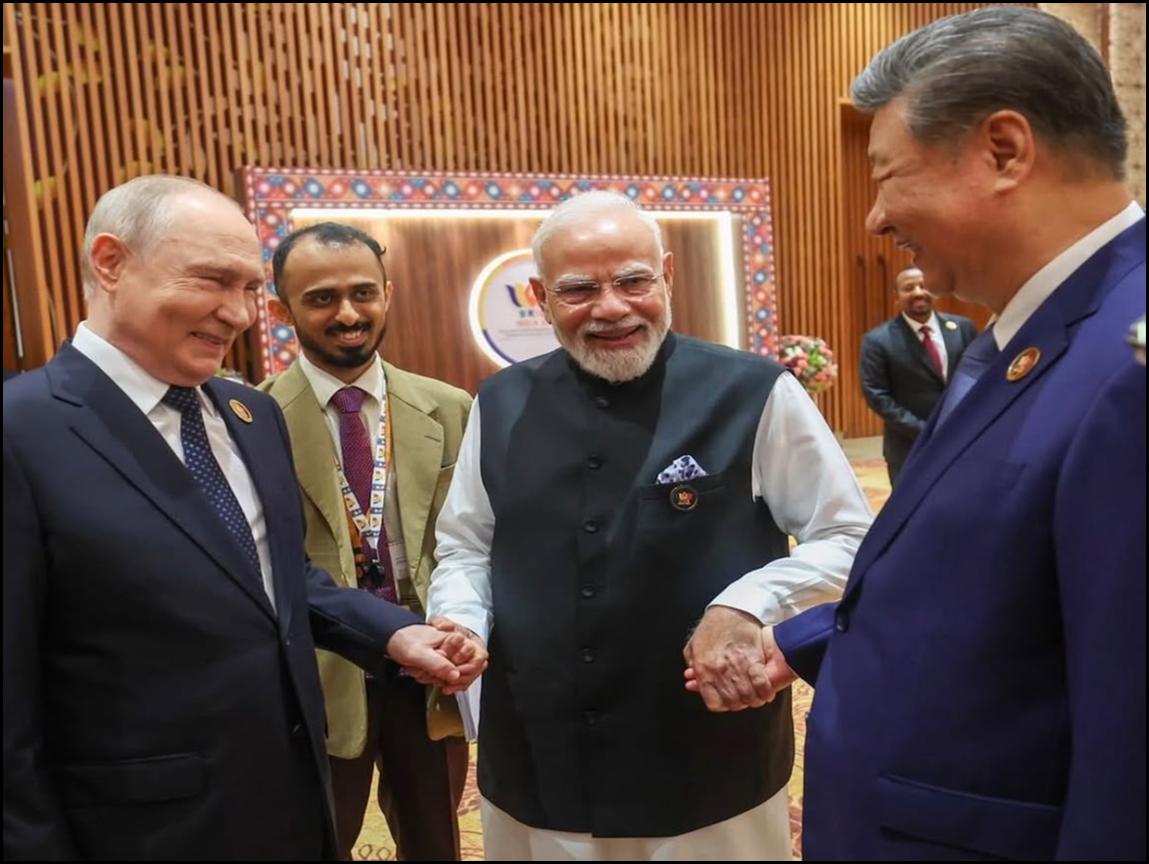
- India–China: Modi and Xi held a formal bilateral focusing on economic and border issues. While official comments were muted, media noted China’s agenda-setting: Xi put forward BRICS-wide proposals on AI and supply chains which imply deeper tech collaboration. The cordial photo of Xi–Modi–Putin hand-in-hand symbolised a warmer India–China tone, though observers saw it mainly as a public-relations success.
- Iran–UAE: In a standout encounter, President Pezeshkian met Abu Dhabi’s Crown Prince Khaled bin Mohamed. They discussed “regional and international issues, de-escalation and stability” in Yemen and the Gulf. This historic Iran-UAE exchange helped secure UAE support for the joint BRICS declaration on Middle East restraint.
- Other Major Bilaterals: Modi also held talks with other leaders. For example, he met Iran’s President to discuss energy cooperation and sanctions, and engaged with Crown Prince Mohammed bin Salman of Saudi Arabia (represented by his FM) on stability in the oil markets. Xi Jinping had meetings with South Africa’s Ramaphosa and Brazil’s delegation; one key theme was closer trade and technology links within BRICS. In addition, Chinese and Brazilian officials reportedly signed minor agreements on tech transfer and trade facilitation.
The bilateral agenda underscored diverging priorities: India and China sought pragmatism on trade and border, while Iran and Gulf states managed conflict. These side discussions set the stage for some outcomes in the declaration and hinted at future MoUs.
Timeline of Summit Events
A mermaid timeline chart is shown below for clarity:

Recent U.S. Tariff Actions
Coinciding with the summit, the Trump Administration pressed ahead with a flurry of trade measures.
- Russia/Iran Sanctions Bill: On 16 Sep 2026 the U.S. House prepared to vote on the Lindsey Graham Sanctioning Russia and Iran Act of 2026. This bipartisan bill (passed by Senate 86–11 on 7 Aug) authorises the President to impose up to 100% tariffs on countries importing Russian oil and gas. India and China – among the top five buyers of Russian fuel would be directly hit by such tariffs. The proposal also includes measures against the “shadow fleet” of tankers. Notably, the bill reduces a previously discussed maximum tariff from 500% to 100%. Congressman Troy Nehls (R-TX) and others pushed for its swift passage, framing it as strategic pressure on Putin.
- Other Moves: Separately, USTR has continued broad Section 301 investigations (e.g. a March 2026 initiative targeting China, EU, India and others), and signaled future possible tariffs on “strategic sectors” through 2026.
Market reaction to these actions has been notable. For example, past tariff threats on India correlated with Indian rupee weakness; in August 2025, the rupee plunged to record lows amid fresh U.S. tariffs on Indian goods. As of mid-Sep 2026, the rupee was trading near historic lows (≈₹87.95) reflecting investor jitters, while global oil prices (affecting BRICS importers) remained volatile. The Canadian dollar and stock indices briefly wavered on the news of expanded U.S. bans, though long-term effect may be muted by the limited scope of $20B.
The juxtaposition is striking. In New Delhi, BRICS leaders preached cooperation and “resilience”, condemning “unilateralism” in principle. They even demanded protecting trade and energy flows. Yet at the exact same time, the U.S. government was doubling down on unilateral tariffs. The New Delhi communique’s veiled criticism of trade wars carefully omitting any direct reference to Washington highlights how BRICS chose wording to preserve unity. Contrast that with the Trump Administration’s overt pledges to “rebalance trade” with any country seen as non-cooperative.
Strategically, US tariff actions may in fact reinforce BRICS resolve. By targeting allies and trying to coerce India via oil tariffs, Washington risks driving these nations closer to BRICS alternatives. Indeed, India had to tread carefully: Modi, hosting BRICS, sought Middle Eastern restraint even as US-Israel strikes resumed. India must balance its own energy security (still partly reliant on Iranian/Russian oil) with preserving US ties. The current US bill threatens 100% duties if India defies cuts in Russian oil imports. Such pressure could encourage New Delhi to seek oil elsewhere (perhaps further from Western reach) or to deepen trade ties within BRICS to hedge.
Within BRICS, trade diversity is extolled, yet these tiffs illustrate the fragility of intra-alliance commerce when Washington pivots on a dime. In practice, affected U.S. exporters (from steel firms to tech companies) face uncertainty. Analysts warn the USMCA supply chain may fray, with USMCA manufacturers factoring in these new trade costs.
In broader geopolitical terms, the summit’s message that “emerging markets must be rule-shapers, not rule-takers”. The likely near-term scenario is continued trade friction: the U.S. may finally impose or threaten huge duties on Indian/Chinese energy imports if the sanctions bill passes. Markets will remain volatile: currency swings in rupee and yuan may accompany any tariff escalation.
Meanwhile, BRICS may respond by institutionalising alternatives: for example, intensifying the use of non-dollar payment systems (India and Russia have been pilot-testing Rouble-Rupee settlements, accelerating BRICS bank loans, and encouraging intra-BRICS trade agreements in local currencies. Over the coming months, diplomats will watch if BRICS’s unified stance on trade can translate into concrete steps or if US actions simply harden fault lines.
Way Forward
The way forward lies in moving from geopolitical signalling to institutional delivery. BRICS needs to convert its New Delhi commitments on WTO reform, local-currency settlements, payment interoperability, resilient supply chains, development finance and MSME integration into measurable mechanisms. Rather than pursuing outright decoupling from Western markets, a more resilient approach would be strategic diversification expanding trade, technology, energy and financial partnerships across multiple centres while reducing excessive dependence on any single market or currency. For India, this means leveraging BRICS alongside the G20 and other multilateral platforms to strengthen its strategic autonomy while remaining deeply integrated with the global economy. The emerging order should therefore not be reduced to a simple BRICS-versus-U.S. binary. Tariffs, sanctions, technology controls, industrial subsidies and supply-chain restrictions are increasingly converging into a broader contest over the rules of globalisation. The critical task ahead is to prevent this competition from hardening into economic fragmentation by building interoperable, rules-based and diversified systems. If BRICS can translate its declarations into functioning financial, technological and trade institutions, it can evolve from a platform of collective assertion into an architecture of collective delivery enabling the Global South to become increasingly a rule-shaper rather than merely a rule-taker.
*Editor, Focus Global Reporter