Dr. Arvind Kumar*

Few issues expose the folly of our age like water. In an era of “triple planetary crisis” climate change, biodiversity loss and pollution, water is where it all meets. As UNEP Executive Director Inger Andersen has put it, the world does not have an environmental “to-do list” but an environmental “must-do list” to slow climate change, protect and restore nature and biodiversity, and end pollution and waste. Climate change has made India’s monsoon increasingly unpredictable, turning this lifeline into a villain at times. The monsoon still delivers about 70% of India’s rain, and agriculture (19% of GDP) employs half the population. But now we see floods and droughts in the same year, dampening fields in one province while leaving another parched. As Prime Minister Narendra Modi observed at the National Departmental Summit on Water Security, “Water security is vital for India and for our planet. It calls for innovative ideas, technology and above all, Jan Bhagidari.”
Last year, for instance, 5.4 million people were uprooted by climate disasters flooding along the Ganga in Bihar and brutal drought in Maharashtra and Karnataka displaced millions. In other words, water has become India’s most dramatic climate barometer and, ironically, its most politicised playing field.
Ocean of Water, Dripping Per Capita
India is wet but hungry. Overall, it receives about 3,880 billion cubic metres (BCM) of rain annually, which after evaporation and flows nets roughly 2,000 BCM of usable water. Sound like a lot? Divide it by 1.4 billion people and it was only about 1,486 cubic metres per person (2021). By 2031 this may drop below 1,370 m³. As the government’s own figures warn, under 1,700 m³ is “water-stressed” and below 1,000 m³ is a “scarcity” alert. In short, India is tiptoeing toward water poverty on the per-capita scale.
We have 17.5% of the world’s population and just 11.6% of its livestock, yet our agriculture gulps about 80–90% of all rural water. Every crop and cow and canal army competes for those drops. Groundwater tables have steadily fallen, rivers have shrunk in summer, and conflicts over each remaining gush have become routine. No sector can claim a water-free lunch: cities, factories and power plants also suck aquifers and rivers dry. One grim 2016 estimate noted India’s coal-fired power stations “consume an average of 96,000 litres of water for every megawatt”, a figure that would be satire if it weren’t reality.
So, water is literally the economy’s lifeblood from irrigation to industry to hydropower, yet it’s in increasingly short supply. We owe our farmers, factories and power plants a headwaters tax, but today they all shout “give more, it’s essential!”, even as the wells decline.
Half-Full or Half-Empty?
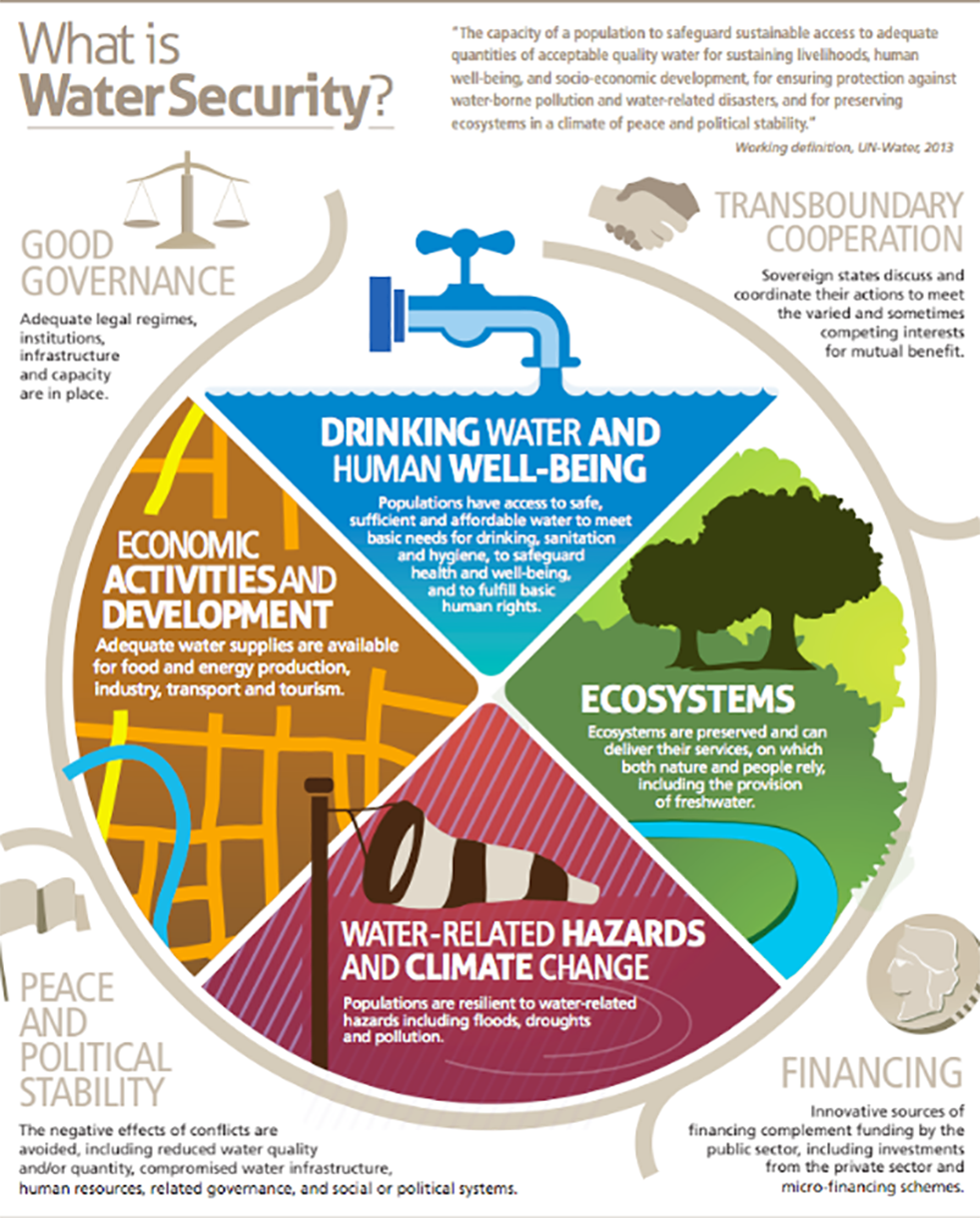
The policy response has expanded through Jal Jeevan Mission, AMRUT 2.0, Pradhan Mantri Krishi Sinchayee Yojana (PMKSY), Mission Amrit Sarovar, Jal Shakti Abhiyan Catch the Rain, Sahi Fasal and Atal Bhujal Yojana. PMKSY’s 2021–26 extension carries an outlay of ₹93,068.56 crore, with 58 of 99 prioritised AIBP projects reported completed; Mission Amrit Sarovar targets 75 water bodies in every district, while Catch the Rain promotes rainwater harvesting, water-body inventory and geo-tagging. Atal Bhujal offers a decentralised model, with 180 of 229 blocks showing measurable groundwater-level improvement in the 2023–24 and 2024–25 assessments. These are significant interventions, but the harder question is whether programme completion is translating into actual water security: a tap connection does not automatically ensure reliable supply, a rejuvenated pond does not necessarily restore an aquifer, and irrigation expansion does not automatically mean efficiency. The contradiction becomes sharper as water demand collides with climate variability and development priorities. The monsoon provides roughly 70% of India’s annual rainfall, yet its variability can bring floods in one region and scarcity in another, while climate change is making historical assumptions about rainfall increasingly uncertain. This is where river interlinking becomes attractive; the idea of transferring water from apparently “surplus” to “deficit” basins but a river is not simply a pipeline waiting to be connected.
Water is a State subject, and inter-basin transfers involve inter-State cooperation, environmental and forest clearances, land acquisition, displacement, ecological flows, financial viability and uncertain future hydrology. The Ken–Betwa project shows that river-linking proposals can advance when institutional and political conditions align, but it cannot establish interlinking as a universal solution; climate change itself challenges the permanence of “surplus” and “deficit” classifications. At the same time, demand-side choices reveal another contradiction. Sahi Fasal seeks to encourage less water-intensive crops in water-stressed areas, yet established cropping patterns and incentives can continue to favour thirsty crops. The ethanol transition illustrates this trade-off: the NITI Aayog–Ministry of Petroleum and Natural Gas roadmap indicates that sugarcane cultivation requires around 1,600–2,100 litres of water per kilogram of sugar, while one litre of sugar-based ethanol can require roughly 3,000 litres of water. Ethanol can support energy security and decarbonisation, but its water footprint cannot simply be treated as an externality. The same logic extends to energy, industry and expanding cities: economic growth may create new value, but the water required to sustain that growth must also be accounted for.
The establishment of the Ministry of Jal Shakti was an important institutional step, but administrative consolidation is not the same as genuine convergence. Water governance requires cooperation, coordination, convergence, sensitisation, incentivisation and galvanising across ministries, States, local governments, communities, markets and civil society. Civil society should not be reduced to a pro-bono implementer or ceremonial consultant; its value lies in connecting local knowledge with policy, identifying priorities, building trust and helping governments distinguish what is urgent from what is merely visible. The next phase must therefore measure outcomes rather than announcements.
The Road Ahead
India’s water challenge requires a decisive shift from grandiosity to flexibility, announcements to outcomes, and silos to integration. The priority should be empowered river-basin institutions, real-time monitoring of dams, aquifers and water bodies, climate-risk assessment of water transfers, and greater emphasis on smaller, flexible interventions, groundwater recharge, efficient irrigation and climate-resilient cropping patterns. This demands cooperation, coordination and convergence across governments, States, farmers, cities, industry, communities and civil society, strengthened through sensitising, incentivising and galvanising stakeholders towards measurable outcomes. At its core, Water Transversality must connect water with agriculture, energy, health, biodiversity, urbanisation and economic planning, while ecosystem-based adaptation should complement engineered infrastructure by strengthening natural water systems. Genuine progress whether in tap-water access, rejuvenated water bodies or groundwater recovery must be recognised, but equally measured against what happens on the ground. The objective is not merely to save more water, but to govern, share, reuse and replenish it more intelligently, translating policy ambition into lasting water security, ecological resilience and sustainable development.
*Editor, Focus Global Reporter