Dr. Arvind Kumar*
The triple planetary crisis of climate change, biodiversity loss and pollution is intensifying, exposing the vulnerabilities of urban systems to extreme heat, flooding and deteriorating air quality. United Nations Secretary-General António Guterres has warned that “cities are where the climate battle will largely be won or lost,” while UN-Habitat Executive Director Anacláudia Rossbach has emphasised that “Adequate housing is not a luxury. It is a foundation for a dignified life and for sustainable cities.” As the world observes World Cities Day on 31 October 2026, under the theme “Regenerating the City: Adequate Housing for All,” the global benchmark is to build inclusive, safe, resilient and sustainable cities in line with SDG 11. For India, a decade of urban missions, including the Smart Cities Mission, AMRUT and PMAY-U, has delivered substantial progress, with 7,790 of 8,064 Smart Cities Mission projects completed by March 2026 and approximately 99 lakh homes delivered under PMAY-U by mid-2026. Yet, housing affordability, unequal access to essential services, air pollution and the degradation of wetlands and green spaces reveal persistent gaps between investment and liveability. The World Bank projects that India’s urban population could reach 951 million by 2050, requiring over US$2.4 trillion in resilient, low-carbon infrastructure and services. The critical question, therefore, is whether India’s urban expenditure is translating into healthier, more equitable and climate-resilient cities. The benchmark for the next decade must extend beyond infrastructure delivery to adequate housing, effective governance, ecological restoration and an improved quality of life.
The United Nations’ World Urbanization Prospects 2025 estimates that cities accommodate 45% of the world’s 8.2 billion people. Urbanisation is reshaping economies, consumption patterns and development priorities, yet the benefits remain unevenly distributed. UN-Habitat’s World Cities Report 2026 estimates that up to 3.4 billion people lack secure, safe and adequate housing, including more than one billion living in informal settlements and slums. Meanwhile, climate hazards threaten infrastructure, livelihoods and public health, while shrinking green spaces weaken cities’ natural capacity to regulate heat and absorb rainfall.
The challenge, therefore, extends beyond accommodating population growth. It concerns whether urbanisation can reconcile economic productivity with ecological integrity and social justice. A city may expand its transport network and commercial districts while leaving millions without affordable homes, dependable water supplies or accessible public spaces. Urban progress must consequently be measured through resilience, inclusion and liveability, not construction alone.
The State of the India’s Cities
India stands at a defining juncture. The World Bank’s July 2025 report, Towards Resilient and Prosperous Cities in India, projects that the urban population could reach 951 million by 2050, requiring more than US$2.4 trillion in resilient, low-carbon infrastructure and services. More than half the infrastructure needed by 2050 remains to be built, presenting an opportunity to embed sustainability into urban expansion rather than retrofit it later. The World Bank’s assessment also estimates that cities will generate 70% of new jobs by 2030.
Government initiatives have established important foundations. Under the Smart Cities Mission, 7,790 of 8,064 projects worth ₹1,56,257 crore. All 100 cities established Integrated Command and Control Centres, while more than 1,700 kilometres of smart roads were completed. Pradhan Mantri Awas Yojana–Urban had delivered approximately 99 lakh homes by July 2026, while PMAY-U 2.0 targets one crore additional eligible beneficiaries over five years. These programmes demonstrate the scale of India’s urban investment.
Water security and mobility are equally important. AMRUT and AMRUT 2.0 have supported more than two crore tap connections and 1.5 crore sewer connections, alongside the rejuvenation of 544 water bodies. Metro rail expansion, meanwhile, has transformed mass transit in several cities. The government’s Urban Challenge Fund, with ₹10,000 crore budgeted for 2026–27, seeks to leverage market financing and reform-oriented investment. Together, these initiatives offer substantial potential to improve urban services and resilience.
Stumbling Blocks
However, infrastructure expenditure does not automatically translate into better outcomes. PRS Legislative Research’s Demand for Grants 2026–27 Analysis: Housing and Urban Affairs estimated that the Ministry would spend only 31% of its 2025–26 allocation at the revised-estimate stage. It also found that the Ministry’s budget utilisation declined from 94% during 2017–18 to 2020–21 to 77% over the following five years. Average underspending under PMAY-Urban reached 34% across 2017–18 to 2025–26. These figures raise questions about implementation capacity, project delays and the conversion of financial commitments into completed, occupied homes.
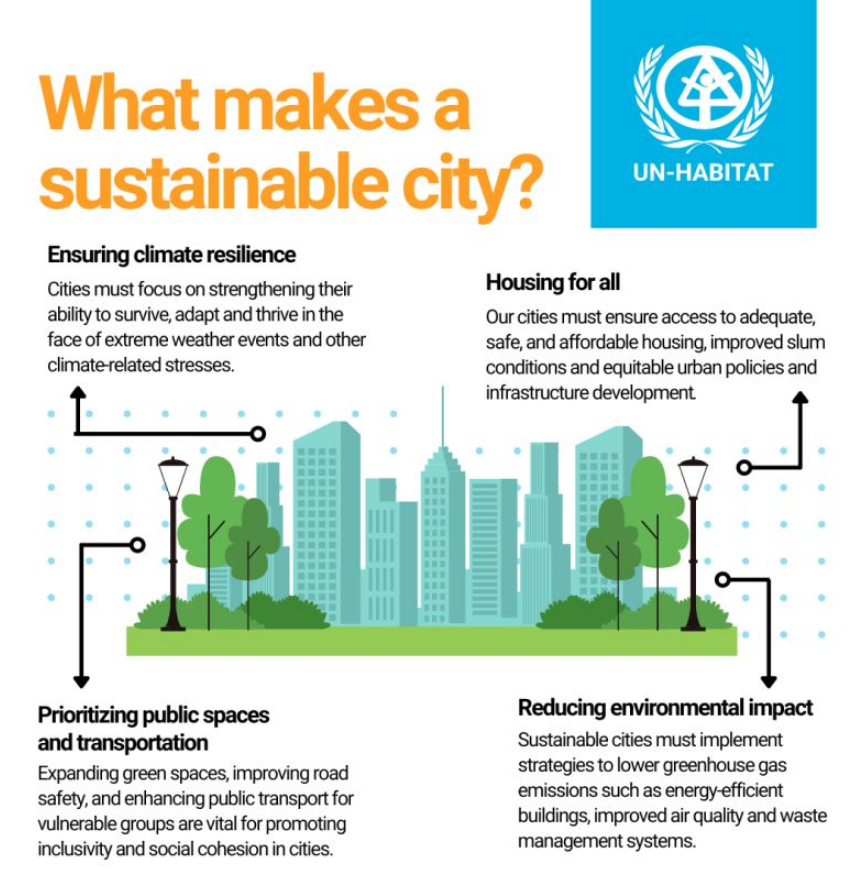
Housing illustrates the complexity. The completion of approximately 99 lakh homes is significant, but housing adequacy also depends on affordability, location, basic services and access to employment. PRS highlights that land can account for up to 63% of housing costs in metropolitan areas. It also notes that India has only 47,650 urban buses, with 61% concentrated in nine megacities. A metro network cannot deliver inclusive mobility if affordable feeder services, pedestrian infrastructure and reliable buses remain inadequate. Institutional fragmentation compounds these challenges. The Comptroller and Auditor General’s 2024 audit compendium on the 74th Constitutional Amendment identified gaps in the devolution of municipal functions across the states examined. Can cities be held accountable for outcomes when the authority and resources required to deliver them remain fragmented?
Environmental pressures reveal the consequences. The World Bank estimates that urban heat-island effects can raise city-centre temperatures by 3–4°C above surrounding areas. Its 2025 report identifies potential annual flood losses that could be averted through timely adaptation amounting to US$5 billion by 2030 and US$30 billion by 2070. The same development model that replaces permeable land with concrete can intensify flooding, heat exposure and energy demand.
Urban expansion is also eroding the natural systems that protect cities from heat and flooding. The National Institute of Urban Affairs reported in April 2025 that Bengaluru, once home to over 1,800 lakes, retains barely 200. In Bengaluru Urban district, a 2025 survey found that 730 of 837 lakes had been encroached upon, affecting 4,554 acres. Energy transition presents a parallel challenge: although non-fossil sources accounted for 52.3% of India’s installed electricity capacity in January 2026, they supplied only 29.2% of electricity generated during FY 2025–26, according to the Ministry of Power and MNRE. These gaps illustrate how urban development continues to compromise wetlands and green spaces while remaining dependent on carbon-intensive energy.
Air pollution is inseparable from this urban crisis. The Health Effects Institute and Institute for Health Metrics and Evaluation’s State of Global Air 2025 attributed approximately two million deaths in India in 2023 to air pollution. According to CREA’s January 2026 assessment, 190 of 229 Indian cities with sufficient PM10 data for 2025 exceeded the national standard. Of 130 cities covered by the National Clean Air Programme, only 90 had completed source-apportionment studies, limiting the evidence available to target pollution sources effectively.
The government reports that 108 NCAP cities reduced PM10 levels in 2025–26 relative to 2017–18, with 26 achieving reductions exceeding 40%. CREA’s analysis, however, shows that reductions do not necessarily mean compliance with national standards. It also found that 68% of utilised NCAP funds went towards road-dust management, while industry, household fuels and public outreach each received less than 1%. The implication is not that progress is absent, but that performance must be judged by cleaner air, reduced exposure and improved health not spending or isolated reductions alone.
Way Forward
Therefore, India must move beyond fragmented urban planning towards transversality, integrating water, energy, housing, mobility, public health, biodiversity and climate resilience within a coherent governance framework. ESG principles can strengthen accountability by linking urban finance to measurable environmental outcomes, social equity and transparent governance. Simultaneously, ecosystem-based adaptation including restored wetlands, urban forests, permeable surfaces and protected floodplains must complement engineered infrastructure to mitigate heat, flooding and pollution. People-centred regeneration should prioritise adequate and affordable housing, accessible public transport, in-situ settlement upgrading and safeguards against displacement. Empowered municipal institutions, reliable ward-level data and collaboration among governments, businesses, researchers and communities are essential to translate investment into tangible improvements in citizens’ lives.
As World Cities Day 2026 approaches under the theme Regenerating the City: Adequate Housing for All, the fundamental question is whether India’s cities are becoming more breathable, resilient and equitable? The future of sustainable cities lies not in building more alone, but in governing better, integrating intelligently and putting people and nature at the centre of development.
*Editor, Focus Global Reporter